
Home Maintenance Psychology • WagMore Garage Doors
“It Still Opens”: Why Homeowners Ignore Their Garage Door — And What It Ends Up Costing Them
Your HVAC dies on a 96-degree July day and you have a technician on the phone within the hour. A pipe bursts under the kitchen sink and you’re mopping the floor while simultaneously texting a plumber. The urgency is immediate, physical, and impossible to ignore.
Your garage door squeals like a screen door in a hurricane. A spring sounds a little different than it used to. The opener strains on the way up. And you… make a mental note. Maybe next month. It still opens.
This is one of the most predictable patterns we see as a garage door company in Northeast Florida: homeowners who would never tolerate a dripping faucet for six months will happily live with a visibly deteriorating garage door for years. Why? And what’s the real cost of that delay?
The answer is rooted in psychology — and it’s worth understanding, because the price tag on apathy is a lot higher than most people realize.
904-584-4828The Urgency Gap: Why Garage Doors Don’t Feel Like Emergencies
The root of garage door apathy is something behavioral economists call the “salience gap” — the difference between problems we can vividly feel right now and problems that exist somewhere in an abstract future.
When your air conditioning fails, the discomfort is immediate and inescapable. You feel it in your body. You can’t ignore it. The same is true for a burst pipe: there is water on your floor, and water on your floor is a visceral, undeniable signal that something requires action immediately.
A garage door in decline gives you no such signal. It still opens. It still closes. The fact that it’s working 30% harder than it should, that a spring is 80% through its cycle life, that a frayed cable is one bad morning away from snapping — none of that is visible or felt. The door performs its function. Just a little louder. A little slower. A little rougher than it used to be.
| System | Panic Response | Apathy Risk |
|---|---|---|
| HVAC | Immediate — heat/cold are felt in minutes | Low. Discomfort forces action. |
| Plumbing | Immediate — water on the floor is undeniable | Low. Visible damage forces action. |
| Garage Door | Gradual — it still opens… for now | HIGH. Nothing urgently demands attention. |
This is the core asymmetry. HVAC and plumbing failures announce themselves loudly and bodily. Garage door decline whispers. And we are not wired to respond urgently to whispers.
The “It’s Always Been That Way” Trap
There’s a second psychological mechanism at work: adaptation.
When a garage door starts to develop a problem, it rarely goes from perfect to broken overnight. A spring that’s been gradually losing tension sounds a little louder month by month. Rollers that are wearing down get a little rougher with each season. The opener that’s slightly undersized for the door has been straining on every lift for three years.
But because the change is gradual, the brain re-establishes its baseline. “That’s just how the door sounds.” “It’s always opened a little slow.” “Every garage door does that.”
This is textbook adaptation — the same mechanism that makes you stop noticing background noise in your house or the hum of your refrigerator. The brain filters out stimuli that are consistent and non-threatening. A door that creaks the same way every morning eventually stops registering as a problem.
The Boiling Frog Problem
A spring doesn’t snap from fine to broken in a day. It fatigues over thousands of cycles — losing tension, developing micro-stress fractures, working harder and harder against the load. By the time homeowners notice “something’s off,” the spring is often weeks away from failure. The gradual decline is exactly what makes it easy to miss.
The Invisible System Problem
Part of what makes garage door apathy so easy to sustain is that most homeowners don’t actually understand what’s happening inside their system. HVAC and plumbing are better understood — everyone knows roughly what a furnace does, what a water heater does, what happens when a pipe corrodes.
Garage door systems — the interaction between springs, cables, rollers, tracks, and the opener — are a mystery to most people. And what you don’t understand, you don’t monitor. You don’t know what a torsion spring is supposed to look like, so you don’t know what a fatigued one looks like. You don’t know that the opener is rated for a specific door weight, so you can’t tell when it’s over its limit.
This invisibility works against you in another way: it means there’s no dashboard, no warning light, no fuel gauge. Your car tells you when the oil is low. Your phone tells you when the battery is at 20%. Your garage door tells you nothing until the morning it simply won’t open.
The “I’ll Deal With It When It Breaks” Math — Which Doesn’t Work
The final psychological layer is the most expensive one: the belief that deferring maintenance is economically neutral. “If it’s not broken, why fix it? I’ll call someone when it actually fails.”
This logic works for some things. It does not work for interconnected mechanical systems under tension.
Here’s the problem: a garage door is not a collection of independent components. Springs, cables, rollers, tracks, and the opener form a system — and when one component degrades, it transfers stress to everything around it. A spring that’s lost 20% of its tension forces the opener to compensate. The opener working beyond its rated capacity accelerates wear on the drive mechanism. The extra stress on the drive also means more force cycling through the cables and rollers.
By the time the spring finally snaps — which is what waiting “until it breaks” actually looks like in practice — you don’t just need a spring. You often need a spring, a cable inspection, and potentially opener diagnostics, because the system has been running in distress for months.
| Deferred Issue | Failure Mode | Real Cost |
|---|---|---|
| Worn torsion spring | Snap under load | Door crashes; potential injury; car trapped |
| Frayed cables | Cable snaps | Door drops; off-track damage; emergency call |
| Aging rollers | Off-track derailment | Full replacement; track damage |
| No hurricane rating | Panel buckle in storm | Roof pressure failure; insurance denial |
| Old opener (10+ yrs) | Motor burnout | Spring damage; double labor cost to fix later |
| Ignored weatherseal | Pest & moisture intrusion | Mold, pest remediation, floor damage |
In Northeast Florida, the stakes are compounded by climate. Salt air from Ponte Vedra to the Beaches accelerates corrosion on springs and cables. Humidity warps weatherseal and accelerates rust on tracks. UV exposure degrades rubber components faster than in northern climates. And hurricane season means a non-rated door isn’t just inefficient — it’s a structural liability.
What a Failing Garage Door Actually Sounds Like — A Homeowner’s Checklist
Because the signals are subtle, it’s worth knowing what to listen and look for. Any of the following warrants a call, not a mental note:
- A grinding or scraping sound during operation that wasn’t there six months ago
- The door opens noticeably more slowly than it used to
- The opener sounds like it’s straining or laboring
- Visible rust streaks on the spring or cable hardware above the door
- A gap in the torsion spring coil (this means it has already broken)
- The door doesn’t stay fully open — it drifts down on its own
- One side of the door sits lower than the other when closed
- The bottom seal has gaps, tears, or isn’t making full contact with the floor
- The door shudders or jerks during travel instead of moving smoothly
- Your opener is more than 10 years old and doesn’t have battery backup
The One Rule Worth Following
If your door sounds or behaves differently than it did a year ago, that difference is the signal. Not every change requires emergency service — but every change deserves a professional look. The cost of a professional inspection is a fraction of the cost of an emergency repair at 7am when the door won’t open and you’re already late.
Why Northeast Florida Makes Apathy Especially Costly
Most of the published guidance on garage door maintenance is written for generic American climates. Northeast Florida is not a generic American climate.
Salt air reaches well into Duval and St. Johns County — not just at the beach. Humidity is persistent year-round. UV exposure is among the highest in the continental US. And hurricane season runs from June through November, meaning a non-compliant garage door isn’t just cosmetically dated — it’s potentially the weak point in your home’s structural envelope.
Florida’s building codes around wind load requirements for garage doors exist because garage doors are the largest opening in most homes. When a door fails in high winds, the resulting pressure change inside the structure can lift a roof. Insurance carriers are aware of this and have denied claims when installed doors were found to be non-compliant.
In our climate, “it still opens” is not a good enough standard. A door that opens is not necessarily a door that will hold up when it matters most.
The Simple Reframe: Think of It Like Oil Changes
Here’s the mental model that most homeowners find useful: treat your garage door like your car’s engine.
You don’t wait until your engine seizes to change the oil. You follow a maintenance interval because you understand that a small, scheduled investment prevents an expensive, inconvenient, and potentially dangerous failure. The engine runs fine right up until the moment it doesn’t — and then it’s a very bad day.
A garage door is no different. It runs thousands of cycles per year. Springs, cables, and rollers are wear items with defined lifespans. An annual inspection — a real one, not a $29 upsell visit — catches the things that are degrading before they fail and take other components with them.
The psychology of apathy is understandable. But it is not free. The homeowners who act on the early signals consistently pay less, experience fewer emergencies, and don’t find themselves trapped on a Tuesday morning when the door simply won’t go up.
Don’t Wait for the Bang
Text two photos of your door to get a same-day quote — no visit, no pressure.

Garage Door Problems?
We turn "Uh-Oh" into
"ALL GOOD"
Is your garage door acting up? Don't worry, we've got you covered! Our expert technicians are here to diagnose and fix any garage door issues you may be experiencing. From broken springs to malfunctioning openers, the most likable techs you will ever meet will handle it all with precision and care.
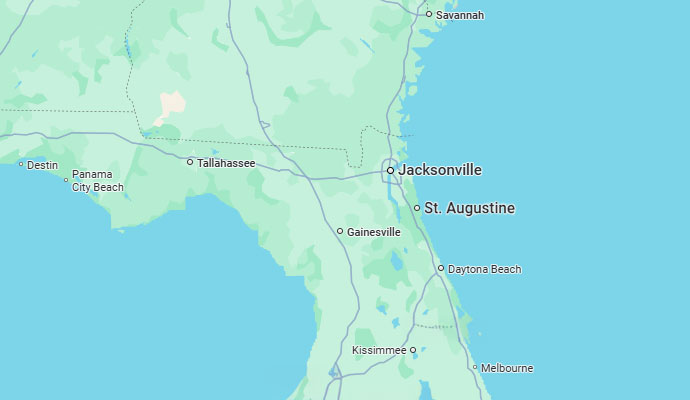
Wagmore Garage Doors Service Area
- Atlantic Beach
- Bartram Park
- Doctors Inlet
- Eagle Harbor
- Elkton
- Fleming Island
- Fleming Island Plantation
- Fruit Cove
- Green Cove Springs
- Hastings
- Jacksonville
- Jacksonville Beach
- Julington Creek Plantation
- Keystone Heights
- Lake Geneva
- Middleburg
- Neptune Beach
- Nocatee
- Oakleaf Plantation
- Orange Park
- Penney Farms
- Ponte Vedra
- Ponte Vedra Beach
- River Town
- Saint Augustine
- Saint Johns
- Sawgrass
- World Golf Village
