
GARAGE DOOR HEALTH | NORTHEAST FLORIDA
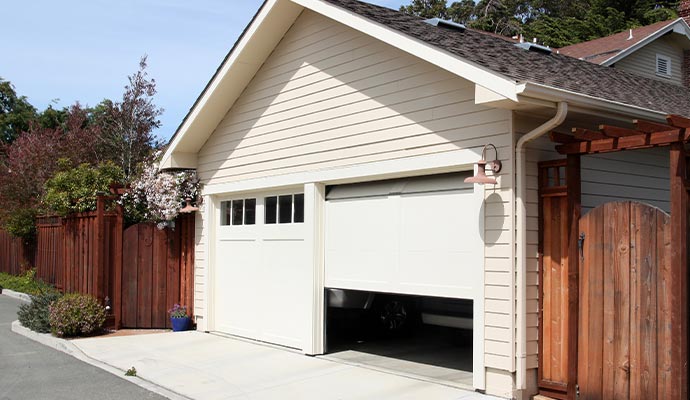
Are You Noise Blind to Your Garage Door?
There’s a phenomenon in pet deodorant commercials called “nose blind.” You love your dog so much, and you’ve been in the house so long, that you genuinely can’t smell what guests notice the moment they walk in.
Your garage door has the same problem. Except instead of smell, it’s sound.
The grinding starts subtly. Then the rattling joins in. Then the shudder on the way down. It happens so gradually, and you use the door so automatically, that your brain simply stops registering it. You become noise blind.
Wally, our unofficial garage door inspector, is not noise blind. Dogs never are. Every time that door groans, shudders, or bangs, he’s already looking at you like: “You know that’s not normal, right?”
904-584-4828Wally Hears It Even When You Don’t
Dogs notice changes in sound before humans do. If your dog has started reacting to the garage door — or if you’ve started not reacting to it — that’s the signal.
Why Noise Blindness Is So Dangerous for Garage Doors
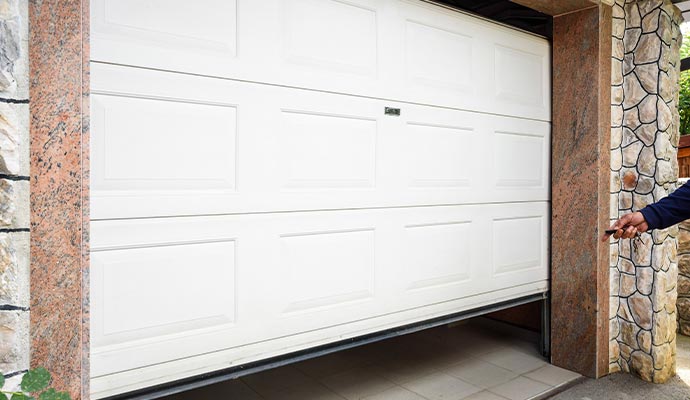
A noisy garage door isn’t just an annoyance. It’s a diagnostic report — one your door has been broadcasting for months while you stopped listening.
Garage doors are mechanical systems under significant tension and load. Every squeal, grind, and rattle is a component telling you something. When those sounds go unaddressed, small problems become expensive ones:
- Worn rollers that grind instead of roll are stressing the tracks, the brackets, and the opener motor with every cycle.
- Dry springs under constant tension develop surface rust. Rust is friction. Friction is fatigue. A fatigued spring doesn’t warn you before it snaps.
- Loose hardware - bolts, hinges, brackets — that rattle loose after thousands of cycles can fail suddenly, causing a panel to drop or a cable to jump.
- A door out of balance shudders because its springs are compensating unevenly. That uneven load is shortening the life of every component that touches the door.
None of these are catastrophic yet. But they’re all on their way there — quietly, while you tune them out.
The Noise Blind Translation Table
Here’s what your garage door is actually saying versus what most homeowners have decided to hear:
| The Sound | What You Think It Is | What It Actually Means |
|---|---|---|
| Low rumble or grinding | "Old house sounds" | Worn rollers on dry tracks |
| Rhythmic metal rattling | "Wind, probably" | Loose hardware — hinges, brackets, bolts |
| Squeak on the way up | "Needs WD-40" | Dry bearings — and WD-40 makes it worse |
| Loud bang or pop | "Something outside" | Spring breaking — call a pro immediately |
| Shuddering start or stop | "Old opener being old" | Spring tension off — door out of balance |
| Scraping along one side | "It always does that" | Track misalignment or bent track section |
| Slapping or flapping at top | "Wind getting in somewhere" | Failed weatherstripping — heat, pests, moisture |
Northeast Florida Makes It Worse
Noise blindness is a universal phenomenon, but our climate accelerates the underlying problems that cause the noise in the first place.
- Salt air and humidity attack unpainted metal surfaces and spring coils. Corrosion turns smooth metal into rough metal, and rough metal is loud metal.
- Heat extremes cause metal components to expand and contract with every season. Hinges and rollers that fit precisely in January are slightly looser by August.
- Hurricane season puts lateral stress on tracks and hardware that was designed for vertical load. A door that sounds a little off in June may not be sound enough to handle a tropical storm by September.
- UV exposure degrades rubber weatherstripping and vinyl seals. A flapping bottom seal or loose top seal doesn’t just let in heat and pests — it’s an early sign the door is no longer sealing evenly.
The noise your door is making right now didn’t start this summer. It started last summer, and the summer before that. Florida has been working on it for years.
The “Go Listen” Test
If you’ve become noise blind to your own door, here’s how to reset your ears and get an honest read on what’s actually happening.
| Step 1: Stand outside the garage. Let the door run through a full open-and-close cycle while you listen from the driveway — not inside the garage where you’ve tuned it out. |
| Step 2: Listen specifically for: grinding at the start of travel, rattling during movement, scraping along one side, shuddering at the top or bottom of travel, any bang or pop. |
| Step 3: Now ask yourself honestly: if this were a neighbor’s door, would you notice it? If yes — you’re no longer noise blind. You heard it. |
| Step 4: Disconnect the opener and lift the door manually to the halfway point. Let go. A properly balanced door stays put. If it drops or rises on its own, the spring tension is off and a technician needs to assess it. |
What You Can Address Yourself — and What You Shouldn’t
Once your ears are working again, some of what you find has an easy fix. Some of it does not.
Safe to DIY:
- Lubricate rollers, hinges, and spring coils with white lithium grease or a dedicated garage door lubricant spray. (Never WD-40 — it’s a solvent, not a lubricant, and it washes away the grease that’s already there.)
- Wipe debris from the inside of the tracks with a damp cloth. Dirty tracks cause rollers to skip or grind.
- Inspect and replace the bottom weatherseal if it’s cracked, brittle, or not contacting the floor evenly.
Stop and call a pro:
- If you see a gap in the torsion spring coil above the door — it’s broken. Don’t try to operate the door. Call immediately.
- If cables are frayed, kinked, or have jumped off the drum — these are under serious tension. This is not a DIY situation.
- If the door is off-track or hanging at an angle — do not force it. A misaligned door under spring tension can fall without warning.
- If the balance test fails and the door won’t stay at the midpoint — spring adjustment requires calibrated tools and training.
What a Real Maintenance Visit Does for a Noisy Door
If you’ve gone through the test above and realized your door needs professional attention, here’s what a legitimate tune-up addresses — and why the $29 “tune-up” ads you see online don’t actually deliver it.
- Balance and tension test — door disconnected from opener, held at midpoint, assessed for spring load and even tension.
- Spring inspection — wire gauge, coil count, rust, and stress fractures checked by hand, not from the driveway.
- Cable inspection — checked at the drum, along the full run, and at the bottom bracket.
- Roller condition — each roller spun by hand for wobble, stem wear, and flat spots. Nylon rollers reduce noise significantly over worn steel.
- Track alignment — gaps, bends, and plumb issues that cause scraping or binding.
- Hardware tightening — every hinge, bracket, and track bolt confirmed with tools, not eyeballed.
- Proper lubrication — the right product on the right components. White lithium on spring coils and hinges. Clean, dry tracks.
- Opener force and auto-reverse test — safety-critical. A door that doesn’t reverse under resistance is a hazard.
After a proper tune-up, your door should run quietly, smoothly, and with noticeably less effort on the opener. If it’s still loud after all of that, the noise isn’t a maintenance problem anymore — it’s a parts problem.
Wally’s Rule:
If you have to explain away a sound your garage door makes — "it always does that," "it’s the weather," "I think it’s just old" — you’ve gone noise blind. Wally noticed months ago. Now you have too.
Ready to Find Out What You've Been Tuning Out?
Text two photos of your garage door and opener to:
We'll send you a same-day assessment — no pressure, no visit required.








Garage Door Problems?
We turn "Uh-Oh" into
"ALL GOOD"
Is your garage door acting up? Don't worry, we've got you covered! Our expert technicians are here to diagnose and fix any garage door issues you may be experiencing. From broken springs to malfunctioning openers, the most likable techs you will ever meet will handle it all with precision and care.
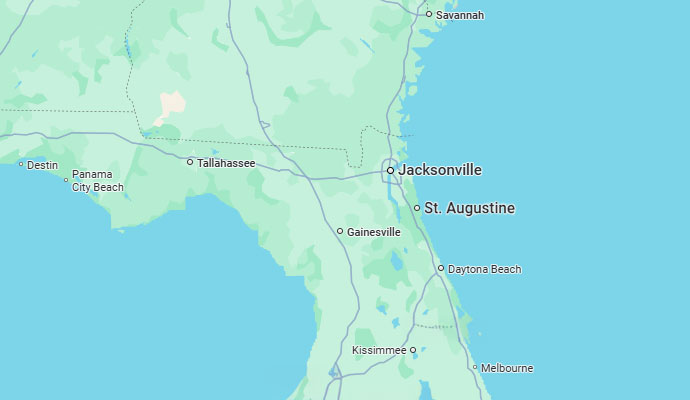
Service Area
- Atlantic Beach
- Bartram Park
- Doctors Inlet
- Eagle Harbor
- Elkton
- Fleming Island
- Fleming Island Plantation
- Fruit Cove
- Green Cove Springs
- Hastings
- Jacksonville
- Jacksonville Beach
- Julington Creek Plantation
- Keystone Heights
- Lake Geneva
- Middleburg
- Neptune Beach
- Nocatee
- Oakleaf Plantation
- Orange Park
- Palm Coast
- Penney Farms
- Ponte Vedra
- Ponte Vedra Beach
- River Town
- Saint Augustine
- Saint Johns
- Sawgrass
- World Golf Village
