
GARAGE DOOR SAFETY MONTH | MAY 2026
Is Your Garage Door Safe? May Is the Month to Find Out
Every May, the International Door Association marks Garage Door Safety Month — a national reminder that the largest moving mechanical object in most American homes deserves more than a glance on the way out the door.
Here in Northeast Florida, that reminder carries extra weight. Our climate puts garage door systems through a unique gauntlet: salt air accelerates corrosion on springs, cables, and hardware. Year-round humidity promotes rust. Intense UV exposure degrades weatherseals and plastic components faster than almost anywhere else in the country. And hurricane season — which officially begins June 1, just weeks after Safety Month ends — puts the structural integrity of your door to the ultimate test.
If your garage door has never had a professional safety inspection, or if it's been more than a year since your last one, May is the right time to fix that. WagMore's Safe & Sound 16-Point Diagnostic is designed exactly for this moment — and it's complimentary.
904-584-4828Why Garage Door Safety Matters More Than Most Homeowners Realize
The garage door is the most frequently used entry point in most homes — often seeing more daily cycles than the front door. And because it works reliably most of the time, it tends to get ignored until something fails dramatically.
But the failure modes of a garage door aren't just inconvenient. They can be genuinely dangerous.
The torsion spring above your door stores an enormous amount of mechanical energy. When a spring fails — and they all eventually will — it can snap with enough force to cause serious injury, damage your vehicle, or trap you inside your garage with no warning. Cables under load, rollers past their service life, and openers with faulty auto-reverse sensors all carry their own risk profiles.
A garage door that's out of balance puts excessive strain on the opener, shortens spring life, and can make the door unpredictable in its movement. A door with misaligned photo-eye sensors may not reverse if a child or pet is in its path. A door without a functioning emergency release could leave your family stranded during a power outage at the worst possible moment.
None of these are rare edge cases. Our technicians see them regularly — often in homes where the door appeared to be working just fine.
3 Safety Tests You Can Do Right Now
Before you call anyone, you can run three simple checks that take less than five minutes and require no tools. These don't replace a professional inspection, but they'll tell you immediately if your door has a safety issue that needs urgent attention.
| The Test | How to Do It | What Failure Means |
|---|---|---|
| Auto-Reverse Test | Place a 2x4 flat on the ground in the door's path. Press the close button. The door should reverse upon contact. | The opener's force setting is too high. A door that doesn't reverse is a crush hazard — call a technician. |
| Photo-Eye Sensor Test | While the door is closing, wave your hand through the beam about 6 inches off the ground. The door should immediately reverse. | Sensors are misaligned, dirty, or faulty. Don't use the door until corrected. |
| Balance Test | Pull the emergency release and manually lift the door to waist height. Let go. It should stay put — not rise or drop. | Spring tension is off. This puts excessive strain on your opener and is a sign the door system needs professional attention. |
| Visual Spring Check | Look at the torsion bar above your door. Any visible gap in the coil means a broken spring. | Do not attempt to operate the door. A broken spring makes the door extremely heavy and unpredictable — call for repair. |
Important: If your door fails the balance test or you see a gap in the torsion spring coil, do not attempt to operate the door or make any adjustments yourself. Springs are under extreme tension and are not DIY territory. Call WagMore.
What a Professional Safety Inspection Actually Covers
The three tests above are a starting point, not a finish line. A thorough professional inspection goes well beyond what a homeowner can safely assess from the floor of their garage.
WagMore's Safe & Sound 16-Point Diagnostic covers every component that contributes to safe, reliable door operation — not just the parts that typically break first.
| WagMore's Safe & Sound 16-Point Safety Inspection | |||
|---|---|---|---|
| 1 | Spring tension & balance | 2 | Spring wire gauge & condition |
| 3 | Cable integrity at drum & bracket | 4 | Cable fraying or kinking |
| 5 | Roller condition & stem wear | 6 | Hinge & bracket hardware tightness |
| 7 | Track alignment (plumb & level) | 8 | Track gap & debris clearance |
| 9 | Opener force & torque settings | 10 | Auto-reverse safety test |
| 11 | Photo-eye sensor alignment | 12 | Emergency release function |
| 13 | Bottom seal & weatherstripping | 14 | Lubrication of all moving parts |
| 15 | Panel & frame structural check | 16 | Opener antenna position & signal |
Each of these points involves hands-on testing, not visual inspection from a distance. The balance test requires disconnecting the opener and holding the door at mid-travel. The auto-reverse test uses an actual resistance check, not just a button press. Spring and cable inspection includes checking wire gauge, coil condition, and attachment hardware — the stuff that shows fatigue before a visible failure.
That's the difference between a real inspection and a technician looking for things to sell you.
The Northeast Florida Angle: Why Your Door Works Harder Here
A garage door system in Nocatee or Ponte Vedra faces different conditions than one in Phoenix or Chicago. The specific climate stressors here make regular inspection more important — not less.
- Salt Air & Corrosion: Homes within a few miles of the coast — Atlantic Beach, Neptune Beach, Ponte Vedra Beach, Vilano — deal with accelerated corrosion on all metal components. Springs, cables, hinges, and track hardware all corrode faster in salt air. We look for early-stage rust that homeowners can't see, and we check whether standard hardware should be upgraded to stainless or powder-coated alternatives.
- Humidity & Weatherseal Integrity: Florida's year-round humidity attacks rubber weatherseals, bottom seals, and the foam backing on insulated panels. A degraded bottom seal isn't just an energy issue — it's an open invitation for moisture, palmetto bugs, and mold. Our inspection includes a hands-on seal assessment, not just a quick look.
- Hurricane Preparedness: With hurricane season starting June 1, May is the ideal time to confirm your door is wind-load compliant and structurally sound. A door that can't stand up to high winds isn't just a door problem — it's a structural risk to your entire roof. We verify compliance and flag any concerns before storm season begins.
WagMore's Safe & Sound Inspection: No Pressure, No Upsell, Just the Truth
We know the reputation that some garage door companies have earned — show up for a "free inspection," spend five minutes looking at the spring from a safe distance, then write up a $1,400 quote for things you didn't need.
That's not how we operate.
Our technicians are paid to do thorough work — not to hit a sales number. When we complete a Safe & Sound 16-Point Diagnostic, we give you a straight answer on every point: what's in good shape, what's worth watching, and what actually needs attention. If your door is healthy, we'll tell you that and be on our way. If something needs service, we'll explain exactly what it is, why it matters, and what it will cost — with no pressure to decide on the spot.
The Safe & Sound Diagnostic is complimentary for all WagMore customers — no service fee, no obligation. It takes about 25-30 minutes and leaves you with a clear picture of exactly where your door stands heading into hurricane season.
The Best Time to Schedule Is Before You Need To
Garage door failures rarely announce themselves in advance. Springs snap without warning. Cables fray quietly. Rollers wear down gradually until the day they don't roll anymore. By the time the problem is visible, it's already a repair call.
May — Garage Door Safety Month, and the month before hurricane season — is the strategic window to get ahead of all of that. An inspection now means:
- Any developing issues are caught before they become emergencies
- Your door is verified wind-load compliant before storm season begins
- Your opener's safety features — auto-reverse, photo-eyes, emergency release — are confirmed functional
- You head into summer with a door you know you can count on
Scheduling is easy. Call us or visit WagMoreGarageDoors.com to book your Safe & Sound Diagnostic. We serve Duval and St. Johns County — from Jacksonville Beach and Neptune Beach to Nocatee, World Golf Village, Ponte Vedra, Palencia, St. Augustine, Fleming Island, and everywhere in between.
904-584-4828Schedule Your Safe & Sound Diagnostic
May is Garage Door Safety Month — make sure your door passes the test.
Serving Nocatee • Ponte Vedra • World Golf Village • St. Augustine •
Fleming Island • Palencia • Jacksonville & all of Duval and St. Johns
County







Garage Door Problems?
We turn "Uh-Oh" into
"ALL GOOD"
Is your garage door acting up? Don't worry, we've got you covered! Our expert technicians are here to diagnose and fix any garage door issues you may be experiencing. From broken springs to malfunctioning openers, the most likable techs you will ever meet will handle it all with precision and care.
Service Area
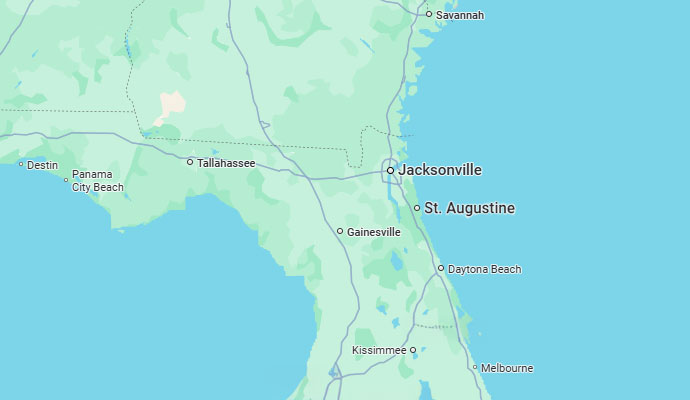
- Atlantic Beach
- Bartram Park
- Doctors Inlet
- Eagle Harbor
- Elkton
- Fleming Island
- Fleming Island Plantation
- Fruit Cove
- Green Cove Springs
- Hastings
- Jacksonville
- Jacksonville Beach
- Julington Creek Plantation
- Keystone Heights
- Lake Geneva
- Middleburg
- Neptune Beach
- Nocatee
- Oakleaf Plantation
- Orange Park
- Palm Coast
- Penney Farms
- Ponte Vedra
- Ponte Vedra Beach
- River Town
- Saint Augustine
- Saint Johns
- Sawgrass
- World Golf Village
