
How Often Should You Have Your Garage Door Serviced?
Posted by WagMore Garage Doors | Northeast Florida
Your garage door opens and closes thousands of times a year. Most homeowners never think about it until something breaks — and by then, a routine maintenance visit that would have cost a couple hundred dollars has turned into an emergency repair bill that's two or three times that.
So how often does a garage door actually need to be serviced?
The short answer: once a year for a professional tune-up, with a few quick checks you can do yourself in between. The longer answer depends on how hard your door works, what it's made of, and what our Northeast Florida climate is doing to it when you're not paying attention.
904-584-4828
The One-Year Rule — and Why It Matters Here
Annual professional service is the standard recommendation across the industry — and it's the right baseline for most Northeast Florida homes. One tune-up per year keeps all the moving parts lubricated, catches hardware that's working loose, and gives a trained technician a chance to spot the early warning signs that are invisible to the naked eye.
But "annual" is a minimum, not a ceiling. A few factors push the service frequency higher for homes in our area:
Salt Air and Humidity
If you live in Ponte Vedra Beach, Vilano Beach, or anywhere within a few miles of the coast, salt air is quietly attacking your garage door hardware year-round. Springs corrode faster. Cable sheaths degrade. Hardware that would last a decade inland may show meaningful wear in four or five years. Coastal homeowners should seriously consider twice-yearly service — and should prioritize stainless or corrosion-resistant hardware when components are replaced.
Even inland communities — Nocatee, World Golf Village, Murabella — deal with year-round humidity that accelerates surface rust on springs and rollers. Our climate is harder on garage door hardware than most of the country. That's just the reality of living in Northeast Florida.
Door Usage
A spring is rated in cycles — one cycle equals one open and one close. A standard spring is rated for 10,000 cycles. If your household runs the door twice a day, that's roughly 730 cycles per year. If you're running it six, eight, or ten times a day — multiple cars, kids coming and going, work vehicles — you're chewing through cycles at three to five times that rate.
Heavy-use households should plan on service every six months. It's not an upsell — it's math.
Door Age and Construction
A newer triple-layer insulated door with high-cycle springs and quality hardware doesn't need attention as often as a 15-year-old builder-grade door with original springs and steel rollers. If your door was installed before 2010 and has never been professionally serviced, you are overdue — regardless of how it looks or sounds.
The Florida Climate Factor
Northeast Florida's combination of salt air, year-round humidity, and wide temperature swings creates conditions that shorten hardware lifespan faster than most of the country. What works on a 3-year service schedule in the Midwest may need attention every 12-18 months here. When in doubt, schedule annual service — and bump to twice-yearly if you're coastal or a heavy user.
What a Professional Service Visit Actually Includes
This matters because "service" means different things from different companies. A legitimate tune-up isn't a technician spraying lubricant and writing up a parts quote. It's a systematic inspection of every component in the system, documented honestly, with recommendations that prioritize your actual needs.
Here's what a proper WagMore service visit covers:
- Balance and tension test: door disconnected from opener, held at mid-point. A properly balanced door stays put. If it drifts up or drops, the spring tension needs adjustment.
- Spring inspection: wire gauge, coil count, condition, and signs of fatigue, rust, or stress fractures assessed. Not a glance from the driveway.
- Cable inspection: frayed or kinked lift cables are a serious safety issue. Full-length check at the drum, along the cable, and at the bottom bracket attachment.
- Roller inspection: each roller spun by hand, checked for wobble, stem wear, and surface damage. The right roller grade depends on your door's weight.
- Hardware tightening: hinges, brackets, and track bolts vibrate loose over thousands of cycles. Checked with proper tools, not eyeballed.
- Track alignment: gaps, bends, and plumb issues cause binding, premature wear, and opener strain.
- Opener force and limit settings: auto-reverse sensitivity tested. A door that doesn't reverse under resistance is a safety hazard.
- Weatherseal and bottom seal: cracked or compressed seals let in water, pests, and Florida humidity.
- Lubrication: the right product on the right component. White lithium grease on springs and hinges; not WD-40, not a general spray-down.
That's the Safe & Sound 16-point inspection included with every WagMore service visit — at no additional charge. If something needs attention, we tell you what it is, why it matters, and what it costs. Honestly.
What You Can Do Between Visits
Annual professional service is the foundation, but there are a few things homeowners can do on their own to keep the door healthy between visits. None of these require tools or expertise — just a few minutes and a set of eyes.
Lubricate Every Six Months
Twice-yearly lubrication is the single most impactful DIY maintenance task. Use white lithium grease or a dedicated garage door lubricant spray (3-IN-ONE Garage Door Lube is the standard recommendation). Apply a thin coat to the spring coils, roller bearings, and hinge pivot points.
Two things to get right: don't lubricate the tracks (grease in the tracks collects debris and causes rollers to slip), and don't use WD-40 (it's a solvent and water displacer, not a lubricant — it evaporates quickly and washes away the grease that was doing its job).
Do a Monthly Visual Check
You don't need to inspect every component every month — just keep your eyes open. Look for:
- Any gap in the torsion spring coil above the door (a 2-inch gap means it's snapped)
- Cables that look frayed, kinked, or sitting at an unusual angle
- Rollers that are wobbling, cracked, or noisy
- Bottom seal that's cracking, flaking, or no longer touching the floor evenly
- Daylight visible under the door when it's closed
None of these things require you to touch anything. If you spot a problem, call a technician.
Test the Auto-Reverse
Once a month, place a 2x4 flat on the ground under the center of the door and trigger it to close. The door should reverse immediately when it contacts the board. If it doesn't, that's a safety issue that needs attention right away — an auto-reverse that isn't functioning correctly is a hazard to children, pets, and anyone who might be near the door.
Listen
Your door communicates. A grinding sound from the rollers, a squeal from the springs, a clunk at the top or bottom of travel — these aren't just noise. They're the door telling you something is working harder than it should. A door that sounded fine six months ago and now sounds rough has changed. That change is worth a service call.
Quick DIY Maintenance Schedule
- Monthly: Visual check for spring gaps, cable condition, bottom seal, and roller wobble. Test auto-reverse.
- Every 6 months: Lubricate springs, roller bearings, and hinge pivot points with white lithium grease.
- Annually (minimum): Professional service visit — balance test, full hardware inspection, opener calibration, weatherseal check.
- Every 6 months (coastal/heavy use): Move to twice-yearly professional visits.
DIY VS Professional: What You Can Handle and What You Can't
This is worth being clear about, because garage door service has a real safety line.
| Task | DIY (Homeowner) | Professional Tech |
|---|---|---|
| Lubricate springs & rollers | ✓ Twice a year | ✓ Included in tune-up |
| Visual spring inspection | ✓ Monthly glance | ✓ Full wire/coil assessment |
| Balance test | ✗ Requires disconnect | ✓ Every visit |
| Cable inspection | ✓ Visual only | ✓ Full length + drum check |
| Opener force/limit test | ✗ Needs calibration tools | ✓ Every visit |
| Hardware tightening | ✓ With basic tools | ✓ Every visit |
| Track alignment check | ✓ Visual/level | ✓ Measured & adjusted |
| Weatherseal inspection | ✓ Easy visual | ✓ Checked & replaced if needed |
| Roller replacement | ✓ Possible but tricky | ✓ Correct grade for door weight |
The hard rule: anything involving spring adjustment or replacement requires a professional. Torsion springs are under enormous tension — enough to cause serious injury if handled incorrectly. Lubrication and visual inspection are safe for homeowners. Winding, adjusting, or replacing springs are not.
Warning Signs That Mean Call Now, Not Later
Annual service is the right rhythm for a healthy door. But some signs mean the door shouldn't wait for its scheduled visit:
- The spring has a visible gap or the door suddenly feels extremely heavy when you try to lift it manually
- A cable is frayed, broken, or has jumped off the drum
- The door has come off the tracks or is hanging at an angle
- The opener runs but the door doesn't move — or moves jerkily and stops partway
- You heard a loud bang from the garage (broken spring sounds like a gunshot)
- The door reverses immediately when you try to close it and the sensors appear fine
These aren't "watch and wait" situations. A door with a broken spring or compromised cable is carrying dead weight on one side and can fail unpredictably. Call the same day.
The Math on Deferred Maintenance
Here's what deferred maintenance actually costs, in practical terms.
A comprehensive annual tune-up is a modest investment. It keeps everything lubricated, catches hardware that's working loose, and identifies a spring that's approaching the end of its cycle life before it snaps — ideally when your car is not trapped on the wrong side.
A broken spring that wasn't caught — one that snaps during use — is an emergency repair. Springs that fail in service sometimes do collateral damage: the door drops unevenly, stressing cables, rollers, and tracks simultaneously. What started as a $350-450 spring replacement becomes a more complicated job.
Rollers that are never inspected or replaced wear into the tracks. Tracks that are worn or bent cause opener strain, which shortens the opener's life. An opener that's working too hard against a poorly maintained door fails years earlier than it should.
None of this is meant to scare you — it's just the mechanics of a system that runs thousands of cycles a year and gets almost no attention from most homeowners. Annual service is cheap compared to the repairs it prevents.
The WagMore Approach
Our technicians are paid to do good work — not to hit a sales number. When we show up for a service visit, we go through the full 16-point inspection because that's what the job requires. If something needs attention, we tell you what it is and what it costs, honestly, without pressure. If it can wait, we'll tell you that too.
The Bottom Line
One professional service visit per year is the baseline for a well-maintained garage door in Northeast Florida. Bump that to twice a year if you're within a few miles of the coast or run the door heavily. In between, keep up with twice-yearly lubrication and a monthly visual check.
It's not complicated — and it's not expensive. The door that gets looked at once a year runs quieter, lasts longer, and doesn't leave you stranded at 7 AM when you need to be somewhere.
If your door hasn't been serviced this year — or if you can't remember the last time it was — we'd be glad to take a look. Give us a call or text us two photos from the driveway and we'll tell you exactly what your door needs.
Ready to Schedule a Tune-Up?
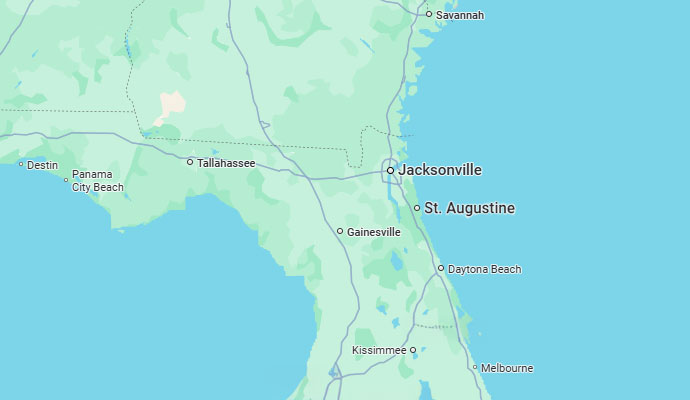
WagMore Garage Doors serves Nocatee, World Golf Village, Ponte Vedra, St. Augustine, St. Johns, Fleming Island, and all of Duval and St. Johns County.
Same-day service on most repairs. Honest pricing. No upsells.
Proudly serving St. Johns and Duval County homeowners — Nocatee ·
Ponte Vedra Beach · World Golf Village · Palencia · Fleming Island ·
St. Augustine · Murabella · King & Bear








Garage Door Problems?
We turn "Uh-Oh" into
"ALL GOOD"
Is your garage door acting up? Don't worry, we've got you covered! Our expert technicians are here to diagnose and fix any garage door issues you may be experiencing. From broken springs to malfunctioning openers, the most likable techs you will ever meet will handle it all with precision and care.
Service Area
- Atlantic Beach
- Bartram Park
- Doctors Inlet
- Eagle Harbor
- Elkton
- Fleming Island
- Fleming Island Plantation
- Fruit Cove
- Green Cove Springs
- Hastings
- Jacksonville
- Jacksonville Beach
- Julington Creek Plantation
- Keystone Heights
- Lake Geneva
- Middleburg
- Neptune Beach
- Nocatee
- Oakleaf Plantation
- Orange Park
- Palm Coast
- Penney Farms
- Ponte Vedra
- Ponte Vedra Beach
- River Town
- Saint Augustine
- Saint Johns
- Sawgrass
- test-Fleming Island
- test-Palm Coast
- test-World Golf Village
- World Golf Village
