
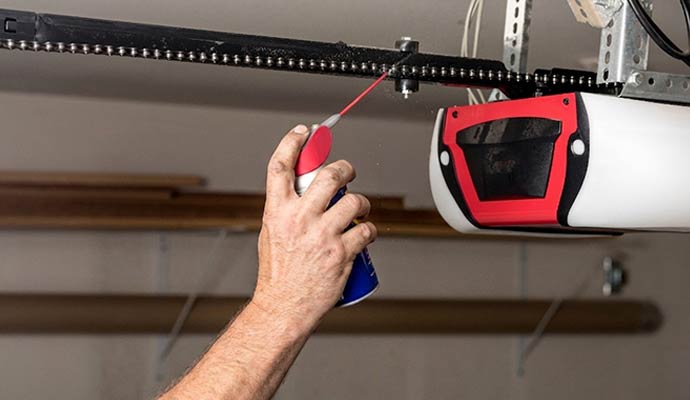
The Right Lube for the Job: What to Use (and What to Avoid) on Your Garage Door
Your garage door has a lot of moving parts — and if you've ever heard that grinding, squealing protest on a cold morning, you already know they don't stay happy on their own. A little lubrication goes a long way. But here's the thing most homeowners get wrong: using the wrong product can cause more damage than using nothing at all.
Wally knows the difference. Here's what you need to know.
The Golden Rule of Garage Door Lubrication
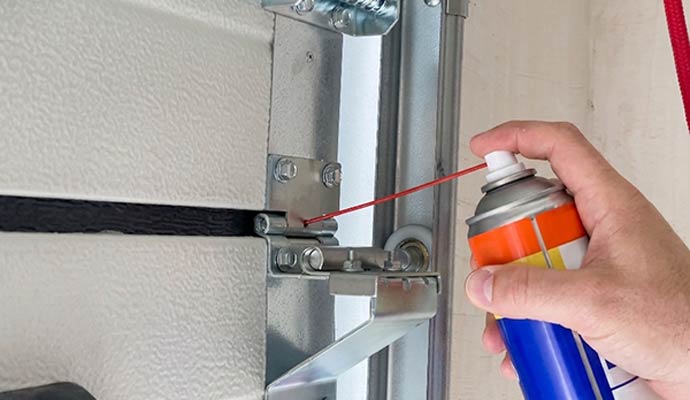
One product dominates the conversation for good reason: white lithium grease or a dedicated garage door lubricant spray (like 3-IN-ONE Garage Door Lube) is what you want for almost every moving metal part on your door. It's thick enough to stay in place, it doesn't attract dirt the way light oils do, and it handles temperature swings well — which matters here in Northeast Florida.
WD-40 is not a lubricant. This one trips up almost everyone. WD-40 is a water displacer and light solvent. It'll loosen a rusty hinge in a pinch, but it evaporates quickly, leaves parts dry, and actually washes away grease that was already doing its job. Keep it off your garage door hardware.
Springs: Lubricate, Don't Skip This One
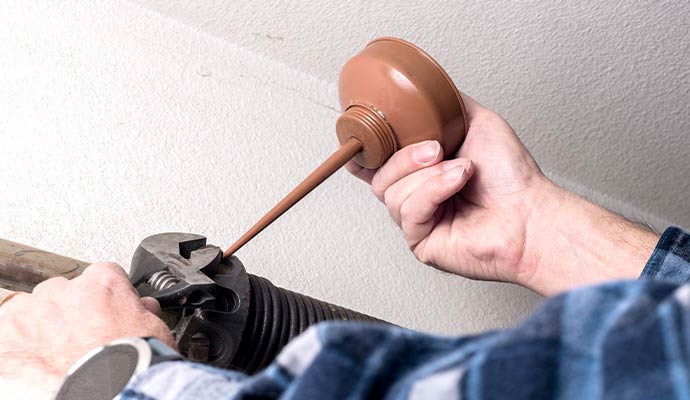
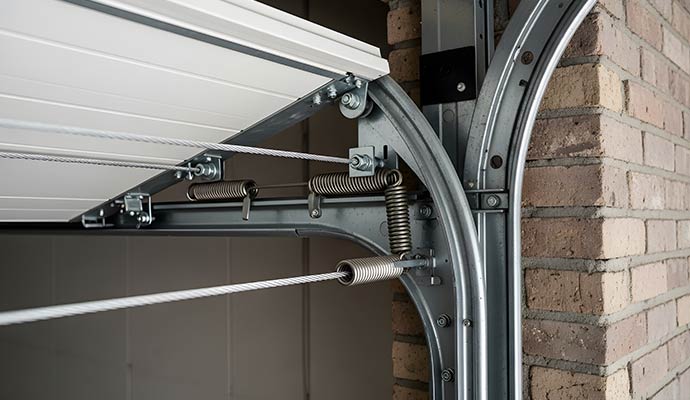
Torsion springs (the horizontal spring above your door) and extension springs (the ones running along the sides) both need lubrication to prevent rust and reduce the stress of constant tension cycling.
Apply a thin coat of white lithium grease or garage door lubricant spray along the coils — not the entire spring, just the coil gaps where friction actually happens. Wipe off any excess.
DIY Tip: Never attempt to adjust or replace springs yourself. They're under extreme tension and can cause serious injury. Lubrication is safe to do on your own; spring repair is not.
Rollers: The Type Matters
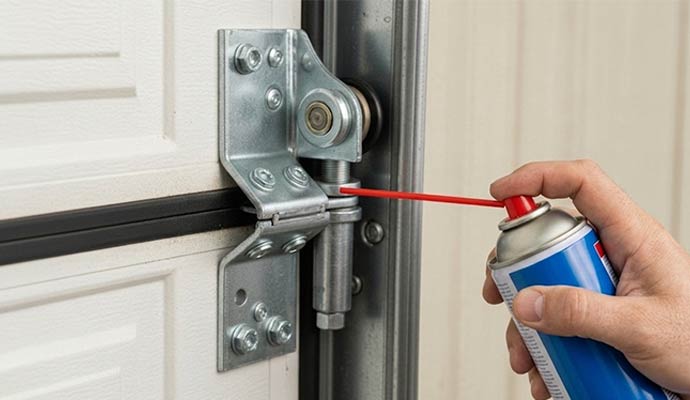
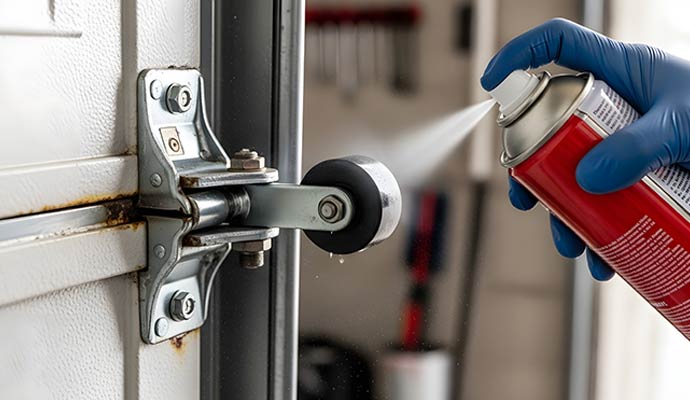
If you have steel rollers, they have exposed bearings that need lubrication. Apply white lithium grease directly to the bearings — not the roller itself, and not the track it runs in.
If you have nylon rollers, the bearings still need lubrication if they're unsealed. But the nylon wheel itself? Leave it dry. Grease on nylon rollers attracts grit and debris, which grinds against the track and causes wear faster than no lube at all.
DIY Tip: While you're at it, inspect each roller for cracks or wobble. A worn roller is louder, harder on your opener, and eventually causes track misalignment. Replacing a set of rollers is one of the more cost-effective maintenance moves you can make.
Tracks: This One Surprises People — Don't Lubricate Them
The tracks themselves should stay clean and dry. Lubricating the tracks seems logical — the rollers run inside them, after all — but grease in the tracks collects dust, dirt, and debris and turns into a grinding paste over time. It also causes rollers to slip rather than roll cleanly.
What you should do is clean the tracks with a damp rag or a little rubbing alcohol on a cloth to remove built-up grime, then leave them dry.
DIY Tip: Use a level to check that your tracks are plumb (vertically level) and even with each other. Tracks that have shifted even slightly can cause dragging, uneven wear, and opener strain.
Hinges and Bearing Plates
Metal hinges get a small amount of white lithium grease where the hinge pin meets the bracket — just the pivot points. The same goes for the bearing plates at each end of the torsion bar. A little goes a long way; over-applying just creates a mess that attracts dirt.
DIY Tip: Listen while you lubricate. Run the door up and down after greasing each section. Most squeaks and grinding sounds will tell you exactly where the problem is.
How Often Should You Do This?
Twice a year is the standard recommendation — once before summer heat and humidity kick in, and once heading into winter. If your door is used heavily (multiple times a day), quarterly lubrication is worth the ten minutes it takes.
When It's More Than Lube
If lubricating your rollers, springs, and hinges doesn't quiet things down, the noise isn't a maintenance problem — it's a parts problem. Worn rollers, bent tracks, or a spring that's reached the end of its cycle count need a technician, not a spray can.
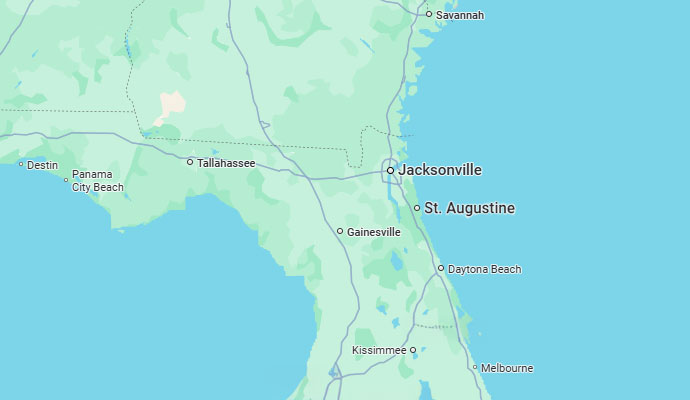
That's where WagMore comes in. We serve homeowners across Duval and St. Johns counties — and Wally always knows when something sounds off.








Garage Door Problems?
We turn "Uh-Oh" into
"ALL GOOD"
Is your garage door acting up? Don't worry, we've got you covered! Our expert technicians are here to diagnose and fix any garage door issues you may be experiencing. From broken springs to malfunctioning openers, the most likable techs you will ever meet will handle it all with precision and care.
Service Area
- Atlantic Beach
- Bartram Park
- Doctors Inlet
- Eagle Harbor
- Elkton
- Fleming Island
- Fleming Island Plantation
- Fruit Cove
- Green Cove Springs
- Hastings
- Jacksonville
- Jacksonville Beach
- Julington Creek Plantation
- Keystone Heights
- Lake Geneva
- Middleburg
- Neptune Beach
- Nocatee
- Oakleaf Plantation
- Orange Park
- Palm Coast
- Penney Farms
- Ponte Vedra
- Ponte Vedra Beach
- River Town
- Saint Augustine
- Saint Johns
- Sawgrass
- World Golf Village
