
GARAGE DOOR OPENERS | NORTHEAST FLORIDA
Does My Garage Door Opener Need to Be Replaced? Signs, Costs, and What to Do Next
Your opener runs thousands of cycles a year. Here's how to tell when repair isn't enough — and what a replacement actually costs in Duval and St. Johns County.
904-584-4828Quick Answer: Signs You Need a New Garage Door Opener
- The opener is 15+ years old and showing repeated errors or sluggish performance
- It lacks modern safety features: battery backup, auto-reverse, rolling code security
- You recently replaced your door with a heavier insulated model and kept the old opener
- The motor hums but the door doesn't move, or it reverses without obstruction
- Repairs are adding up — more than one service call in 12 months is a signal
If two or more of these apply, replacement is almost always more cost-effective than continuing to repair.
How Long Should a Garage Door Opener Last?
The industry standard lifespan for a residential garage door opener is 10 to 15 years. That range assumes average residential use — roughly 3 to 5 cycles per day — and routine maintenance. In Northeast Florida, the combination of humidity, heat, and frequent use during storm season can compress that timeline.
After the 10-year mark, you're not necessarily looking at immediate failure. But you are looking at an opener that lacks the safety features, smart technology, and motor efficiency of current models — and one that's increasingly likely to leave you stranded at an inconvenient moment.
7 Signs Your Opener Needs to Be Replaced
1. Age: 15 Years or Older
If your opener was installed before 2010, it predates rolling code security, battery backup systems, and smartphone integration — features that are now standard on entry-level models. An opener in this age range may still function, but it's operating without modern safety infrastructure and likely has a motor that's working harder than it should.
2. It Doesn't Have Battery Backup
This matters specifically in Northeast Florida. Summer storms, tropical systems, and hurricane season mean power outages are a regular reality — not a theoretical one.
Modern openers include battery backup that runs the door for dozens of cycles on a single charge when the power goes out. If yours doesn't have it, you're manually disconnecting and lifting the door every time the power cuts.
3. Your New Door Is Heavier Than Your Old One
This is the most underestimated mismatch we see throughout Nocatee, World Golf Village, and St. Johns County. Homeowners replace a builder-grade single-layer door with an insulated double- or triple-layer door — and keep the old opener to save money. A triple-layer insulated door can weigh 175 to 225 lbs. An opener that was rated for a 130-lb single-layer door will strain against that load from day one, accelerating motor wear and stressing your new door's springs and hardware. The savings on opener installation disappear in the first repair call.
4. It Uses Fixed-Code Technology
Older openers (generally pre-1996, but some budget models were still using it into the 2000s) use a fixed code to communicate with the remote. That code can be captured and cloned. Rolling code technology — now standard on all modern openers — generates a new encrypted code every time the remote is used, making it essentially impossible to clone. If your opener predates rolling code, it's a security risk as well as an aging appliance.
5. Frequent Reversals or Failure to Close
An opener that reverses without obstruction, refuses to close completely, or requires multiple button presses is telling you something. Sometimes this is a sensor alignment issue or a force adjustment — legitimate repair territory. But if the problem recurs after a technician visit, or if it's accompanied by other symptoms, the logic board or motor may be failing. Recurring functional problems in an older opener typically don't resolve permanently through repair.
6. Loud Operation That's Getting Worse
A rattling, grinding, or banging opener isn't just an annoyance — it's mechanical strain made audible. Some noise is attributable to the drive system (chain drives are inherently louder than belt or wall-mount systems), but a sudden increase in operating noise, or noise that continues after lubrication and hardware tightening, often indicates drive component wear or a motor under stress.
7. Repairs Are Stacking Up
One repair in several years is normal maintenance. Two or more repairs in a 12-month period — especially on an opener that's already 10+ years old — is a signal that the math has shifted. You're spending money to extend the life of a unit that is approaching the end of its useful service. That money is almost always better directed toward a replacement that will run reliably for the next 15 years.
Don't Confuse These: Repair vs. Replace
Not every opener problem means replacement. A sensor alignment issue, a dead remote battery, a tripped circuit, or a keypad that's lost its programming are all repair-level fixes — often DIY or a single service call. The question becomes replacement when: the opener is old, the problems repeat after repair, or the door system has changed in a way the opener wasn't built to handle.
What Does Opener Replacement Cost in Northeast Florida?
Opener pricing in the Jacksonville and St. Johns County market spans a wide range depending on drive type and features. Here's a practical breakdown:
| Drive Type | Installed Price Range | Noise Level | Best For |
|---|---|---|---|
| Chain Drive | $650 – $850 | Louder | Detached garages, budget-conscious |
| Belt Drive | $750 – $1,000 | Quiet | Attached garages, bedrooms nearby |
| Wall-Mount (Jackshaft) | $1,000 – $1,500 | Very quiet | High ceilings, modern builds |
| Smart Opener w/ Battery Backup | $900 – $1,300 | Varies | Most NE Florida homes — recommended |
The most important factor beyond drive type: make sure the opener's horsepower rating matches your door's weight. A 1/2 HP unit is typically sufficient for a light single-layer door. Double-layer doors call for 3/4 HP as a minimum. Triple-layer and oversized doors may require 3/4 or 1-1/4 HP. An undersized opener running a heavy door is one of the most common causes of premature failure we see throughout Nocatee and WGV.
What Modern Openers Include That Yours Probably Doesn't
If your opener was installed before 2015, you're operating without features that are now standard on entry-level models:
- Battery backup: keeps your door running through power outages. Essential in Northeast Florida storm season.
- Rolling code security: a new encrypted code on every use. Fixed-code openers are a security vulnerability.
- Smartphone integration: open, close, and monitor from your phone via myQ or equivalent apps. Know whether your door is closed from anywhere.
- Auto-reverse sensors: stops and reverses the door if an obstruction is detected. Safety-critical and required on all new installations.
- Soft-start/soft-stop motors: reduces stress on springs and hardware at the start and end of each cycle, extending the life of your entire door system.
Should You Replace the Opener When You Replace the Door?
If you're already replacing the door, the answer is usually yes — especially if your opener is more than 10 years old. Here's why the timing matters:
- A new installation visit covers both. One labor charge instead of two separate service calls.
- The new door and opener are calibrated together from day one. Force settings, limit settings, and hardware alignment are all done as a system.
- Manufacturer warranties on many doors require a compatible, properly rated opener. Pairing a new door with an underpowered or incompatible opener can void coverage.
- An insulated replacement door is almost certainly heavier than the builder-grade door it's replacing. Your old opener may not have the horsepower to handle it properly.
If your current opener is recent — under 7 years old and functioning correctly — and the new door's weight is compatible, there may be no reason to replace it. A technician can assess compatibility when they measure for your new door.
Frequently Asked Questions
How do I know if my garage door opener is too old?
Can a garage door opener be repaired instead of replaced?
What happens if I keep my old opener with a new garage door?
Do I need a permit to replace a garage door opener in Florida?
What is the best garage door opener for Northeast Florida?
How long does opener installation take?
Not Sure If Your Opener Needs Replacing?
Text two photos of your door and opener for a same-day assessment. No sales visit. No pressure.








Garage Door Problems?
We turn "Uh-Oh" into
"ALL GOOD"
Is your garage door acting up? Don't worry, we've got you covered! Our expert technicians are here to diagnose and fix any garage door issues you may be experiencing. From broken springs to malfunctioning openers, the most likable techs you will ever meet will handle it all with precision and care.
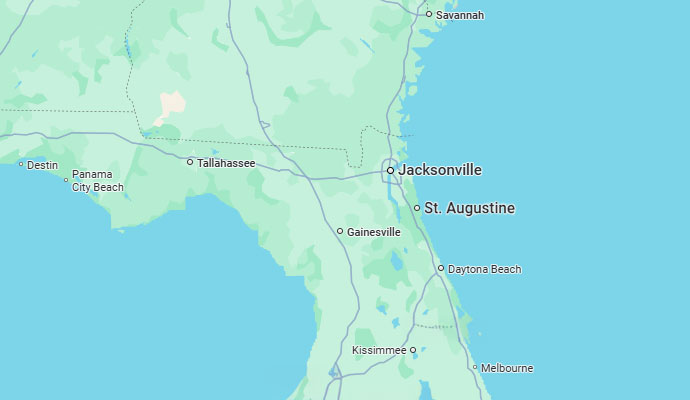
Wagmore Garage Doors Service Area
- Atlantic Beach
- Bartram Park
- Doctors Inlet
- Eagle Harbor
- Elkton
- Fleming Island
- Fleming Island Plantation
- Fruit Cove
- Green Cove Springs
- Hastings
- Jacksonville
- Jacksonville Beach
- Julington Creek Plantation
- Keystone Heights
- Lake Geneva
- Middleburg
- Neptune Beach
- Nocatee
- Oakleaf Plantation
- Orange Park
- Palm Coast
- Penney Farms
- Ponte Vedra
- Ponte Vedra Beach
- River Town
- Saint Augustine
- Saint Johns
- Sawgrass
- World Golf Village
