
Garage Door Opener Repair vs. Replacement: How to Know What You Actually Need Before You Call
WagMore Garage Doors | Serving Jacksonville, Nocatee, Ponte Vedra, St. Augustine & Northeast Florida
Your opener stopped working. Now you're staring at two options on a quote and wondering whether it's worth repairing something that might just fail again, or paying more upfront for a full replacement you might not need yet.
This is one of the more consequential decisions in garage door ownership — because getting it wrong costs you either way. Here's the honest framework for making it.
904-584-4828Quick Answer
Should I repair or replace my garage door opener?
If your opener is under 8 years old and a single component has failed (circuit board, capacitor, remote receiver), repair is usually the right call — $200–$450 for parts versus $650–$1,500 for full replacement. If the opener is over 8 years old, missing battery backup, or failing repeatedly, replacement is almost always more economical over 3–5 years. The decision hinges on age, failure type, and whether your door's weight is properly matched to the opener.
The Decision Framework: 5 Questions That Tell You What to Do
Question 1: How Old is the Opener?
Age is the most reliable single predictor of whether repair makes economic sense.
- Under 8 years old: Repair almost always makes sense unless the motor itself has failed.
- 8–10 years old: Depends on the failure type and whether it has battery backup. Run through the remaining questions.
- Over 10 years old: Replacement is usually the better investment. Parts for older openers are increasingly hard to source, and you're likely missing safety and convenience features that are now standard.
- Over 15 years old: Replace. The opener has typically exceeded its design life, and patching it is paying for borrowed time.
Question 2: What Exactly Failed?
Not all opener failures are equal. Some are cheap, reliable repairs. Others signal the motor is dying.
| What Failed | Lean Toward | Why |
|---|---|---|
| Remote / keypad not working | Repair (DIY likely) | Battery, reprogram, or receiver — rarely a hardware issue |
| Logic / circuit board | Repair if under 8 yrs | Board replacement: $200–$400 in parts; motor intact |
| Capacitor failure | Repair | Common, cheap fix — opener runs but won't start moving |
| Motor burned out | Replace | Motor replacement cost approaches new unit price |
| Stripped drive gear | Repair if under 8 yrs | Gear kit; reasonable repair on young opener |
| Repeated failures, same component | Replace | Pattern indicates the unit is in general decline |
| No battery backup (FL storm season) | Replace or add module | Battery backup now standard — worth upgrading before hurricane season |
| Opener undersized for door weight | Replace | A mismatched opener will keep failing and wear springs faster |
Question 3: Is Your Opener Matched to Your Door's Weight?
This is the question most homeowners don't know to ask, and it's one of the most important. Openers are rated by horsepower for a reason — heavier doors require more of it.
- Single-layer uninsulated door (100–130 lbs): ½ HP is typically sufficient.
- Double-layer door with polystyrene insulation (130–170 lbs): ¾ HP is the recommended minimum.
- Triple-layer polyurethane door (175–225+ lbs): ¾ HP to 1¼ HP depending on weight.
If you replaced your door with a heavier insulated model in the past few years and kept the original opener "to save money," there's a real chance the opener has been running above its rated capacity — and failing as a result. Repairing it without correcting the mismatch means you'll be back in the same position in 18 months. This is one of the most common patterns we see in Nocatee and World Golf Village, where newer homes with triple-layer doors sometimes still have builder-grade openers.
Wally's Take
An opener that's been straining against a door it's too small for has been working itself to death. Repairing the symptom without fixing the cause is like changing the oil in a car that's been running without coolant. The next failure is already in motion.
Question 4: Does It Have Battery Backup?
In Northeast Florida, this is not a luxury question — it's a preparedness question. Since July 2019, UL 325 standards have required battery backup on all new opener installations. Any opener installed before that date almost certainly doesn't have it.
During a power outage — and Florida averages meaningful storm-related outages every year — an opener without battery backup means manual operation every time the power goes out. A modern LiftMaster or Chamberlain opener with battery backup switches automatically, gives you dozens of cycles on a single charge, and requires zero action from you.
If you're already facing a repair decision on a pre-2019 opener, the cost difference between repairing the old unit and installing a new one with battery backup is often narrower than homeowners expect — and the operational difference is significant.
Question 5: What Are You Actually Comparing on Price?
The repair-vs-replace math only works if you're comparing total cost over the same time horizon — not just today's invoice.
A $400 board repair on an 11-year-old opener looks cheaper than a $1,000 replacement today. But if that opener fails again in 18 months, you've spent $400 plus another service call plus whatever the next repair costs — and you're still running an old opener without battery backup or smart features. At some point the math flips. A technician who gives you an honest answer will tell you where that point is for your specific unit.
What a New Opener Actually Includes in 2025
If you haven't replaced an opener in the last 5 years, the current baseline has moved significantly. Today's standard-tier LiftMaster and Chamberlain openers include:
- Battery backup — automatic switch to battery power during outages, dozens of cycles per charge.
- Rolling code security — a new encrypted code generated on every use; eliminates the vulnerability of fixed-code systems.
- Smartphone integration via myQ — open, close, and monitor from anywhere; receive real-time alerts.
- Auto-reverse sensors — stops and reverses if anything crosses the door's path (required safety standard).
- Soft-start/soft-stop motors — reduces stress on springs and hardware at cycle start, extending component life.
These aren't premium features — they're the current standard. If your existing opener lacks them, you're running below the current safety and convenience baseline for every cycle until it's replaced.
The Honest Case for Repair
Not every opener situation calls for replacement. If your opener is under 7 years old, has battery backup, is properly matched to your door's weight, and a single inexpensive component has failed — repair is the right call. There's no reason to spend $900–$1,300 on a new unit when a $450 repair puts you back to full function.
A good technician will tell you this. A technician working on commission won't — their incentive is the higher-ticket replacement. At WagMore, our technicians are salaried and bonus on quality, not ticket size. When repair is the right answer, that's what we'll recommend.
904-584-4828Frequently Asked Questions
How long do garage door openers last?
What are the signs my garage door opener is failing?
Is it worth repairing an old garage door opener?
What garage door opener brands does WagMore install?
Can I keep my current opener when I get a new garage door?
Not Sure What Your Opener Actually Needs?
WagMore's complimentary Safe & Sound 16-point inspection includes a full opener assessment — drive type, horsepower match, battery backup status, and safety sensor function. Get an honest answer before you spend anything.






Garage Door Problems?
We turn "Uh-Oh" into
"ALL GOOD"
Is your garage door acting up? Don't worry, we've got you covered! Our expert technicians are here to diagnose and fix any garage door issues you may be experiencing. From broken springs to malfunctioning openers, the most likable techs you will ever meet will handle it all with precision and care.
Service Area
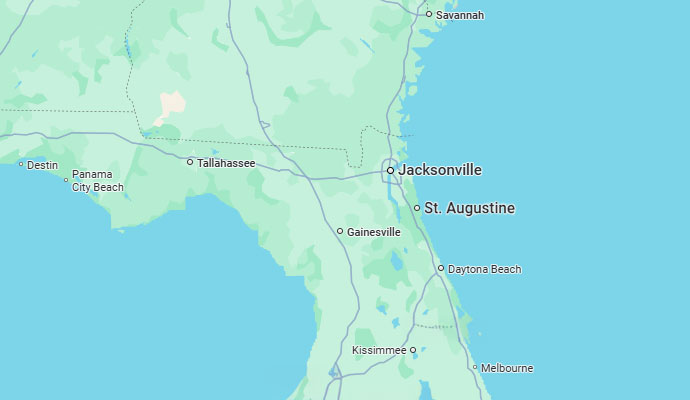
- Atlantic Beach
- Bartram Park
- Doctors Inlet
- Eagle Harbor
- Elkton
- Fleming Island
- Fleming Island Plantation
- Fruit Cove
- Green Cove Springs
- Hastings
- Jacksonville
- Jacksonville Beach
- Julington Creek Plantation
- Keystone Heights
- Lake Geneva
- Middleburg
- Neptune Beach
- Nocatee
- Oakleaf Plantation
- Orange Park
- Palm Coast
- Penney Farms
- Ponte Vedra
- Ponte Vedra Beach
- River Town
- Saint Augustine
- Saint Johns
- Sawgrass
- World Golf Village
