
WAGMORE GARAGE DOORS | NORTHEAST FLORIDA
904-584-4828
Why Won't My Garage Door Close? A Photo-Eye & Auto-Reverse Troubleshooting Guide
You press the button. The door starts down… and stops. Or it closes two feet and shoots right back up. It's one of the most common calls we get across Duval and St. Johns County — and most of the time, it's not the motor, the springs, or anything expensive. It's a twenty-dollar safety sensor with a spider web on it.
QUICK ANSWER
If your garage door won't close, starts to close and reverses, or closes only partway, the most likely cause is the photo-eye safety sensors near the bottom of the tracks — misaligned, dirty, or blocked. Check those first. If the sensors are clean, aligned, and unobstructed and the door still won't close, the issue is more likely a wall switch stuck in lock mode, a limit setting that's out of adjustment, or (less commonly) a spring or cable problem that needs a technician.
Why Does My Garage Door Start to Close Then Reverse?
This is the single most common version of the complaint, and it's almost always the photo-eye sensors doing exactly what they're designed to do: refusing to close the door because something is — or appears to be — in the way.
Every garage door opener made since the early 1990s includes two small sensors mounted a few inches off the ground on either side of the track, roughly six inches up. They shoot an invisible infrared beam across the opening. Break that beam while the door is closing, and the opener reverses the door back up as a safety measure — federal law has required this on residential openers since 1993, following a series of child entrapment deaths in the 1980s and early '90s.
So when your door reverses partway down, the opener isn't malfunctioning. It's telling you it thinks something is in the doorway.
What Are Photo-Eye Sensors, and Why Do They Cause So Many Problems in Florida?
The sensors themselves rarely fail outright. What fails is the environment around them, and Northeast Florida's climate is uniquely hard on them:
- Spider webs and insects. Warm, humid garages are magnets for spiders, and a single strand of web across the lens is enough to trigger a false reversal.
- Condensation and humidity fogging. On humid mornings — which is most mornings here — moisture can cloud the lens enough to weaken the beam.
- Sun glare through an open garage door. Direct sunlight hitting the receiving sensor at a low afternoon angle can wash out the beam, especially on west-facing garages common in Nocatee and newer St. Johns County developments.
- Bumped alignment. A stray bike, a trash can, a bumper tap — any nudge to the sensor bracket throws off the alignment, even if the sensor looks fine.
Wally's Take
"I've knocked more than one of these sensors sideways just walking past with my tail. If your door's been fine for years and suddenly won't close, something moved it — check for a bump before you check for a bigger problem."
How Do I Fix Misaligned or Dirty Photo-Eye Sensors Myself?
This is a homeowner-safe, five-minute fix in almost every case:
- Locate both sensors — small boxes on metal brackets, one on each side of the track, about 6 inches off the floor.
- Wipe the lens on each sensor with a soft, dry cloth. Avoid glass cleaner or anything abrasive.
- Check for anything in the beam path — a broom, a storage bin, a pet bed, even a hanging cobweb between the two sensors.
- Look at the indicator lights. Most sensors have a small LED; a solid light usually means good alignment, while a flickering or off light usually means the beam is broken or the sensors are pointed at slightly different angles.
- Gently realign if needed. Loosen the wing nut or screw on the bracket, aim the sensor directly at its pair across the track, and snug it back down. Test by closing the door and watching for a smooth, full close.
If the door closes cleanly after this, you're done — no service call needed.
Why Won't My Garage Door Close With the Remote, But It Works Fine From the Wall Button?
This points away from the sensors and toward two other usual suspects:
The Wall Console Lock or Vacation Switch
Many wall-mounted consoles have a physical slide switch for "Lock" or "Vacation" mode, which disables all remotes and keypads while leaving the wall button active. It's easy to bump accidentally — a shelf, a rake handle, a curious kid. Slide it back to the unlocked position and test your remote again.
A Weak or Dying Remote Battery
If the wall button works instantly but the remote is sluggish or unresponsive from anywhere but point-blank range, suspect the battery before the opener itself. For a deeper dive on remote and keypad range issues — including how the wrong garage light bulb can cause wireless interference — see our companion post, "Your Garage Door Keypad Isn't Working."
Could a Limit Setting Be the Reason My Door Won't Close All the Way?
If your door closes partway and stops — without reversing, and without the sensors flashing — the down-limit setting on the opener itself may be out of adjustment. This tells the motor how far to travel before it thinks the door is fully closed. A limit set too short leaves a gap at the floor; a limit that's drifted can also cause the door to strain against the frame. Adjusting this requires locating the limit dial or button on the opener motor head and making small incremental changes is a quick fix for a technician on a standard service call.
When Is a Door That Won't Close a Sign of a Spring or Cable Problem, Not a Sensor Problem?
Stop and call a professional — don't keep testing the door — if you notice any of the following alongside the closing issue:
- A visible 2-inch gap in the torsion spring coil above the door
- A loud bang or firecracker-like pop from the garage before the problem started
- The door feels unusually heavy when lifted by hand, or won't stay up on its own
- A cable that looks frayed, kinked, or loose around the drum
- The door closes crookedly, or one side drops faster than the other
These are signs the door's counterbalance system — not the safety sensors — is compromised, and a door under that condition can drop unexpectedly. For more on how springs work and why they fail, see our companion post, "The Muscles of Your Home: Why Your Garage Door Springs Are Doing All the Heavy Lifting."
Troubleshooting Checklist: Work Through This Before You Call
- Wipe both photo-eye lenses clean and confirm nothing is blocking the beam
- Check for a bumped sensor bracket and realign if needed
- Slide the wall console lock/vacation switch to unlocked
- Swap the remote battery and retest
- Watch the door through a full open-and-close cycle for a partial-travel or crooked-close pattern
- If none of the above resolves it, or you see spring/cable warning signs, stop and call a technician
Frequently Asked Questions
Why does my garage door go down and then back up immediately?
Can I bypass or disconnect the photo-eye sensors to get my door to close?
Why does my garage door only close halfway?
Is it safe to manually close a garage door that won't close automatically?
How much does it cost to fix a garage door that won't close?
STILL WON'T CLOSE?
If you've worked through this list and your door still won't close all the way, text two photos to 904-584-4828 — one of the sensors and one of the door from the driveway — and we'll help you figure out what's going on, often before we even get to your house. Every WagMore visit includes our $0 Safe & Sound 16-point inspection, so you'll know exactly what's happening with your door, not just the part that's acting up today.
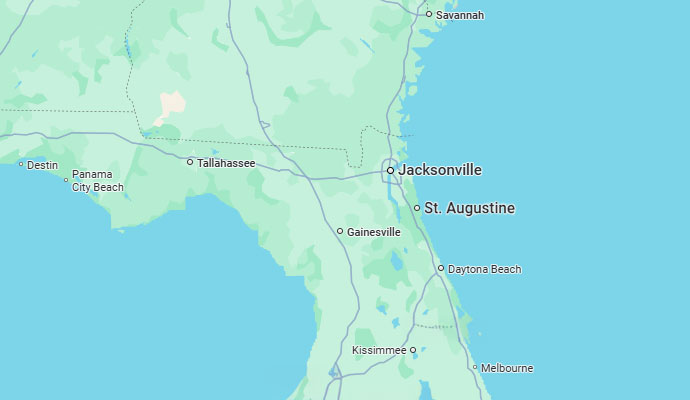
Serving Jacksonville, Nocatee, Ponte Vedra, St. Augustine, Fleming Island, Mandarin, World Golf Village, Palencia, and all of Duval and St. Johns County.








Garage Door Problems?
We turn "Uh-Oh" into
"ALL GOOD"
Is your garage door acting up? Don't worry, we've got you covered! Our expert technicians are here to diagnose and fix any garage door issues you may be experiencing. From broken springs to malfunctioning openers, the most likable techs you will ever meet will handle it all with precision and care.
Service Area
- Atlantic Beach
- Bartram Park
- Doctors Inlet
- Eagle Harbor
- Elkton
- Fleming Island
- Fleming Island Plantation
- Fruit Cove
- Green Cove Springs
- Hastings
- Jacksonville
- Jacksonville Beach
- Julington Creek Plantation
- Keystone Heights
- Lake Geneva
- Middleburg
- Neptune Beach
- Nocatee
- Oakleaf Plantation
- Orange Park
- Palm Coast
- Penney Farms
- Ponte Vedra
- Ponte Vedra Beach
- River Town
- Saint Augustine
- Saint Johns
- Sawgrass
- World Golf Village
