
DIY DIAGNOSTIC GUIDE
How to Test Your Garage Door Weather Seal (And Know If It Actually Needs Replacing)
Four two-minute tests that tell you the truth about your seal — before you spend money guessing.
904-584-4828QUICK ANSWER
Close your garage door, turn off the garage lights, and look for daylight around the edges — that's the fastest test. Follow it with a dollar-bill drag test along the bottom seal and a hand-flex test on the rubber itself. If you see light, the bill slides out with no resistance, or the rubber cracks instead of bending, it's time to replace the seal.
Typical cost: bottom seal replacement runs $375–$600 installed; side and top weatherstripping runs $200–$450 installed.
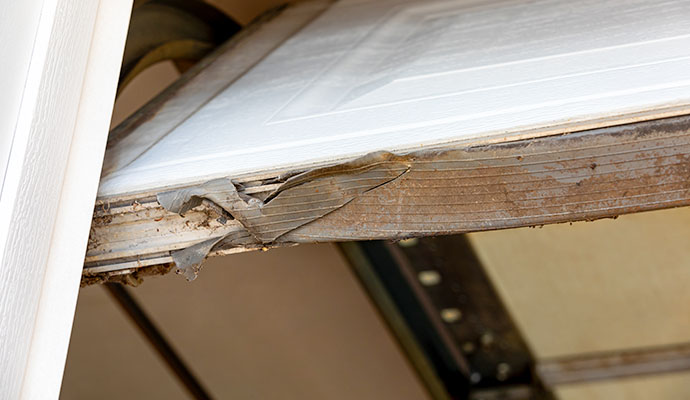
How Do I Know If My Garage Door Seal Is Bad?
Most homeowners never think about their garage door seal until they notice a puddle after a storm or find a palmetto bug that clearly didn't use the front door. The good news: you don't have to wait for a problem to show up. Four simple tests, done back to back, take about five minutes and tell you exactly where your seal stands — no guessing, no waiting for a technician to point a flashlight at it for you.
Here's the order to run them in, and what each one is actually checking for.
Test 1: The Daylight Test
This is the fastest test and the one most people already know without realizing it's a real diagnostic.
- Close the garage door fully.
- Turn off every light inside the garage. Wait a moment for your eyes to adjust.
- Walk the full width of the door and look along the bottom, both sides, and the top. Any place you see a thin line of daylight is a place the seal isn't making full contact.
A little haze at the very corners is normal on some door styles. A clear, continuous line of light along any stretch of the bottom or side is not — that's an active gap, not a cosmetic issue.
Test 2: The Dollar Bill Drag Test (Bottom Seal)
This test checks contact pressure, not just visible gaps — a seal can look fine and still not be sealing.
- With the door closed, slide a dollar bill under the bottom seal at one end of the door.
- Pull it out slowly and pay attention to the resistance. You should feel the seal gripping it.
- Repeat every couple of feet across the full width of the door — center, both ends, and at least one point in between.
If the bill slides out with zero resistance at any point along the width, the seal isn't contacting the floor there, even if it looks fine standing up. If it drags freely everywhere except one narrow section, make a note — that's useful information for the next test.
Test 3: The Flashlight-at-Night Test (Sides and Top)
The daylight test works best in daytime; this version is more precise for the side and top weatherstripping, and it's worth doing if the daylight test showed anything questionable at the frame.
- Close the garage door after dark and turn off all lights inside the garage.
- Have someone stand outside with a flashlight and slowly run the beam along the top and both sides of the door, holding it close to the frame.
- From inside, watch for any glow coming through. A gap that's too subtle to see as daylight often shows up clearly as a flashlight beam in the dark.
Test 4: The Hand-Flex Test
Gaps aren't the only failure mode. Rubber degrades before it visibly separates from the frame — this test catches that.
- With the door closed, gently press and flex a section of the seal between your fingers — bottom seal and side weatherstripping both.
- Fresh rubber flexes and springs back. Aging rubber feels stiff, cracks when bent, or leaves a chalky residue on your fingers.
A seal that passes the daylight and dollar-bill tests today but fails the hand-flex test is on borrowed time — especially with Northeast Florida's UV exposure and heat, which breaks down rubber faster than a mild climate would.
WALLY'S TAKE
If the dollar bill test feels like a tug-of-war everywhere except one section of the door, don't jump straight to buying a new seal. That uneven pattern usually points to a door that's out of balance or a track that's shifted — not a worn seal. A brand-new seal on a crooked door still leaks. Get the balance checked first.
Bottom Seal vs. Side & Top Weatherstripping: What's the Difference?
These are two different components with two different jobs, two different test methods, and two different price points — worth knowing before you call for a quote so you know what you're actually asking about.
| Bottom Seal | Side & Top Weatherstripping | |
|---|---|---|
| What it is | The rubber gasket along the floor edge of the door | Foam or rubber strips lining the door frame on the sides and top |
| What it stops | Water pooling, pests entering at ground level, floor-level drafts | Rain driven sideways, wind whistling, light gaps at the frame |
| How to test it | Dollar bill drag test + daylight test at the floor | Flashlight test at night + daylight test at the frame |
| Typical cost | $375–$600 installed | $200–$450 installed |
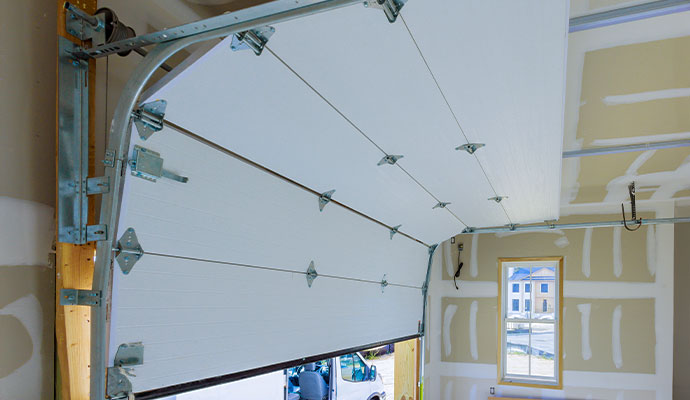
How Much Does It Cost to Replace a Garage Door Seal?
Bottom seal replacement typically runs $375–$600 installed. Side and top weatherstripping typically runs $200–$450 installed. Where you land in each range depends on your door's brand and track profile (not every seal is a universal fit), the length of run needed, and whether the retaining track itself needs replacing along with the rubber.
If your test results show both the bottom seal and the side/top weatherstripping have failed, doing both in the same visit saves you a second service call — worth asking about when you get a quote.
Can I Test and Replace My Own Weather Seal?
Testing: absolutely — all four tests above are homeowner-friendly and require no tools beyond a dollar bill and a flashlight.
Replacing: it's a common weekend project, but two things trip people up. First, the retaining track the rubber slides into has to be in good shape — if it's bent or rusted, a new seal won't seat correctly no matter how well it's installed. Second, seals aren't universal; you need the right width and profile for your specific door brand. If your dollar-bill test showed uneven resistance across the width rather than a clean fail everywhere, that's a balance issue a new seal won't fix on its own.
When Should I Call a Professional Instead?
- Your daylight or flashlight test shows gaps only in certain sections, not evenly across the door — that pattern usually means a balance or track issue, not just a worn seal.
- The retaining track is visibly bent, rusted, or the seal keeps popping back out after you reinstall it.
- You're not sure which seal profile fits your door brand and don't want to guess on a part.
- The seal is fine, but you're still getting water intrusion or drafts — that points to a different problem entirely.
Frequently Asked Questions
How often should I test my garage door seal?
Does Florida heat wear out garage door seals faster than other climates?
Will a new seal fix water coming under my door during heavy rain?
Is a gap under my garage door a security or pest risk, not just an energy issue?
Not sure what your test results mean?
Text two photos of your door — one from the driveway, one close-up of the seal — to 904-584-4828 and we'll tell you straight whether it's a seal, a balance issue, or something else. Same-day answer, no site visit required.
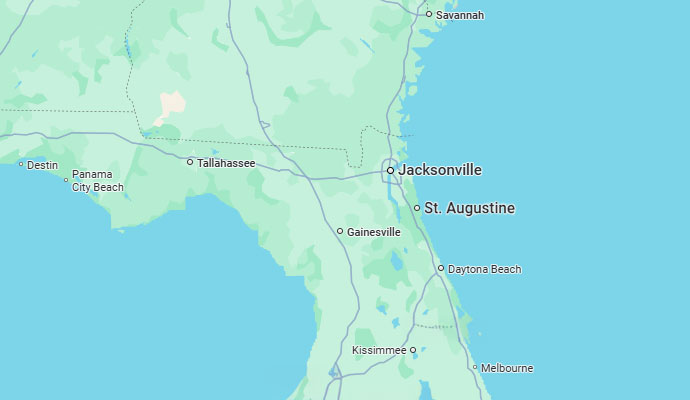
Serving Jacksonville, Nocatee, Ponte Vedra, St. Augustine, Fleming Island, Mandarin, World Golf Village, Palencia, and the rest of Duval and St. Johns County.








Garage Door Problems?
We turn "Uh-Oh" into
"ALL GOOD"
Is your garage door acting up? Don't worry, we've got you covered! Our expert technicians are here to diagnose and fix any garage door issues you may be experiencing. From broken springs to malfunctioning openers, the most likable techs you will ever meet will handle it all with precision and care.
Service Area
- Atlantic Beach
- Bartram Park
- Doctors Inlet
- Eagle Harbor
- Elkton
- Fleming Island
- Fleming Island Plantation
- Fruit Cove
- Green Cove Springs
- Hastings
- Jacksonville
- Jacksonville Beach
- Julington Creek Plantation
- Keystone Heights
- Lake Geneva
- Middleburg
- Neptune Beach
- Nocatee
- Oakleaf Plantation
- Orange Park
- Palm Coast
- Penney Farms
- Ponte Vedra
- Ponte Vedra Beach
- River Town
- Saint Augustine
- Saint Johns
- Sawgrass
- World Golf Village
