
GARAGE DOOR TROUBLESHOOTING · NORTHEAST FLORIDA
Garage Door Won’t Work? Try These Checks Before You Call for Service
A Duval & St. Johns County homeowner’s guide to the DIY fixes that save you a service call — and the three warning signs that mean it’s time to call a pro.
Quick Answer
Before calling for garage door service, check the five most common DIY-fixable issues: (1) a tripped breaker or GFCI outlet, (2) a dead remote or keypad battery, (3) blocked or misaligned safety sensors, (4) an engaged wall-lock or “vacation” switch, and (5) the manual-release cord.
A large share of “broken” garage doors are fixed by one of these — in about two minutes, at no cost. Stop and call a professional if you see a broken spring, a frayed cable, or a door hanging off its track. Those three are the dangerous ones.
Your garage door is the largest moving object in your home. When it stops cooperating, it’s easy to assume the worst and reach for the phone. Here’s the honest truth most companies won’t put in writing: a big chunk of the “my door is broken” calls we get across Duval and St. Johns County turn out to be a dead battery, a tripped outlet, or a spider web on a sensor. Fixes that cost you nothing and take about two minutes.
We’d genuinely rather you fix a $0 problem yourself than pay us to plug something back in. So before you schedule anything, walk through this guide. We’ll show you what’s safe to handle on your own, what each symptom is probably telling you, and — just as important — the warning signs that mean you should step back and let a trained tech take it from there.
904-584-4828What Should I Check First When My Garage Door Stops Working?
Run these quick checks before anything else. They solve more problems than you’d expect:
- Is the opener plugged in? It sounds obvious, but a bumped cord — or an outlet a family member borrowed for the shop vac — is a surprisingly common culprit. Confirm the power cord is firmly seated in the ceiling outlet.
- Has a breaker or GFCI outlet tripped? Garage outlets in Florida homes are almost always GFCI-protected, and our humidity and summer storms trip them constantly. Look for a “Reset” button on the outlet itself, and check your panel for a breaker sitting in the middle position.
- Is something blocking the safety sensors? The two small “photo eyes” a few inches off the floor stop the door if anything breaks the beam between them — including a cobweb, a leaf, or a stored bike leaning in. More on this below.
- Is the wall control set to “Lock” or “Vacation”? Many wall consoles have a slide switch or button that disables every remote in the house. If it got bumped, your remotes go dead while the wall button still works fine.
- Are the remote and keypad batteries fresh? A weak battery is the number-one reason a remote only works up close — or quits entirely. Florida humidity also corrodes battery contacts on outdoor keypads faster than you’d think.
If none of those brings the door back to life, the symptom itself usually points to the cause. Here’s how to read it.
Why Won’t My Garage Door Open at All?
Total silence — no lights, no hum: This is a power problem nine times out of ten. Work the breaker, GFCI, and plug checks above before assuming the opener is dead.
Motor hums but the door doesn’t move: The red manual-release cord was probably pulled, disconnecting the door from the opener carriage. Re-engaging it takes ten seconds — our guide to operating your door in a power outage walks through it. But if the door also feels extremely heavy when you try to lift it by hand, that’s a different problem: stop and read the spring warning below.
Remote does nothing, wall button works: It’s a signal issue, not a door issue — usually a battery, the lock switch, or interference from the wrong LED bulb inside the opener. That last one catches almost everyone; a cheap bulb can shrink your remote range to a few feet.
Why Won’t My Garage Door Close — or Why Does It Reverse Before It Hits the Ground?
This is almost always the safety sensors (the “photo eyes” mounted a few inches up each track). If the door won’t close, or starts down and pops right back up, and you notice one sensor light blinking, the beam between them is broken.
- Look for an obstruction: a cobweb (extremely common in Florida garages), a leaf, a stored item, or something leaning into the beam.
- Check alignment: a bumped sensor points the wrong way. Gently nudge it until both LEDs glow solid instead of blinking.
- Wipe the lenses: dust and love-bug residue fog them up. A dry cloth usually does it.
The one thing you should NOT do
If the sensors are clean, aligned, and glowing solid — and the door still reverses — do not “fix” it by turning up the opener’s force or travel settings.
Cranking the force to overpower a reversing door defeats the auto-reverse safety system that’s designed to stop the door if a child, pet, or car is underneath it. A door that reverses with clean sensors is usually telling you about rising resistance somewhere in the system — a roller starting to bind, a spring losing tension, a track pulling out of line. That’s a diagnosis, not a dial. Most generic troubleshooting articles online tell you to bump the force. We’re telling you not to.
Why Does My Garage Door Only Open Partway or Stop a Few Inches Up?
Stops a few inches up, then reverses: Often a travel-limit setting — but the same caution applies. A door that suddenly won’t lift can be an early sign the springs are fatiguing, since the springs (not the motor) do about 90% of the lifting. If the door also feels heavy on the manual release, treat it as a spring issue and call a pro.
Stops at the same spot every time: Something physical is in the track — a bolt backing out, a bracket catching, or debris. With the door disconnected from the opener, look for the obstruction. Clearing loose debris is a DIY fix; a bent track or hardware is not.
Why Is My Remote Not Working When the Keypod or Wall Button Is?
Isolate it first: if the wall button works, your opener and door are healthy. It’s a signal problem, and the fixes are all DIY:
- Replace the remote battery (usually a CR2032 coin cell).
- Check the wall lock/vacation switch.
- Reprogram the remote — a 60-second process your opener’s manual walks through.
- Rule out interference: the wrong LED bulb inside the opener is a shockingly common cause of short remote range. Opener-rated or incandescent bulbs solve it.
Why Is My Garage Door So Loud, Grinding, or Squeaking?
Most noise is maintenance, not failure. Dry rollers, hinges, and springs get loud — especially heading out of a humid Florida summer.
- Apply white lithium grease or a garage-door-specific lubricant to the rollers, hinges, and spring coils — never the tracks (grease turns track dust into grinding paste).
- Tighten the hinges, brackets, and track bolts that vibrate loose over thousands of cycles.
The exception: a sudden new bang, pop, or grinding-metal sound is not a lubrication problem. A single loud “bang” like a gunshot is the classic sound of a spring snapping. If a good lube job doesn’t quiet the door, the noise is a worn part — and that’s a service call.
Why Is My Garage Door Crooked or Coming Off the Track?
Stop here. A door hanging at an angle, with a gap in the track or a cable dangling loose, is off-track or has a broken cable. This is one of the few garage door problems that is genuinely dangerous to touch — the door can drop. Don’t run the opener (it makes the damage worse), keep people and cars clear, and call a professional. This is never a DIY job.
The 3 Warning Signs to Stop and Call a Pro
Some problems aren’t fix-it-yourself territory — not because they’re complicated, but because they can seriously hurt you. Step back and call a professional the moment you see any of these:
Do NOT DIY these three
- A 2-inch gap in the spring above the door — or the door suddenly feels like it weighs 200+ pounds. Torsion springs store enormous energy; DIY spring work is how people lose fingers.
- A frayed, loose, or snapped lift cable — these are under spring tension and can whip without warning.
- A door off its track or hanging crooked — it can fall. Keep it closed, keep people clear, and call.
The common thread: springs and cables are the high-tension parts of the system. Everything on the two-minute list above is safe to check. These three are not.
Safe to DIY VS. Call a Pro: a Quick Reference
| Symptom | DIY or Call? | What to do |
|---|---|---|
| Dead / weak remote or keypad | DIY | Replace battery; clean contacts; check lock switch |
| No power / silent opener | DIY | Check plug, breaker, and GFCI outlet reset |
| Door reverses before closing | DIY | Clean & align safety sensors — never raise the force |
| Motor hums, door won’t move | DIY | Re-engage the manual-release cord (if springs are intact) |
| Loud, squeaky operation | DIY | Lubricate rollers, hinges, springs — not the tracks |
| Broken spring (2-inch gap) | CALL | High-tension part — professional replacement only |
| Frayed or snapped cable | CALL | Under tension — professional replacement only |
| Door off-track / crooked | CALL | Stop using it — risk of the door falling |
| Bent track or panel damage | CALL | Requires realignment or panel work |
Why a Garage Door Company Would Tell You How to Fix It Yourself
Fair question. The answer is how we’re built. Our technicians are salaried — not commissioned. Their bonus is tied to doing quality work efficiently, not to selling you parts, so we have zero incentive to turn a dead battery into a service call. The homeowners we help for free today are the ones who call us — and refer their neighbors — when they actually need a spring or an opener down the road.
And when you do need us, every visit includes a complimentary Safe & Sound 16-point inspection of your whole door system, flat-rate pricing with no surprise line items, and — on spring jobs — our Furever Warranty: high-cycle springs covered for parts and labor for as long as you own your home.
904-584-4828Frequently Asked Questions
Can I fix my garage door myself?
How do I reset my garage door opener?
Why does my garage door reverse before it closes?
How do I know if my garage door spring is broken?
Is it safe to open my garage door manually?
How much does a garage door service call cost in Northeast Florida?
STILL STUCK AFTER THE 2-MINUTE CHECKS?
Skip the guesswork. Text us two photos — one of your door, one of whatever’s giving you trouble — and we’ll tell you whether it’s a five-minute DIY fix or something we should handle. Same-day answer, no pressure, no salesperson at your door.
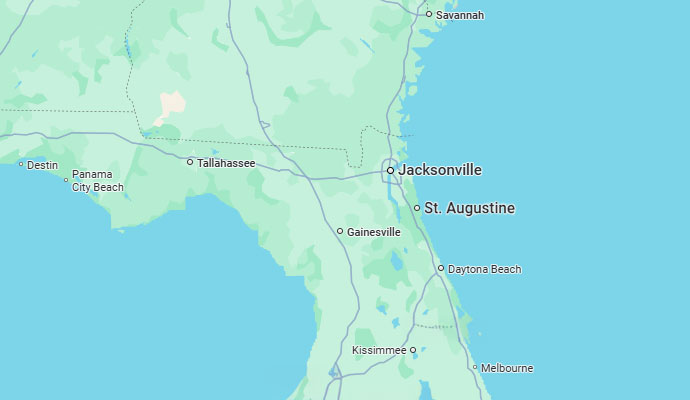
Serving Nocatee, Ponte Vedra, World Golf Village, Palencia, St. Augustine, Fleming Island, Jacksonville, and all of Duval & St. Johns County.








Garage Door Problems?
We turn "Uh-Oh" into
"ALL GOOD"
Is your garage door acting up? Don't worry, we've got you covered! Our expert technicians are here to diagnose and fix any garage door issues you may be experiencing. From broken springs to malfunctioning openers, the most likable techs you will ever meet will handle it all with precision and care.
Wagmore Garage Doors Service Area
- Atlantic Beach
- Bartram Park
- Doctors Inlet
- Eagle Harbor
- Elkton
- Fleming Island
- Fleming Island Plantation
- Fruit Cove
- Green Cove Springs
- Hastings
- Jacksonville
- Jacksonville Beach
- Julington Creek Plantation
- Keystone Heights
- Lake Geneva
- Middleburg
- Neptune Beach
- Nocatee
- Oakleaf Plantation
- Orange Park
- Palm Coast
- Penney Farms
- Ponte Vedra
- Ponte Vedra Beach
- River Town
- Saint Augustine
- Saint Johns
- Sawgrass
- World Golf Village
