
CONSUMER PROTECTION • NORTHEAST FLORIDA

Predatory Lead Aggregators: How “Fake Local” Garage Door Companies Are Scamming Jacksonville Homeowners
That “local” garage door company you found on Google might not be local at all — and it might not even be a company. Here’s how the scam works, the red flags that expose it in under a minute, and exactly how to protect yourself before you give anyone your address.
You search “garage door repair near me.” You call the first listing that pops up on Google Maps. A friendly voice answers, “Thank you for calling Garage Door Services, how can we help?” They quote you a suspiciously low service fee — $29, maybe — and someone will be out within the hour.
Two hours later, a stranger in an unmarked truck pulls into your driveway. He's not from the company you called. He's never heard of the $29 fee. And by the time he leaves, you've paid four or five times what you expected for work you can't verify and can't get warrantied.
You didn't call a garage door company. You called a predatory lead aggregator — and you're not the only one they're hurting. Real local shops across Northeast Florida are watching their phones go quiet because these operations are burying them in fake search results.
Here's exactly how the scam works, how to spot it before you ever give out your address, and what to do if it's already happened to you.
904-584-4828QUICK ANSWER
A predatory lead aggregator is an out-of-state call center that creates fake “local” business listings (using names like “Garage Door Repair Jacksonville”), answers your call pretending to be a neighborhood company, then sells your address to the highest-bidding unlicensed subcontractor — who shows up and inflates the price. Protect yourself by asking three questions before you give anyone your address: their exact legal business name, their physical shop address, and their state contractor license number. A real local company answers all three instantly.
What Is a Predatory Lead Aggregator?
A predatory lead aggregator (also called a “fake local” lead generator, ghost listing operation, or call interception scheme) is a marketing operation — usually run far outside your state — that builds dozens or hundreds of fake online business profiles for urgent home-service categories like garage door repair, locksmiths, and plumbing. They target these trades specifically because a homeowner with a broken spring or a jammed door at 7 a.m. is in a hurry, and a hurried customer clicks the first phone number on the screen instead of checking who's actually behind it.
These operations don't build a brand. They build keyword bait — generic names like “24/7 Garage Door Repair Jacksonville” or “Affordable Garage Door Pros” designed to rank for exactly what you're searching, with none of the accountability of an actual business.
How the Scam Actually Works
- The Ghost Listing: A virtual phone number with a local area code gets attached to a fake Google Business Profile or website, using a generic, keyword-stuffed name instead of a real brand.
- The Generic Greeting: When you call, an out-of-state call center agent answers with a vague phrase like “Thank you for calling Garage Door Services.” If you ask whether they're a specific company you found, they'll often say “yes” or “we're the dispatch center for them” just to keep you on the phone.
- The Lead Sale: Once they have your address and a description of the problem, they sell that lead to whichever local subcontractor bids highest — often someone unlicensed and unvetted by the platform that listed them.
- The Bait-and-Switch: The call center quoted you a low number to get you to agree to a visit. The subcontractor who shows up has no obligation to honor it — and usually doesn't.
8 Red Flags of a Fake Local Garage Door Listing
Most of these scams fall apart the moment you know what to look for. Here's what to check before you ever pick up the phone.
1. The Business Name Is Just Keywords
A real garage door company in Northeast Florida has a name — WagMore, a family name, a founder's name. A listing called “Garage Door Repair Jacksonville” or “Local Garage Door Experts Near Me” isn't a brand. It's search engine bait with no business behind it.
2. The Address Doesn't Hold Up
Look closely at the pin on Google Maps. Fake listings frequently use residential apartment buildings, vacant retail spaces, parking lots, or even the address of a completely unrelated business. If the listed service area covers an unrealistic multi-state region for what's supposed to be a local technician, that's a major tell.
3. Reviews Arrived in a Wave
Click into the photos on their reviews. Stock images of generic tools, vans with no visible logo, or 50 five-star reviews that all landed in the same week from accounts with no other review history — that's a bought reputation, not an earned one.
4. They Dodge the “Who Are You” Questions
This is the fastest way to expose the scam, and it takes about 60 seconds. Ask these three questions before you give anyone your address:
- “What is the exact legal name of your business?” If they repeat the generic name back to you or hesitate, hang up.
- “What is your physical shop address in this town?” A real local company gives you cross streets instantly. A scammer says, “Oh, we're strictly mobile dispatch.”
- “What is your state contractor license number?” Real local pros can recite it or point you to where it's posted on their website.
5. The Quote Is Suspiciously Low
A $29 service call or tune-up for a job that legitimately costs hundreds of dollars isn't a deal — it's the hook. Loss-leader pricing only makes sense as a business model if the real money comes from a markup you haven't seen yet.
6. The Truck Is Unmarked
A technician who shows up in a plain truck or a personal vehicle with no company branding isn't representing the business that answered your call — because the business that answered your call doesn't actually have technicians. It has a call list.
7. There's No Warranty They Can Point To in Writing
Ask what the warranty covers and who honors it if something breaks in six months. A real company can answer immediately, because the warranty is theirs to give. A subcontractor working a one-off lead sale usually can't — and won't be around to ask later.
8. The Price Changes Once They're in Your Driveway
This is the bait-and-switch closing the loop. The phone quote gets you to agree to the visit. Once a technician is standing in your garage and you're inconvenienced, the price quietly multiplies — and most homeowners pay it rather than start over.
Fake Local Listing VS Real Local Company: Side-by-Side
| What to Check | Fake Local / Lead Aggregator | Real Local Company |
|---|---|---|
| Business name | Generic, keyword-stuffed (“Garage Door Repair [City]”) | Actual brand name, consistent everywhere |
| Address | Hidden, vague, or doesn't match the pin | Real address, given instantly |
| Who answers the phone | Out-of-state call center, scripted greeting | Local staff who know the technicians by name |
| License number | Can't or won't provide one | Posted on the website and given on request |
| Truck | Unmarked or personal vehicle | Branded company vehicle |
| Quoted price | Very low, designed to get a visit booked | Realistic, explained, in writing |
| Final price | Jumps dramatically on-site | Matches what was quoted |
| Warranty | Vague or nonexistent | Specific, in writing, honored long-term |
How You Know WagMore Is the Real Thing
When you call WagMore, you get WagMore — every time, no exceptions. Our technicians are salaried, not commissioned, so nobody is incentivized to inflate a price once they're in your driveway. Every visit includes a $0 Safe & Sound 16-Point Inspection, and our high-cycle springs come with a Furever Warranty — covered for parts and labor for as long as you own the home. Text two photos and we'll send you a real, same-day quote before anyone steps foot on your property.
Why This Scam Specifically Targets Garage Door Repair
Lead aggregators concentrate on urgent, high-emotion home service categories — garage doors, locksmiths, plumbing, HVAC — because the customer is rarely calm when they call. A broken spring means a car trapped inside the garage. A door stuck open means a home that isn't secure. That urgency is exactly what these operations are built to exploit: a panicked homeowner clicks the first result instead of the right one.
It's also why this isn't just a consumer problem. Every fake listing that outranks a real Northeast Florida garage door company is a phone call that never reaches the people who actually live and work here — and a homeowner who's now relying on a subcontractor nobody vetted.
If You Already Let Someone In
If a subcontractor from one of these operations has already worked on your door, don't assume the job was done safely. Garage door springs and cables operate under extreme tension, and unlicensed or rushed work is one of the more common ways homeowners end up with a door that looks fixed but isn't safe to operate. If anything feels off — the door is heavier than it should be, it's jerky, or it makes a new noise — get a second opinion from a licensed local company before you use it again.
It's Not Just Shady — It's Often Illegal
This isn't a gray-area marketing tactic. State Attorneys General and the Federal Trade Commission actively pursue these operations under deceptive lead generation and false advertising laws, and the legal exposure has only gotten more serious in recent years.
- State Deceptive Trade Practices Act violations: Many states award triple damages plus attorney fees to consumers harmed by bait-and-switch schemes and false business identities.
- FTC Enforcement: The Federal Trade Commission prosecutes deceptive lead generation fronts under Section 5 of the FTC Act and has filed multi-million dollar actions against operators of these networks.
- TCPA Violations: If a call center used spoofed local numbers or automated robocalls without consent, that carries separate federal penalties.
Frequently Asked Questions
How can I tell if a garage door company on Google is actually local?
Why did the price change so much once the technician arrived?
What should I do if I already got scammed by a fake local garage door company?
Is it legal for these companies to pretend to be a local business?
Does WagMore use subcontractors or call centers?
Skip the Guesswork. Talk to a Real Local Shop.
Text two photos of your garage door to WagMore and get a real, same-day quote from the actual local company that will show up to do the work — no call center, no mystery subcontractor, no bait-and-switch.





Garage Door Problems?
We turn "Uh-Oh" into
"ALL GOOD"
Is your garage door acting up? Don't worry, we've got you covered! Our expert technicians are here to diagnose and fix any garage door issues you may be experiencing. From broken springs to malfunctioning openers, the most likable techs you will ever meet will handle it all with precision and care.
Service Area
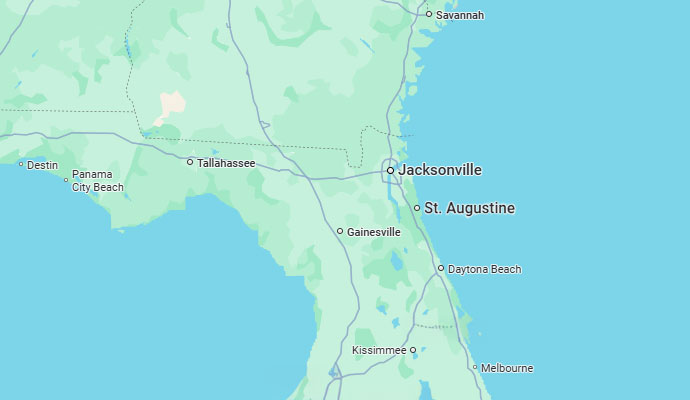
- Atlantic Beach
- Bartram Park
- Doctors Inlet
- Eagle Harbor
- Elkton
- Fleming Island
- Fleming Island Plantation
- Fruit Cove
- Green Cove Springs
- Hastings
- Jacksonville
- Jacksonville Beach
- Julington Creek Plantation
- Keystone Heights
- Lake Geneva
- Middleburg
- Neptune Beach
- Nocatee
- Oakleaf Plantation
- Orange Park
- Palm Coast
- Penney Farms
- Ponte Vedra
- Ponte Vedra Beach
- River Town
- Saint Augustine
- Saint Johns
- Sawgrass
- World Golf Village
