
WAGMORE GARAGE DOORS | NORTHEAST FLORIDA | REPAIR GUIDE
How Long Do Garage Door Springs Last in Florida?
The honest answer — and why Northeast Florida shortens the timeline for most homeowners.
Garage door springs are the most replaced component in any residential garage door system — and for good reason. They work harder than any other part, cycling under enormous tension every single time the door moves. And in Northeast Florida, they work in conditions that accelerate wear: relentless humidity, salt air from the coast, UV exposure, and summer heat that causes metal to expand and contract daily.
If you're wondering whether your springs are getting close to the end of their life — or you've already heard that unmistakable bang from the garage — this guide gives you the straight answer on what to expect, what shortens spring life in our climate, and how to get the most out of whatever system is on your door right now.
904-584-4828Quick Answer
Standard garage door springs are rated for approximately 10,000 cycles — roughly 7 to 10 yearsmfor a household that uses the door 4 times per day. In Northeast Florida, salt air, humidity,mand heat cycling can shorten that to 5–7 years for standard springs. High-cycle springsm(rated 25,000+ cycles) typically last 15–20 years even in coastal conditions — and WagMore backs ours with a Lifetime Warranty. The single biggest factor in spring lifespan isn't the brand — it's the wire gauge and whether the door is properly maintained.
How Garage Door Spring Lifespan Is Measured
Springs aren't rated by years — they're rated by cycles. One cycle equals the door opening and closing once. That's the metric every spring manufacturer uses because how long a spring lasts depends entirely on how often the door is used, not the passage of time.
For a household with two drivers, a dog that gets walked in the morning, and kids coming and going — four to six cycles a day is a reasonable average. Here's what that looks like across spring types:
| Spring Type | Cycle Rating | Est. Lifespan (4x/day) | Florida Factor |
|---|---|---|---|
| Standard Spring | ~10,000 cycles | 7–10 years | 5–7 years (salt air, humidity) |
| High-Cycle Spring | 25,000+ cycles | 20+ years | 15–20 years w/ proper lube |
That Florida Factor column matters more than most homeowners realize. The same spring installed in Phoenix or Denver behaves differently on the First Coast. We'll get into why in a moment.
What Shortens Garage Door Spring Life in Northeast Florida
Salt Air and Humidity
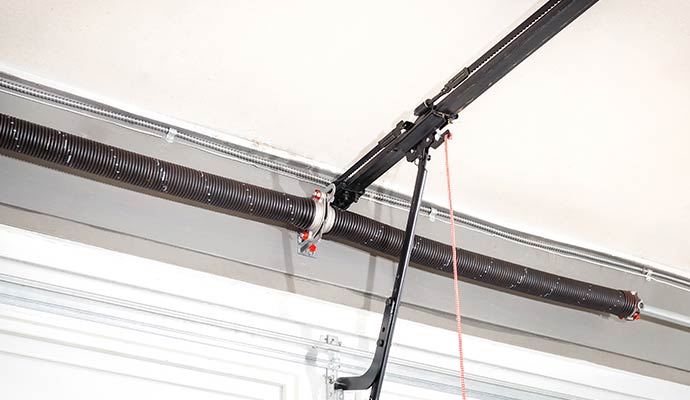
Corrosion is the silent killer of garage door springs. Torsion springs are made of high-carbon steel wire — strong and resilient under tension, but vulnerable to rust. In coastal communities like Ponte Vedra Beach, Atlantic Beach, and Vilano Beach, salt particles in the air accelerate oxidation on the spring's surface. That surface rust isn't just cosmetic — it creates friction between coils, increases stress on each individual section of wire, and accelerates fatigue fractures.
Even inland communities like Nocatee, World Golf Village, and Palencia aren't immune. Northeast Florida's baseline humidity is high enough that ungalvanized spring steel corrodes noticeably faster here than in drier climates. A spring that would last 9 years in Atlanta might last 6 years in St. Johns County.
Thermal Expansion and Contraction
Florida summers push garage temperatures well above 100°F. Metal expands in heat and contracts overnight. For a tightly wound torsion spring under significant pre-load tension, that daily thermal cycling adds cumulative stress over thousands of cycles. It's not dramatic — no single hot day breaks a spring — but across years, it accelerates fatigue in the wire, particularly at the end coils where the spring attaches to the winding cone.
Door Weight and Spring Sizing
Springs are engineered for a specific door weight. When a door is replaced — particularly when a lightweight single-layer pan door is swapped for a heavier insulated double or triple-layer door — the spring system needs to be re-specified for the new load. A spring running above its rated capacity wears exponentially faster. This is one of the most common causes of premature spring failure we see in Northeast Florida neighborhoods undergoing door upgrades.
If you replaced your door in the last few years and kept the original springs, it's worth having a technician verify that the spring sizing matches your current door weight.
Lubrication (or the Lack of It)
A dry spring is a fast-wearing spring. The coils of a torsion spring experience friction against each other as the spring winds and unwinds. Proper lubrication — white lithium grease applied to the coil gaps twice a year — significantly reduces that friction and protects the wire surface from moisture. A spring that's never been lubricated can lose years of life compared to one on a regular maintenance schedule.
In Florida's climate, lubrication also helps displace moisture and slow the corrosion process. It's the single highest-ROI maintenance task a homeowner can perform on their garage door system.
Original Builder-Grade Springs
A large percentage of homes in Nocatee, World Golf Village, Palencia, and newer St. Johns County developments were built with standard-cycle builder-grade springs — the minimum specification for code compliance, not for longevity. These springs are typically wire gauges lighter than what a professional replacement technician would specify. If your home is 7 to 12 years old and still running its original springs, there's a good chance you're closer to the end of their life than you think.

Warning Signs Your Springs Are Near the End
Springs don't usually give much warning — when they fail, they fail fast. But there are early signals worth knowing:
- The door feels heavier than usual when lifted manually (pull the emergency release cord and try to hold the door at the halfway point — it should stay with minimal effort)
- The door opens unevenly or one side rises faster than the other
- Visible rust or surface pitting on the spring coils — look for orange or brown discoloration
- The opener is straining audibly or running noticeably slower than usual
- Squealing or creaking from the spring during operation (not just from rollers or hinges)
- The door has slammed down unexpectedly or dropped faster than normal
Any of these is worth a technician's eyes. A spring that's partially fatigued puts strain on the opener, cables, and rollers — so catching it early prevents collateral damage to other components.
Standard vs. High-Cycle Springs: The Only Decision That Really Matters
When a spring is replaced — whether it's one spring or both — the most important decision is whether to install standard or high-cycle springs. This choice affects everything that follows: how long the repair lasts, what you pay over the lifetime of the door, and whether you'll be making this same call again in seven years.
Standard springs are rated for approximately 10,000 cycles. They're the default option at many companies because they're cheaper to purchase. In Northeast Florida's climate, expect 5 to 8 years of life depending on usage and proximity to the coast.
High-cycle springs are rated for 25,000 cycles or more — manufactured from heavier-gauge, higher-carbon steel wire. They're built to handle the demands of a busy household in a corrosive climate. In practical terms, a properly lubricated high-cycle spring on a Northeast Florida home should outlast most standard springs by a factor of two to three.
The math is straightforward: paying more once for high-cycle springs typically costs less than paying twice (or three times) for standard springs over the same period — and that's before factoring in service call fees.
WagMore's Lifetime Warranty on High-Cycle Springs
We install high-cycle springs with a Lifetime Warranty — if they fail for any reason while you own the home, we replace them at no charge. We recommend them on every job, and especially on heavier insulated doors where standard springs work harder and wear faster. It's the last spring conversation you should ever have to have.
How to Get More Life Out of the Springs You Have
If your springs are in reasonable condition and you want to extend their service life, three things make the biggest difference:
1. Lubricate Twice a Year
Apply white lithium grease or a dedicated garage door lubricant spray to the spring coil gaps — not a general coat, but worked into the gaps where coil-to-coil friction actually occurs. Do this in spring before summer heat arrives and again in the fall. It takes five minutes and meaningfully slows both friction wear and corrosion.
2. Keep the Door Balanced
An out-of-balance door puts uneven load on the spring system. A simple balance test: pull the emergency release cord, lift the door to the halfway point, and let go. A properly balanced door should stay put or drift only slightly. If it falls or shoots up, the spring tension needs adjustment — that's a job for a technician, not a DIY fix. Correcting an imbalance before it becomes a failure prevents accelerated spring wear.
3. Don't Ignore Other Worn Components
Springs don't fail in isolation. Worn rollers and misaligned tracks increase the load the spring system handles on every cycle. A door that's dragging, binding, or running unevenly is working its springs harder than it should. A full maintenance visit that addresses rollers, tracks, and hardware extends the life of the spring system — not just the parts that were visibly serviced.
Frequently Asked Questions
How do I know if my garage door spring is broken?
Can I still use my garage door with a broken spring?
Do both springs need to be replaced at the same time?
How long do garage door springs last in Florida specifically?
What does garage door spring replacement cost?
Can I replace my garage door springs myself?
Not Sure How Much Life Your Springs Have Left?
WagMore's $0 Safe & Sound 16-Point Inspection includes a full spring assessment — condition, cycle estimate, and an honest recommendation. No pressure, no upsell.
Serving Nocatee • Ponte Vedra • World Golf Village • St. Augustine • Jacksonville Beach • Fleming Island • Mandarin • Atlantic Beach








Garage Door Problems?
We turn "Uh-Oh" into
"ALL GOOD"
Is your garage door acting up? Don't worry, we've got you covered! Our expert technicians are here to diagnose and fix any garage door issues you may be experiencing. From broken springs to malfunctioning openers, the most likable techs you will ever meet will handle it all with precision and care.
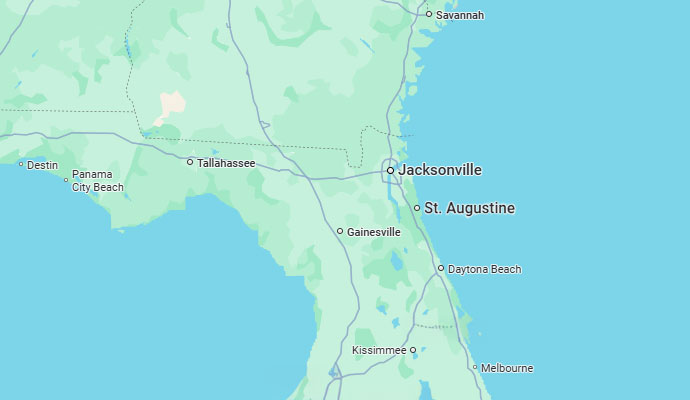
Wagmore Garage Doors Service Area
- Atlantic Beach
- Bartram Park
- Doctors Inlet
- Eagle Harbor
- Elkton
- Fleming Island
- Fleming Island Plantation
- Fruit Cove
- Green Cove Springs
- Hastings
- Jacksonville
- Jacksonville Beach
- Julington Creek Plantation
- Keystone Heights
- Lake Geneva
- Middleburg
- Neptune Beach
- Nocatee
- Oakleaf Plantation
- Orange Park
- Palm Coast
- Penney Farms
- Ponte Vedra
- Ponte Vedra Beach
- River Town
- Saint Augustine
- Saint Johns
- Sawgrass
- World Golf Village
