
How to Choose a New Garage Door: A Homeowner's Decision Framework for Northeast Florida
By WagMore Garage Doors | Serving Duval and St. Johns County
You've decided your garage door needs to go. Now you're staring down forty style options, three insulation levels, two or three material choices, and a handful of contractors who all say they're the honest one. This guide breaks that decision into the six factors that actually determine whether you're happy with your door in year one — and in year fifteen.
It's not a price list (that's here: our Garage Door Replacement Cost Guide) and it's not a list of horror stories (that's here: 5 Mistakes to Avoid When Replacing Your Garage Door). It's the framework that should come before either of those — the questions to answer before you're comparing quotes at all.
904-584-4828QUICK ANSWER
Choosing a new garage door comes down to five decisions: material (steel is the Florida standard), insulation layers (double or triple for attached garages), wind-load rating (required by Florida code), opener compatibility (matched to your door's weight), and warranty terms (parts and labor, in writing). Confirm your contractor is pulling a permit — that's the step most often left out.
What Should I Consider Before Buying a New Garage Door?
Every garage door decision in Northeast Florida comes down to the same six factors. Get these right and the rest of the process — style, color, budget — becomes a lot easier to sort through.
| Decision Factor | Why It Matters in Northeast Florida | Where to Go Deeper |
|---|---|---|
| Material | Steel handles salt air and humidity with minimal maintenance; wood and wood-composite trade upkeep for curb appeal. | Cost Guide, Curb Appeal Guide |
| nsulation layers | Attached garages and rooms above the garage benefit most from double or triple-layer construction. | Garage Door Layers Guide |
| Wind-load rating | Required by Florida code; homes closer to the coast face stricter thresholds than inland communities. | Cost Guide, WGV Replacement Guide |
| Opener compatibility | A heavier insulated door often outperforms a 10+ year old opener's torque rating. | New Door Deserves a New Opener |
| Warranty terms | Parts-and-labor coverage in writing protects you long after the install truck leaves. | Repair Cost Guide |
| Permits | Legally required for door replacement in Florida; skipping this can affect insurance and resale. | This guide, Cost Guide |
Which Garage Door Material Is Best for a Florida Home?
Steel is the dominant choice across Duval and St. Johns County, and for a practical reason: it handles salt air, humidity, and UV exposure with almost no maintenance, and it can be finished to mimic wood-look carriage styles popular in communities like World Golf Village and Heritage Landing.
- Steel — the default for good reason. Available at every price point; thicker gauge resists denting.
- Wood / wood-composite — real wood is a premium aesthetic choice that needs periodic sealing in our humidity; wood-composite gives the look on a steel frame with far less upkeep.
- Aluminum and glass — popular in newer builds for natural light and a modern look; typically the higher end of the price range.
- Vinyl and fiberglass — rarely specified locally, but essentially rust-proof — worth a look for homes very close to the coast.
Whatever material you choose, confirm it's rated for wind load in your specific area before you fall in love with a style — see the section below.
How Many Insulation Layers Does a Garage Door Actually Need?
Single-layer (no insulation), double-layer (steel plus polystyrene foam), and triple-layer (steel-foam-steel) doors perform very differently in Florida's heat and humidity — and the right choice depends on whether your garage is attached, detached, or has a room above or beside it.
For most attached garages in St. Johns and Duval County, double or triple-layer is worth the modest premium over single-layer — the difference in comfort, noise, and durability is noticeable from day one. For the full construction breakdown, see our Garage Door Layers Guide.
Does My New Garage Door Have to Meet Florida Wind-Load Code?
Yes. Florida building codes require garage doors to meet wind-load ratings specific to your location, and homes closer to the coast — Ponte Vedra Beach, Vilano Beach, South Ponte Vedra — face stricter thresholds than inland communities like World Golf Village or Mandarin.
This isn't a box to check quietly. A non-compliant door is a code violation, a potential insurance-claim denial after a storm, and — if you're preparing to sell — a red flag that surfaces during a buyer's inspection. Any reputable local contractor specs the correct wind-load rating automatically and pulls the required permit as part of the job.
Should I Replace My Garage Door Opener at the Same Time?
If your current opener is more than 10 years old, generally yes. Modern insulated doors are heavier than the builder-grade doors they replace, and an older opener may lack the torque to run the new door without strain — leading to a service call and a second labor charge down the road.
Today's openers also include features that weren't standard a decade ago: battery backup for power outages, rolling code security, auto-reverse sensors, and smartphone integration through apps like myQ. For the full case, read New Door Deserves a New Opener.
WALLY'S TAKE
For most Northeast Florida homes, the best garage door opener in 2026 is a belt-drive opener with a DC motor, built-in Wi-Fi, and battery backup.
"A contractor who doesn't bring up permits on their own isn't being efficient — they're skipping a step that protects you, not them. If it doesn't come up unprompted, ask." — Wally
What Do Some Contractors Leave Out of Their Quote?
This is the section most buying guides skip, because it's the section that separates a straightforward install from a headache six months later. Before you sign anything, make sure these four items are addressed — not implied, addressed:
- Permits. In Florida, garage door replacement is a permitted installation. A company that says permits "aren't required" or quietly skips this is cutting a corner that surfaces later — at claim time, at resale, or if the installation itself has a problem.
- Wind-load documentation. "Hurricane resistant" on a box is marketing language. A wind-load rating tied to your specific address is a code requirement. Ask for it in writing.
- Haul-away of the old door. Some quotes price the new door and installation but leave disposal of the old one as a surprise line item — or your problem.
- Warranty scope. "Warrantied" can mean parts only, labor only, or both. Get the specific scope in writing before you compare price across contractors — a lower number with a thinner warranty isn't actually the lower number.
Any quote you receive should be all-in: door, hardware, installation, haul-away, and permit fees, spelled out — not bundled into a single number you have to take on faith.
What Are the Most Common Mistakes People Make?
Three come up constantly: choosing the cheapest door without checking wind-load compliance, keeping a 10+ year old opener to "save" money on a heavier new door, and skipping insulation on an attached garage to shave a few hundred dollars off the quote. Each one tends to cost more in year two than it saved on day one. For the full breakdown with real numbers, see 5 Mistakes to Avoid When Replacing Your Garage Door.
How Much Will a New Garage Door Cost?
Cost depends on size, material, insulation, and whether the opener is included — enough variables that a single number here would be more misleading than useful. For a full price breakdown by door size, construction, and opener type specific to St. Johns and Duval County, see our Garage Door Replacement Cost Guide.
Five Questions to Ask Before You Hire Anyone
- Are you licensed and insured in my county?
- Do you pull permits for replacement installations? (Required by Florida law — get a yes or no.)
- Is the door rated to meet the wind-load code for my specific address?
- What warranty do you offer on parts and labor — and can I have that in writing?
- Does your quote include removal and disposal of my old door?
A company that hesitates on any of these isn't the right fit for a Northeast Florida home.
904-584-4828Frequently Asked Questions
Do I need a permit to replace a garage door in Florida?
What's the difference between single, double, and triple-layer garage doors?
Is it cheaper to repair or replace my garage door?
Can I keep my current garage door opener with a new door?
How do I know if a garage door is wind-load rated for my address?
How long does a garage door replacement take?
READY TO GET A REAL NUMBER?
Text two photos — your door from the driveway, and the size sticker inside the frame — to 904-584-4828, and we'll send you a real budget range the same day. No site visit required, no pressure, no commitment.








Garage Door Problems?
We turn "Uh-Oh" into
"ALL GOOD"
Is your garage door acting up? Don't worry, we've got you covered! Our expert technicians are here to diagnose and fix any garage door issues you may be experiencing. From broken springs to malfunctioning openers, the most likable techs you will ever meet will handle it all with precision and care.
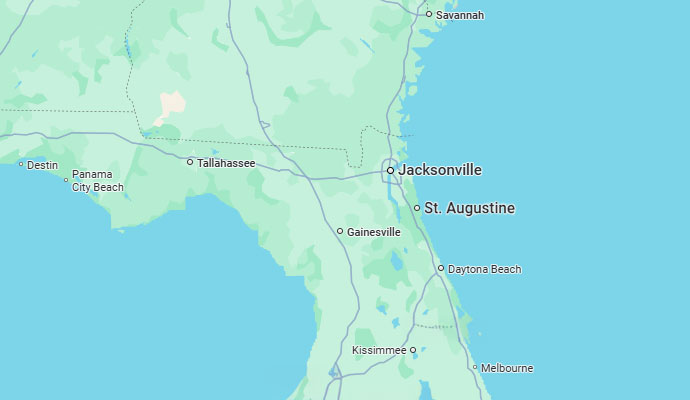
Wagmore Garage Doors Service Area
- Atlantic Beach
- Bartram Park
- Doctors Inlet
- Eagle Harbor
- Elkton
- Fleming Island
- Fleming Island Plantation
- Fruit Cove
- Green Cove Springs
- Hastings
- Jacksonville
- Jacksonville Beach
- Julington Creek Plantation
- Keystone Heights
- Lake Geneva
- Middleburg
- Neptune Beach
- Nocatee
- Oakleaf Plantation
- Orange Park
- Palm Coast
- Penney Farms
- Ponte Vedra
- Ponte Vedra Beach
- River Town
- Saint Augustine
- Saint Johns
- Sawgrass
- World Golf Village
