
CONSUMER GUIDE | WAGMORE GARAGE DOORS | NORTHEAST FLORIDA
How to Find a Reputable Garage Door Company (And Spot the Ones You Should Run From)
Your garage door just stopped working. Or it's making a noise it didn't make last week. You go to Google, pick a name near the top of the results, and call. An hour later, a tech is standing in your garage.
What happens next depends entirely on which company you called.
The garage door industry has a well-documented problem with predatory practices: bait-and-switch pricing, commission-driven technicians incentivized to find problems whether they exist or not, and out-of-area companies operating under local-sounding names. None of this is hidden — consumer protection agencies get complaints about it regularly. But homeowners don't usually know what to watch for until it's already happened to them.
This post is the briefing you should read before you make that call.
904-584-4828A garage door repair call is one of the few home services where the wrong company can cost you three times what an honest one would. Here's how to tell the difference before anyone sets foot in your garage.
QUICK ANSWER
To find a reputable garage door company: verify they are licensed and insured locally, confirm technicians are salaried (not commission-based), ask for a written quote before any work begins, and check that they pull permits for replacement jobs. Avoid companies running $29 "tune-up" loss-leader specials — that business model is built around upselling, not service. Ask about warranties in writing. Truly local companies with named owners and local phone numbers are generally more accountable than national franchises or private equity rollups.
How Does a Garage Door Scam Actually Work?
Most garage door fraud doesn't look like fraud. It looks like a helpful technician doing a thorough inspection. That's what makes it effective.
Here's the most common version:
A company runs ads for a $29 or $49 "tune-up" or "safety inspection." That price is a loss leader — it is mathematically impossible for a legitimate service company to send a trained technician to your home, cover fuel, labor, and overhead, and turn a profit on $29. The ad isn't designed to make money. It's designed to get a commission-paid representative standing inside your garage surrounded by everything he can pitch you on.
The inspection itself is usually quick. The quote that follows is not. Springs that "look worn." Rollers that are "about to fail." An opener that's "really on its last legs." Each item gets its own line on a worksheet. The total climbs. The tech mentions he can do it all today, but prices go up next week.
None of this is necessarily made up from whole cloth. Your springs might have some age on them. But the framing — urgency, packages, today-only pricing — is designed to close a sale, not inform a decision.
The $29 Tune-Up
No legitimate service company can cover labor, fuel, and overhead on $29. When you see this ad, you are not looking at a maintenance offer. You are looking at a sales funnel with a wrench.
The Commission Tech Problem
The deeper structural issue is how technicians get paid.
At commission-based companies, the technician's income is directly tied to what they sell on each call. This is a conflict of interest that is baked into the job. It doesn't require a dishonest person to create bad outcomes — it just requires a person who needs to make rent.
A salaried technician who finds nothing wrong goes back to the shop. A commission technician who finds nothing wrong goes home short. The financial incentive to find something — anything — is enormous. And in a garage full of springs, cables, rollers, hinges, and a motor that's been running for a decade, there is always something that could be framed as concerning.
Asking how technicians are compensated is not a rude question. It is the most important question you can ask before scheduling a service call. Any company that won't answer it directly has given you your answer.
What WagMore Does Differently
Our technicians are salaried, not commissioned. When a tech comes to your home, they're paid to do good work — not to hit a sales number. If your door only needs lubrication and a bolt tightened, that's what we tell you. We'd rather earn your trust on a $0 inspection than sell you a repair you don't need.
Bait-and-Switch Pricing: What It Looks Like in Real Life
Bait-and-switch in the garage door industry usually takes one of two forms.
The first is the low-priced ad that doesn't reflect actual service costs. You call about a broken spring. The ad says spring replacement starts at $99. The tech arrives and explains that your door is a "special size," or that you need both springs, or that your cables are also compromised and really should be done at the same time. The final number is $800-900. The $99 was real — for a product configuration that fits almost no one's actual door.
The second form is the parts swap without explanation. A technician replaces your springs without discussing spring grade, cycle rating, or warranty. You get standard springs — the cheapest available — without knowing that high-cycle springs exist, that they last two to three times as long, or that they come with guarantees. You've paid for a repair, but you haven't been given the information to make a real decision.
A trustworthy company explains your options before touching anything. Standard vs. high-cycle. What the price difference is. What the warranty covers. And they put it in writing before the work begins.
Verbal-Only Quotes
If a technician quotes you a price verbally and then presents a higher number on the invoice, that gap is not a mistake. Always get a written itemized quote before authorizing any work. A reputable company will not hesitate to provide one.
One-Truck Chucks: The Accountability Problem
Not all small operators are bad. Some of the best technicians in any market are independent. But there's a meaningful difference between an established local operator with a track record, reviews, and a permanent business address — and a guy who appeared on Google last month with a phone number, no website, and a truck with a magnetic sign.
The risk with the latter isn't necessarily dishonesty. It's accountability. If the work is bad, if the spring fails in three months, if the installation isn't to code — who do you call? A business with no fixed presence, no license verification, and no documented history has nothing at stake in your outcome. They move on. You're left with the problem.
Questions that separate accountable operators from fly-by-nights: Do you have a physical business address? Are you licensed in Duval or St. Johns County? Can you pull a permit for this installation? Are your technicians employees, or are you a one-person operation? These aren't confrontational questions. A legitimate operator answers them without hesitation.
Franchises and Private Equity Rollups: The Name Recognition Trap
The garage door industry has seen significant consolidation. National franchise networks and private equity-backed rollup companies operate under locally recognizable names in many markets — including Northeast Florida.
This isn't automatically bad. But it changes something important: the priorities of the business.
A locally owned company's reputation lives or dies in the community it serves. The owner's name is on the truck. Their kids go to school here. Word-of-mouth consequences are real and immediate.
A franchise location or PE-backed operation answers to a different set of stakeholders. Revenue targets, average ticket size, close rates — these are the metrics that matter to people who will never set foot in your garage. A franchisee may be a perfectly honest local operator, but the corporate overlay often includes pricing structures, upsell scripts, and service packages designed to optimize revenue, not your outcome.
Ask the person on the phone: Is this locally owned and operated or a franchise? Where are you based? If the answers are uncertain, or involves phrases like "locally based" or "serving your area" without a clear yes — dig further. Ask for the owner's name. Ask how long they've been operating in Duval or St. Johns County specifically.
WagMore is Locally Owned
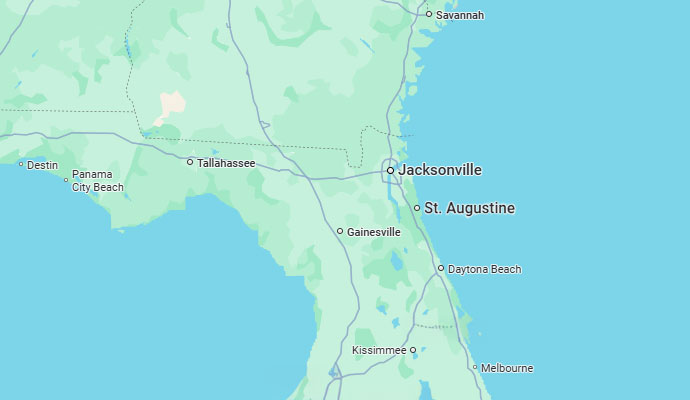
WagMore Garage Doors is a locally owned, owner-operated company serving Duval and St. Johns County. We're not a franchise, not a rollup, and not a national brand running a local phone number. When something goes wrong — and occasionally it does — you know exactly who to call.
What Guarantees Should Actually Look Like
Warranties in the garage door industry vary enormously, and the gaps matter.
"Lifetime warranty" is a phrase that gets attached to parts of very different quality. A lifetime warranty on a standard spring sounds impressive until you learn that standard springs are rated for roughly 10,000 cycles — about seven to ten years of typical use. High-cycle springs are rated for 25,000 cycles or more. A lifetime warranty on a high-cycle spring is a meaningful commitment. A lifetime warranty on a standard spring is a good-sounding phrase on a part that will fail on its own schedule regardless.
Ask: What is the cycle rating on the springs you're installing? What does the warranty cover — parts only, or labor too? If the spring fails in three years, what does the service call cost me?
Labor warranties are equally important and less commonly discussed. Parts failing is one thing. Bad installation is another. A company that warranties its workmanship — not just the parts — is putting real skin in the game.
WagMore's Furever Warranty
We install powder-coated high-cycle springs rated for 25,000+ cycles with our Furever Warranty: if they fail for any reason while you own the home, we replace them at no charge — parts and labor. That's not a marketing phrase. It's a written commitment we stand behind on every job.
What a Legitimate Service Visit Looks Like
A trustworthy garage door technician does the following without being asked:
They balance-test the door — disconnecting it from the opener and holding it at the midpoint to assess spring tension. They weigh the door as well. They inspect springs and cables for wire gauge condition and cycle wear, not just whether they're broken today. They check rollers, hinges, and track hardware. They test the opener's auto-reverse function. And then they explain what they found, what needs attention, what can wait, and what's in good shape. They document it all in writing.
What they do not do: eyeball the spring from the driveway, spray everything with lubricant to look busy, and immediately start writing up a quote for a package you didn't ask about.
The inspection is the product. If the inspection is a formality and the upsell is the main event, you're in the wrong garage.
WagMore's $0 Safe & Sound 16-Point Inspection
Every WagMore service visit includes a full 16-point inspection at no charge. We go through the entire system — springs, cables, rollers, hardware, balance, opener force settings — and tell you honestly what we find. We're not on commission. The inspection isn't a pretext. It's just how we do the job.
The Short Version: What to Ask Before You Book
You don't need to interrogate every company you call. But five direct questions will tell you almost everything:
1) Are your technicians salaried or commission-based?
A company that pays commission is structurally incentivized to find
problems. This is the single most important question.
2) Can you give me a written itemized quote before any work begins?
Verbal estimates become verbal disputes. Reputable companies put
numbers in writing without hesitation.
3) Are you licensed and insured in Duval or St. Johns County?
Florida requires licensing for garage door work. A company that can't
verify this clearly shouldn't be in your garage.
4) Do you pull permits for replacement installations?
Permits are required by Florida law for garage door replacement. A
company that skips them is cutting a corner that could affect your
insurance and resale. Ask directly: yes or no.
5) What warranty do you provide on parts and labor - in writing?
Ask specifically about labor warranty. Parts warranties from
manufacturers pass through to the homeowner regardless. Labor warranty
is the company's own commitment. If they hesitate, that tells you
something.
Ready for a Service Call Done Right?
Text us two photos — one of your door from the driveway, one of the size sticker inside the frame — and we'll send you a real budget range the same day. No commission techs. No bait-and-switch. No pressure.
Frequently Asked Questions
How can I tell if a garage door company is running a bait-and-switch?
What does it mean if a garage door technician is commission-based?
Is a national garage door franchise better or worse than a local company?
What warranties should I ask about before hiring a garage door company?
Do garage door companies need to pull permits in Florida?
What is a 'one-truck Chuck' in the garage door industry?








Garage Door Problems?
We turn "Uh-Oh" into
"ALL GOOD"
Is your garage door acting up? Don't worry, we've got you covered! Our expert technicians are here to diagnose and fix any garage door issues you may be experiencing. From broken springs to malfunctioning openers, the most likable techs you will ever meet will handle it all with precision and care.
Service Area
- Atlantic Beach
- Bartram Park
- Doctors Inlet
- Eagle Harbor
- Elkton
- Fleming Island
- Fleming Island Plantation
- Fruit Cove
- Green Cove Springs
- Hastings
- Jacksonville
- Jacksonville Beach
- Julington Creek Plantation
- Keystone Heights
- Lake Geneva
- Middleburg
- Neptune Beach
- Nocatee
- Oakleaf Plantation
- Orange Park
- Palm Coast
- Penney Farms
- Ponte Vedra
- Ponte Vedra Beach
- River Town
- Saint Augustine
- Saint Johns
- Sawgrass
- World Golf Village
