
CAN YOU ADD INSULATION TO AN EXISTING GARAGE DOOR?
What Northeast Florida homeowners need to know about retrofit insulation — and the spring adjustment that makes it actually work.
QUICK ANSWER
Yes — polystyrene or polyurethane insulation panels can be added to most existing single-skin steel garage doors by a professional. The upgrade improves thermal resistance, reduces noise, and protects stored items. It also requires spring rebalancing, since the added weight changes how the door operates. A tech visit is not optional. This is not a weekend project.
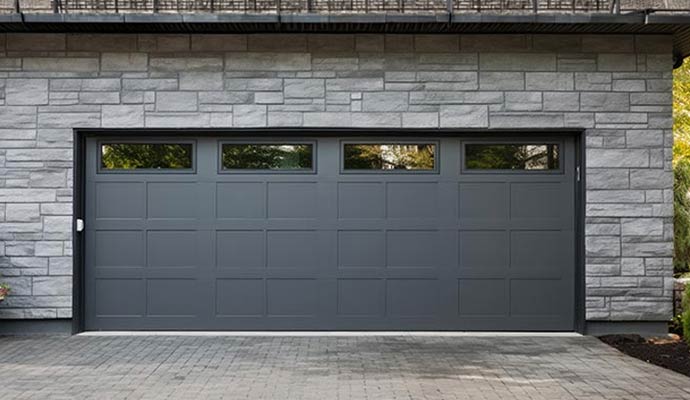
WHAT KIND OF DOORS CAN BE INSULATED?
Not every door is a candidate. Here's what works:
Single-layer steel doors — also called pan doors — are the best candidates. They're common in builder-grade homes throughout Jacksonville, Nocatee, St. Johns, and World Golf Village, and they're the doors most likely to be radiating Florida summer heat into your garage like a griddle.
Double-layer doors that already have polystyrene backing can sometimes be upgraded to polyurethane, but it depends on the door's construction and the cavity depth.
Wood doors, older aluminum doors, and anything with significant panel damage or track problems are generally not good retrofit candidates. A tech needs to assess before you commit.
WHY PROFESSIONAL INSTALLATION? THE SPRING PROBLEM.
This is the part every DIY video skips.
Adding insulation to a garage door changes its weight. Depending on the door size and insulation type, you can add anywhere from 30 to 75 pounds to a system that was precisely balanced when it was built. Springs are set to counterbalance a specific load. Add weight without adjusting the springs, and you get:
- A door that strains the opener motor on every cycle
- Springs wearing faster than their rated lifespan
- Inconsistent operation — heavy to lift manually, jerky on the way down
- Failed auto-reverse safety sensitivity — a safety code issue
A professional installation means the tech adds the insulation and recalibrates the spring tension to match the new door weight. They also test the opener's auto-reverse sensitivity and force settings — which require the door to stop and reverse if it meets more than 8–10 lbs of resistance.
IMPORTANT
If a company is offering to add insulation without mentioning spring adjustment, that's not a complete service. That's half a job.
WHAT ARE THE ACTUAL BENEFITS IN NORTHEAST FLORIDA?
Lower Garage Temperature
An insulated door can reduce peak garage temperature by 10–20 degrees on a Florida summer afternoon. This matters most if you use the garage as a workshop, gym, or laundry room — or if your air handler is in the garage (extremely common in NE Florida). An uninsulated door can cause the air handler to sweat with condensation.
🐾 WALLY'S TAKE
They'll tell you insulation cuts your cooling bill by 30%. It doesn't. Not in Florida. What it does is make your garage livable and protect everything inside it. That's the real story.
Noise Reduction
Polystyrene adds some damping. Polyurethane adds significantly more. If your door currently rattles like a tin can, professionally installed insulation will quiet it. The door itself will sound more solid — more like a wall and less like a sheet of metal.
Dent Resistance
A bare steel skin dents if you look at it wrong. Add a rigid backing — especially polyurethane — and the panel becomes substantially stiffer. In Florida garages where bikes, lawn equipment, and the occasional bumper tap are routine, this matters.
Buffer for Adjacent Living Space
For attached garages with bedrooms above or a shared wall to a living area, insulation reduces heat transfer through that wall system. The adjacent rooms run cooler, the AC works less. It's not dramatic, but it's real and cumulative across a Florida summer.
POLYSTYRENE VS. POLYURETHANE: WHAT'S THE DIFFERENCE?
| Polystyrene (EPS/XPS) | Polyurethane | |
|---|---|---|
| R-value per inch | ~3.8–5 | ~6–6.5 |
| Sound damping | Moderate | Significantly better |
| Structural rigidity | Good | Excellent |
| Retrofit availability | Wide | Limited to some door models |
| Weight added | Moderate | Higher |
Polyurethane is the gold standard — it's what triple-layer doors use. Retrofit polyurethane kits exist for some door models but are not universally available. Your tech will confirm what's possible for your specific door.
WHAT A PROFESSIONAL INSULATION RETROFIT ACTUALLY INCLUDES
When WagMore performs a garage door insulation upgrade, here's what happens:
- Door assessment — panel condition, track alignment, existing layer count, measurements
- Spring inspection — current tension, wire gauge, cycle estimate, condition
- Insulation installation — panels cut, fitted, and secured per manufacturer spec
- Spring rebalancing — tension adjusted for new door weight
- Balance test — door disconnected from opener, held at mid-point; should stay put
- Opener force and limit test — auto-reverse sensitivity confirmed
- Full Safe & Sound 16-Point Inspection — we don't stop at the insulation
This takes a few hours depending on door size and the condition of current hardware.
WHEN RETROFITTING DOESN'T MAKE SENSE
Honest answer: sometimes replacing the door is the smarter move.
If your door is more than 15 years old, has multiple dented or cracked panels, isn't wind-load rated to current St. Johns or Duval County code, or was installed before Florida's 2002 building code updates — you're adding insulation to a door that's already a liability.
A new triple-layer door delivers better R-value, full wind-load compliance, a cleaner look, and a manufacturer warranty from day one. The price difference between a retrofit and a full replacement is often smaller than homeowners expect.
THE STRAIGHT ANSWER
We'll tell you which one makes sense for your door. If retrofit is the right call, we'll do it right. If replacement is the smarter investment, we'll tell you that instead. No commission means no reason to steer you toward the bigger ticket.
FREQUENTLY ASKED QUESTIONS
Can I add insulation to my garage door myself?
How much does it cost to have a garage door insulated professionally in Northeast Florida?
Will adding insulation to my garage door lower my electric bill?
Does insulation affect how long my garage door springs last?
Will insulated panels make my garage door hurricane-rated?
How long does a professional insulation retrofit take?
Does adding insulation void my garage door warranty?
READY TO FIND OUT IF YOUR DOOR IS A CANDIDATE?
Start with our complimentary Safe & Sound 16-Point Inspection. We'll assess your door, tell you whether retrofit or replacement makes more sense, and give you honest numbers on both.








Garage Door Problems?
We turn "Uh-Oh" into
"ALL GOOD"
Is your garage door acting up? Don't worry, we've got you covered! Our expert technicians are here to diagnose and fix any garage door issues you may be experiencing. From broken springs to malfunctioning openers, the most likable techs you will ever meet will handle it all with precision and care.
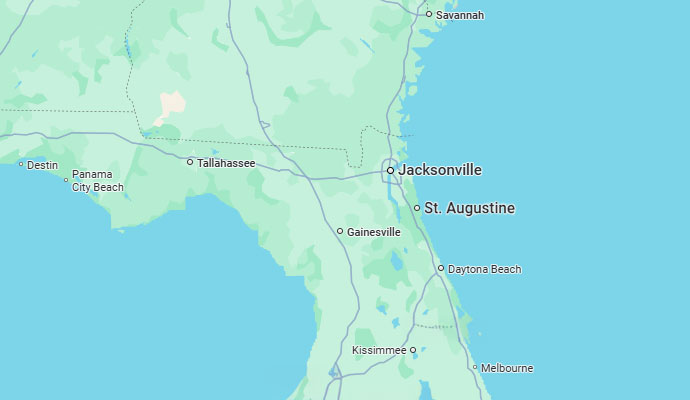
Service Area
- Atlantic Beach
- Bartram Park
- Doctors Inlet
- Eagle Harbor
- Elkton
- Fleming Island
- Fleming Island Plantation
- Fruit Cove
- Green Cove Springs
- Hastings
- Jacksonville
- Jacksonville Beach
- Julington Creek Plantation
- Keystone Heights
- Lake Geneva
- Middleburg
- Neptune Beach
- Nocatee
- Oakleaf Plantation
- Orange Park
- Palm Coast
- Penney Farms
- Ponte Vedra
- Ponte Vedra Beach
- River Town
- Saint Augustine
- Saint Johns
- Sawgrass
- World Golf Village
