
WAGMORE GARAGE DOORS | PEST-PROOFING & MAINTENANCE | DUVAL & ST. JOHNS
COUNTY
Snakes, Mice, and Rats Under Your Garage Door: What a Bad Bottom Seal Is Really Letting In
A cracked or gapped bottom seal isn't just a humidity problem anymore. Here's what's actually getting in, why a snake in your garage is usually a symptom and not the real problem, and what a seal can and can't do about it.
904-584-4828QUICK ANSWER
A cracked, gapped, or missing garage door bottom seal is one of the most common entry points for snakes, mice, and rats into Northeast Florida garages. Replacing a worn seal closes that gap, but a seal alone doesn’t guarantee full exclusion — mice can squeeze through openings as small as a quarter-inch, and a snake often shows up because rodents got there first. The full fix is a properly fitted seal, a quick check of the corners and track ends, and a call to licensed pest control if you already have an active infestation.
Why Are Snakes Getting Into My Garage in Northeast Florida?
Here's the part most homeowners don't expect to hear: the snake usually isn't the problem. It's a symptom of one. Snakes come into garages hunting — and what they're hunting is mice, rats, insects, and the occasional gecko or frog. If you're finding a snake in your garage more than once, the more useful question isn't "how do I get rid of snakes" — it's "why does my garage have enough food source to attract one in the first place."
In Duval and St. Johns County, the snakes homeowners most commonly report finding in a garage are non-venomous species like corn snakes, rat snakes, and black racers — all of which are actively drawn in by rodent activity and, frankly, are doing you a favor by eating the mice. That doesn't make them any less unwelcome. Copperheads and cottonmouths are present in our region as well, particularly near water, so any snake you can't positively identify should be treated with distance and caution, not curiosity.
The garage door's bottom seal is the single largest gap in most homes' pest defenses. Unlike a wall or a foundation, it's a moving part that's designed to flex — which means over time, UV exposure, heat, and daily wear crack and compress the rubber until it stops making full contact with the concrete.
Can Mice and Rats Really Fit Under a Garage Door?
Yes — more easily than most homeowners assume. A mouse can flatten its skull enough to fit through a gap about a quarter-inch wide, roughly the width of a standard pencil or the size of a dime. A rat needs a bit more room, typically around a half-inch, closer to the size of a quarter. A bottom seal that's compressed, torn, or riding unevenly over an uneven slab can easily open a gap that size in one or more spots — even if the door looks "closed" from where you're standing.
Common Signs Your Seal Is Letting Critters In
- Daylight visible under the door at one or more points when it's fully closed
- Gnaw marks or chewed sections on the rubber seal itself
- Droppings, nesting material, or a stale/musty smell near the base of the door
- The seal feels stiff, brittle, or cracks when you press on it
- Visible gaps at the corners where the seal meets the track, not just along the bottom edge
Will a New Bottom Seal Keep Snakes and Rodents Out for Good?
A properly fitted new seal makes a real, meaningful difference — it's the single biggest gap most homes have, and closing it removes the easiest entry point. But we want to give you the honest version, not the sales version: a seal is a strong reduction in risk, not a guarantee.
Rodents gnaw. Given enough time and enough motivation, a determined mouse or rat can wear through standard rubber seal material, especially at the corners where wear happens first. And no seal fixes a problem that already lives inside your garage — if you're seeing consistent activity, that's a call to a licensed pest control company for exclusion and treatment, not just a garage door repair. We'll be straight with you about which side of that line your situation is on.
WALLY'S TAKE
I'll bark at just about anything that moves, but even I don't love finding a snake curled up next to the water heater. If your seal's cracked or gapped, replacing it is one of the cheapest, fastest wins in the whole garage — and it's usually the reason the mice, and whatever's hunting them, found their way in.
What Else Can I Do to Rodent- and Snake-Proof My Garage?
A new bottom seal is the foundation, not the whole job. A few things worth checking alongside it:
- Corner seals and astragal ends — the corners are where a compressed seal gaps first, and where most homeowners never think to look
- Wall penetrations — gaps around pipes, wiring, or vents entering the garage are just as common an entry point as the door itself
- Clutter and storage against the walls — boxes and stored items give rodents cover to nest undisturbed
- Exterior food sources — pet food, birdseed, and open trash are the draw that starts the whole chain
- A working, unobstructed photo-eye sensor and a door that closes fully and evenly every time — a door that doesn't fully seat on the slab defeats even a brand-new seal
How Much Does a Garage Door Bottom Seal Replacement Cost?
In our market, bottom seal replacement typically runs $375–$600, depending on your door’s track type and the length of seal needed. It's one of the most affordable repairs on the board relative to the problem it solves.
| What’s Getting In | Typical Gap Needed | What Stops It |
|---|---|---|
| Mice | About 1/4" — dime-sized | A tight, unbroken seal along the full width and both corners |
| Rats | About 1/2" — quarter-sized | Same seal, checked for gnaw damage and corner gaps |
| Snakes | Varies by species and size | A sealed door plus rodent control — snakes follow the food source |
Frequently Asked Questions
Will a new garage door seal stop snakes from getting into my garage?
What size gap can a mouse fit through?
Are the snakes showing up in Northeast Florida garages dangerous?
How much does it cost to replace a garage door bottom seal?
How do I know if my bottom seal needs to be replaced?
Seeing Gaps Under Your Garage Door? Don't Wait for Company.
Text two photos of your bottom seal — one from outside, one from inside the garage — to 904-584-4828 and we'll send you a same-day quote. No pressure, no commitment.
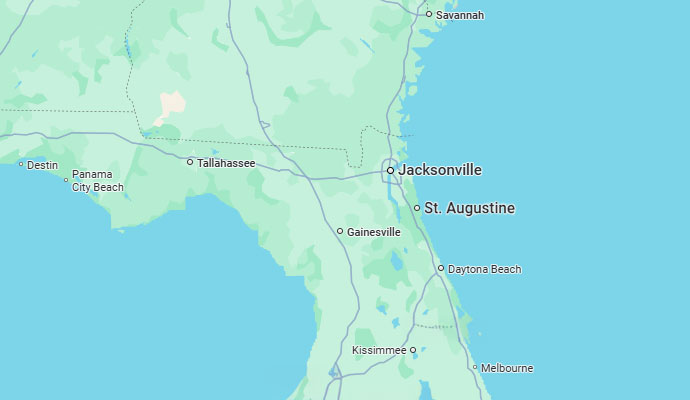
WagMore Garage Doors | Serving Jacksonville, Nocatee, Ponte Vedra, St. Augustine, Fleming Island, Mandarin, World Golf Village, Palencia, and the rest of Duval & St. Johns County








Garage Door Problems?
We turn "Uh-Oh" into
"ALL GOOD"
Is your garage door acting up? Don't worry, we've got you covered! Our expert technicians are here to diagnose and fix any garage door issues you may be experiencing. From broken springs to malfunctioning openers, the most likable techs you will ever meet will handle it all with precision and care.
Service Area
- Atlantic Beach
- Bartram Park
- Doctors Inlet
- Eagle Harbor
- Elkton
- Fleming Island
- Fleming Island Plantation
- Fruit Cove
- Green Cove Springs
- Hastings
- Jacksonville
- Jacksonville Beach
- Julington Creek Plantation
- Keystone Heights
- Lake Geneva
- Middleburg
- Neptune Beach
- Nocatee
- Oakleaf Plantation
- Orange Park
- Palm Coast
- Penney Farms
- Ponte Vedra
- Ponte Vedra Beach
- River Town
- Saint Augustine
- Saint Johns
- Sawgrass
- World Golf Village
