
THE $29 TUNE-UP THAT TURNS INTO $1,200
How commission-based garage door companies really make their money — and what a real tune-up actually looks like
⚡QUICK ANSWER
A $29 garage door tune-up is a loss-leader sales tactic, not a real maintenance visit. The technician who shows up is typically commission-paid — his income depends on what he sells while standing in your garage. Industry data shows these visits regularly produce $800–$1,200 in actual sales per call — 40x the advertised price. If the ad stopped your scroll and something felt off, trust that instinct.
YOU SAW THE AD. SOMETHING FELT OFF. YOU WERE RIGHT.
The mailer lands in your mailbox. The Facebook ad stops your scroll. Twenty-nine dollars for a full garage door tune-up — inspection, lubrication, the works. It sounds like a deal. It also sounds a little too good. So you did what smart homeowners do: you went looking for a second opinion before you picked up the phone.
Here's what you're about to find out.
At a national home services industry conference, one of the largest garage door companies in the country described their $29 tune-up program. The number shared was not $29.
Their average ticket per tune-up visit: over $1,200.
That's not a typo. That's 40 times the advertised price. And it isn't an accident. It's the model.
"Nobody here works on commission, so nobody here works you over."
HOW DOES A $29 TUNE-UP BECOME A $1,200 INVOICE?
It starts with a compensation structure most homeowners never think to ask about.
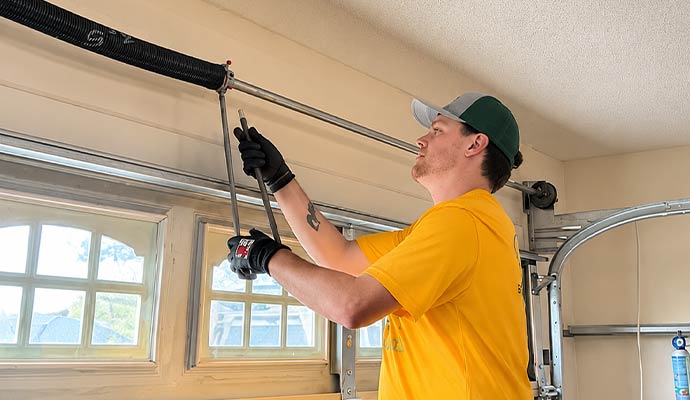
The technician who shows up at your door is not salaried. He's commission-based. His paycheck is directly tied to what he sells while he's standing in your garage. The $29 doesn't cover his time, his fuel, or his training. The company loses money on the visit at $29. They make it back — and then some — on what comes after.
Once he's inside, the clock starts. He's not looking at your door the way a doctor looks at a patient. He's looking at it the way a salesman looks at a commission — searching for every angle that justifies the pitch he's about to make.
- Springs with years of life left get described as a safety hazard.
- Rollers that are slightly worn become an "urgent replacement."
- The opener that's worked fine for five years is suddenly "voiding your spring warranty.
None of it is necessarily a lie. Some of it may even be technically accurate. But the framing, the urgency, and the sequence — all engineered. Because his rent depends on your invoice.
🐾 WALLY'S TAKE
That's how $29 becomes $1,200. Every time. A commission check doesn't care about your door's actual condition — it only cares about the size of the quote. The structure is the problem, not the individual tech.
IS THIS ONE BAD COMPANY OR AN INDUSTRY PATTERN?
Actually, some of these companies are actually great. It’s an industry pattern.
The commission-based tune-up model is widespread across residential home services, including garage door service. The specific numbers vary. The structure doesn't. When you tie a technician's pay to the ticket size, you've created a system where the customer's garage is a revenue opportunity, not a service call.
In your market, it shows up as:
- Direct mail promising free or near-free inspections
- Social media ads with prices well below what an hour of skilled labor actually costs
- Google ads for tune-ups that no legitimate business can sustain at face value
The tell is always the same: the advertised price cannot sustain the business. Which means something else is sustaining it. That something else is you.
⚠ UNLICENSED OPERATORS: A GROWING SCAM IN NORTHEAST FLORIDA
Some companies running cheap offers like a "$29 tune-up" ads aren't just using aggressive sales tactics — they're operating without a valid Florida contractor's license. Unlicensed operators pose as legitimate garage door companies, collect payment for work that may be unsafe or non-code-compliant, and disappear when problems surface. In Florida, garage door contractors are required to hold a state license through the Department of Business and Professional Regulation (DBPR). Before anyone enters your garage, verify their license at myfloridalicense.com. A licensed contractor's number should appear on every invoice, ad, and truck. If you can't find it, that's your answer.
WHAT DOES A REAL GARAGE DOOR TUNE-UP ACTUALLY LOOK LIKE?
A legitimate maintenance visit isn't glamorous. It also isn't $29, because real diagnostic work takes real time and real expertise. An honest tune-up in Northeast Florida runs $80–$150, depending on door size, condition, and what's found.
At WagMore, every maintenance visit includes our Safe & Sound 18-Point Inspection. Eighteen individual checks — not a spray-down and a sales pitch. Here's exactly what we cover:
| # | CHECK | WHAT WE LOOK FOR |
|---|---|---|
| 1 | Door Balance Test | Door disconnected from opener, held at midpoint — must hold position without drifting |
| 2 | Spring Tension Assessment | Wire gauge, coil spacing, rust, stress fractures — hands-on, not a glance |
| 3 | Torsion Bar & Drum Inspection | Check for wear, cable wrap alignment, corrosion |
| 4 | Lift Cable Inspection | Full length — drum, run, bottom bracket — for fraying, kinking, or improper seating |
| 5 | Cable Tension & Balance | Both sides checked for equal tension |
| 6 | Roller Evaluation | Each roller spun by hand — stem wear, wobble, bearing condition |
| 7 | Hinge Inspection | All hinges checked for cracks, bending, and loose fasteners |
| 8 | Hardware Tightening | Brackets, bolts, and track hardware torqued — not eyeballed |
| 9 | Track Alignment — Vertical | Plumb check both sides; gaps or bends identified |
| 10 | Track Alignment — Horizontal | Level and even; proper clearance from door edge |
| 11 | Track Fastener Check | Lag bolts and mounting hardware secure to wall framing |
| 12 | Opener Force Test | Up and down force tested against DASMA threshold |
| 13 | Auto-Reverse Safety Test | Physical obstruction test — door must reverse on contact |
| 14 | Safety Sensor Alignment | Photo-eye sensors aligned, lenses clean, signal solid |
| 15 | Opener Drive System Check | Chain, belt, or screw — tension, wear, lubrication need |
| 16 | Lubrication — Correct Products | White lithium on springs, hinges, bearings; tracks left dry |
| 17 | Bottom Seal Condition | Seal contact with floor, cracks, compression loss |
| 18 | Weatherstrip — Sides & Top | Seal integrity, UV damage, pest entry points |
WHY 18 POINTS MATTER
Most "$29 tune-up" operators check whether the door goes up and down, apply lubricant to visible parts, and start writing a quote. Our 18-point inspection exists because a garage door is the largest moving mechanical object in your home — and because the things that cause expensive failures (cable fraying, spring fatigue, track drift) are invisible unless you're specifically looking for them. The inspection is the service.
WAGMORE DOESN'T WORK THAT WAY.
Our technicians are salaried.
Not commission. Not "base plus bonus tied to ticket size." Salaried — with a performance bonus built around quality of work and efficiency, never around what they sell.
That one structural difference changes everything that happens in your garage.
- A WagMore tech has no financial reason to exaggerate what he finds.
- No incentive to describe a three-year spring as a safety emergency.
- No upside to writing a $1,200 invoice versus a $150 one.
- His paycheck is the same either way.
We send techs, not salesmen.
Every WagMore visit starts with our complimentary Safe & Sound 18-Point Inspection. If your door is healthy, we tell you. If something needs attention, we tell you what it is, why it matters, and what it costs — before we touch it. You decide. No pressure, because there's no commission riding on your answer.
Our Furever Springs come with a Furever Warranty — lifetime parts and labor coverage for as long as you own the home. That warranty exists because the tech who installed them was paid to do the job right, not paid to do it big.
ONE QUESTION TO ASK BEFORE YOU BOOK ANY GARAGE DOOR SERVICE
Ask this: "Are your technicians salaried or commission-based?"
That's the whole filter. The answer tells you whose interests are being served when that tech is standing in your garage.
A company that won't answer directly has already answered.
904-584-4828FREQUENTLY ASKED QUESTIONS
Why is a $29 garage door tune-up so cheap?
How much should a legitimate garage door tune-up cost in Jacksonville or St. Johns County?
How do I know if a garage door technician is working on commission?
How do I verify a garage door company is licensed in Florida?
How often should I have my garage door serviced?
What warranty should I expect on garage door spring replacement?
What is included in WagMore's Safe & Sound 18-Point Inspection?
READY FOR A REAL TUNE-UP?
Start with our complimentary Safe & Sound 18-Point Inspection.
No trip fee. No commission. No "while I'm here."
We send techs, not salesmen.
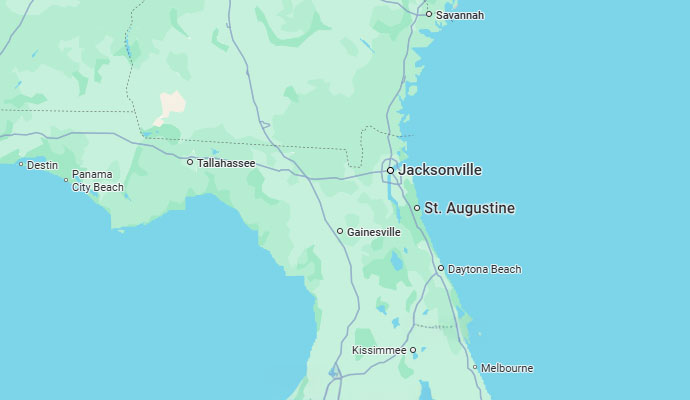
Serving Jacksonville, Nocatee, Ponte Vedra, St. Augustine, World Golf Village, Fleming Island & all of Duval and St. Johns County








Garage Door Problems?
We turn "Uh-Oh" into
"ALL GOOD"
Is your garage door acting up? Don't worry, we've got you covered! Our expert technicians are here to diagnose and fix any garage door issues you may be experiencing. From broken springs to malfunctioning openers, the most likable techs you will ever meet will handle it all with precision and care.
Service Area
- Atlantic Beach
- Bartram Park
- Doctors Inlet
- Eagle Harbor
- Elkton
- Fleming Island
- Fleming Island Plantation
- Fruit Cove
- Green Cove Springs
- Hastings
- Jacksonville
- Jacksonville Beach
- Julington Creek Plantation
- Keystone Heights
- Lake Geneva
- Middleburg
- Neptune Beach
- Nocatee
- Oakleaf Plantation
- Orange Park
- Palm Coast
- Penney Farms
- Ponte Vedra
- Ponte Vedra Beach
- River Town
- Saint Augustine
- Saint Johns
- Sawgrass
- World Golf Village
