
WagMore Garage Doors | Northeast Florida
The Driveway Test™
12 Things to Verify Before Any Garage Door Company Pulls Up to Your Home
A consumer protection guide from WagMore Garage Doors — Jacksonville, Nocatee, Ponte Vedra, St. Augustine & all of Northeast Florida
904-584-4828⚡ QUICK ANSWER — THE DRIVEWAY TEST
The Driveway Test is WagMore's 12-point framework for vetting any garage door company in Northeast Florida before you let them near your home. Ask:
- Is the business DBPR-licensed?
- How are techs trained — not just hired?
- Do they pull permits and can they prove it?
- Are techs on salary or commission?
- Is the quote all-in and what grade of parts?
- Is the door Fl #-rated for your address?
- Is the warranty in writing — parts AND labor?
- What insurance do they carry and at what limits?
- Are techs background-checked and drug-tested?
- Do they arrive uniformed in marked trucks?
- Are they locally owned or a franchise?
- Do they give you options or pressure you into one price?
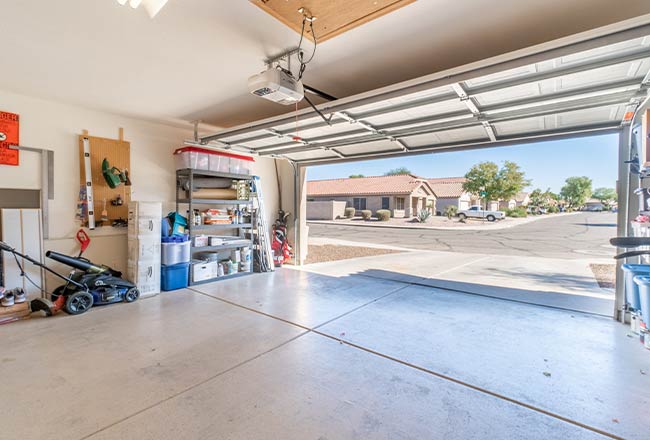
Why The Driveway Test Exists
The garage door industry is one of the least regulated home service trades in Florida. Almost anyone can buy a van, print a magnet, and show up at your house claiming to be a professional. There are no mandatory individual certifications, no industry-wide training standards, and a dominant pay model — commission — that financially rewards technicians for finding problems whether they exist or not.
Most homeowners don't find this out until after something goes wrong.
The Driveway Test is a 12-point vetting framework. It takes about three minutes to run through. It separates the operators who are doing this right from the ones who are doing it cheap. We're publishing it because an informed homeowner is the best customer — and because every single one of these questions is one we answer without hesitation.
Run every company through it. Including us.
🐾Wally's Take
We built a training bay — not a showroom. Because we'd rather have the best-trained tech in your driveway than the prettiest lobby on the street.
The 12-Point Driveway Test
#1: Is the business licensed with the state of Florida?
Florida law requires garage door companies to hold an active license with the Department of Business and Professional Regulation (DBPR). This covers the business — not necessarily individual technicians, since the state does not require individual certification for garage door work. That makes the next question even more important.
Ask for the company's DBPR license number and verify it at myfloridalicense.com before anyone touches your door. Takes 30 seconds. A legitimate operation will give it to you without blinking.
What a good answer sounds like:
Our Florida license number is [number]. Look it up right now — myfloridalicense.com." Hesitation, vagueness, or "I'll have to get back to you on that" is a disqualifier.
Also confirm the company carries general liability insurance and workers' compensation coverage. If an uninsured tech is injured on your property, the liability can fall on you.
#2: How are your technicians trained — not just hired?
Here's what most homeowners don't know: Florida does not require individual garage door technicians to hold any license or certification. The state licenses the business. The person who shows up at your door could have been hired last week with zero formal training, and nothing about that is technically illegal.
This is why training culture matters more than credentials in this industry. Ask the company directly: What does your training process look like? Do techs work alongside experienced staff before running solo calls? Do you have in-house training facilities or standards?
What a good answer sounds like:
Our techs go through a structured training program before they run their own calls. We have a dedicated training facility and ongoing standards they're held to." A vague answer — "they're experienced" or "we train them on the job" — tells you everything.
🐾 Wally's Take:
We built a training bay because we believe the job done right the first time is the only standard worth having. A showroom impresses visitors. A training bay protects your door.
#3: Do you pull permits — and can you prove it after the fact?
Florida Building Code requires a permit for garage door replacements in Duval and St. Johns County — full stop. The permit triggers a county inspection that confirms the installation meets local wind-load and structural requirements. It protects you at closing, protects you in a storm claim, and creates a legal record of compliant work.
Here's the part most homeowners don't know: a significant number of garage door companies skip permits entirely. Some say they pull them and don't. You won't find out until you go to sell the house and the unpermitted work surfaces in the buyer's inspection report — or until a hurricane claim gets denied because the door wasn't code-compliant.
What a good answer sounds like:
We handle permits from start to finish — you don't lift a finger. Once it's filed, we'll give you the permit number so you can verify it with the county yourself." That last part matters. If they can't or won't give you a permit number after the job, the permit may not exist.
For homes in Nocatee, World Golf Village, Ponte Vedra, and other HOA communities: permitted work also satisfies ARC/HOA documentation requirements. An unpermitted replacement can still trigger a compliance notice.
#4: Are your technicians paid on salary or commission?
Commission-based pay is the industry standard for garage door technicians — and the trade organizations actively promote it as a business model. The structure is straightforward: technicians earn more when they sell more. Springs, rollers, cables, openers — every part they recommend is a potential income opportunity.
That's not a conspiracy. It's a math problem. The person diagnosing your door is doing two calculations simultaneously: what's wrong with your door, and what that finding means for their paycheck. Those two calculations don't always land in the same place.
What a good answer sounds like:
"Our technicians are on salary. Their pay is the same whether your repair costs $200 or $2,000." If the company can't clearly tell you how their techs are compensated — or they deflect — that's the answer.
🐾 Wally's Take:
WagMore techs earn a salary plus efficiency and quality bonuses. Never tied to ticket size. Zero commission. It's not a promise — it's a pay structure. Ask us to show you.
#5: Is your quote all-in — and what grade of parts?
Two separate questions bundled into one, because both get exploited routinely.
First: is the quote actually all-in? Door price, hardware, installation labor, haul-away of the old door, and permit fees should all be on one written number. Low advertised prices are almost always door-only — labor and disposal get added later, sometimes 30–50% above the initial quote.
Second — and this one is less obvious: what grade of parts is the quote based on? The cheapest quote in your stack may be the cheapest because it specs builder-grade springs, lightweight rollers, and standard hardware that will need replacement in five years. A quote for heavy-duty, high-cycle components looks more expensive today and costs less over the life of the door.
What a good answer sounds like:
"This quote is all-in — door, hardware, install, haul-away, and permits. Here's exactly what grade of springs and hardware we're installing and why we spec them that way." Price comparisons are meaningless unless the spec is identical.
Ask specifically: What is the cycle rating on the springs? Are the rollers nylon or steel? What gauge steel is the door? These aren't trick questions — a confident company answers them without hesitation.
#6: Is the door wind-load rated for my specific address — and what's the FL# number?
Florida Building Code sets wind-load requirements for garage doors based on location, and those requirements vary across Northeast Florida. Homes in Ponte Vedra Beach, Vilano Beach, and South Ponte Vedra face stricter thresholds than inland communities in Mandarin or World Golf Village — but all of them have mandatory minimums.
An undersized door isn't just a performance issue. It's a code violation. In a major storm event, a non-rated door can buckle under wind pressure, creating interior pressure that can lift the roof structure. Insurance companies have denied hurricane claims when the installed door didn't meet local code.
What a good answer sounds like:
"The door we're installing carries Florida Product Approval number [FL#], and it meets the wind-load requirements for your specific address. We can show you on the written quote." No FL# means no verifiable compliance. Walk away.
You can verify Florida Product Approval numbers at the Florida Department of Business and Professional Regulation database. Any reputable company will have this number available before the door is ordered — not after.
#7: What does the warranty cover — parts AND labor — and is it in writing?
Verbal warranties are legally meaningless in Florida. If it isn't written, signed, and in your hands before the job starts, it doesn't exist.
Beyond the written requirement, the structure of the warranty matters as much as its length. "Lifetime warranty on springs" sounds comprehensive. Read the fine print: many of those warranties cover the spring itself but not the labor to install the replacement — which means every future spring failure costs you a service call and installation fee on top of the "free" part.
- What does the parts warranty cover, and for how long?
- What does the labor warranty cover — separately — and for how long?
- If a spring fails in 10 years, do you cover the replacement spring AND the labor to install it?
- Is the warranty transferable if I sell the home?
- Where is this written, and can I have a copy before work starts?
What a good answer sounds like:
"Here is our warranty in writing. It covers parts and labor. If your springs fail while you own the home, we replace them — parts and labor, no charge." Any warranty that separates parts from labor is designed to limit the company's exposure, not protect you.
Wally's Take:
🐾 WagMore's Furever Warranty covers our Furever Springs — heavy-duty, powder-coated, high-cycle springs built for Florida's humidity and salt air — for as long as you own the home. Parts and labor. In writing. No asterisks.
#8: What insurance do you carry — and what are the coverage limits?
"We're insured" is a nearly useless answer. Ask for specifics.
General liability insurance protects your property if the company damages something during the job. Workers' compensation protects you if a technician is injured on your property — without it, you may be liable for their medical costs. Both should be active, verifiable, and carried at adequate limits for the work being done.
What a good answer sounds like:
"We carry general liability and workers' compensation. We can provide a certificate of insurance before work starts." A company that can't or won't produce a certificate of insurance before the job is a company you shouldn't let on your property.
Ask for the certificate before anyone arrives. A legitimate company issues them routinely — it's a standard business document. Hesitation is a red flag. Refusal is a disqualifier.
#9: Are your technicians background-checked and drug-tested?
A garage door technician has access to your home, your garage, and often your interior. They know your address, your schedule (when you called, when you'll be home), and the layout of your property. The screening standards a company applies to its hires says everything about what they think of their obligation to you.
Background checks and drug screening aren't universal in this industry. Many small operators skip them entirely — not because they're hiring bad people, but because they're hiring fast and loose and the industry doesn't require it.
What a good answer sounds like:
"Every technician goes through a background check and drug test before their first day. It's not optional for us." An uncertain or defensive answer — "we know our guys" or "we're a small team" — is not the same as a process.
#10: Do your technicians arrive in uniform and drive marked trucks?
This question sounds like it's about aesthetics. It isn't. Uniformed technicians in marked trucks are an accountability signal. It means the company is comfortable being identified. It means the technician represents a brand, not just themselves. It means if something goes wrong, there's a clear chain of accountability.
An unmarked vehicle and an untucked polo don't mean the person is unqualified. But they do mean the company isn't investing in the signals that say: we stand behind whoever we send to your door.
What a good answer sounds like:
"Our techs arrive in uniform and drive marked WagMore trucks. You'll know exactly who's in your driveway and who sent them."
This matters especially for homeowners who are not present during the service call — a spouse, an elderly parent, a tenant. A clearly identified professional is a meaningful safety signal.
#11: Are you locally owned and operated — or a franchise?
Franchise and corporate-owned garage door operations are built around a different set of incentives than locally owned companies. Franchise technicians often work under commission structures set by the parent company. Customer complaints get routed through corporate channels. The decision-maker is somewhere else.
A locally owned, owner-operated company has its reputation tied to the zip codes it serves. The owner lives here. Their kids go to school here. Their name is on the truck. When something goes wrong — and occasionally something does — there's a person with a local stake in making it right.
What a good answer sounds like:
"We're locally owned and operated. The owner is reachable and involved in every job." Ask who owns the company, where they're based, and how long they've been serving this market specifically.
🐾 Wally's Take:
WagMore is family-owned. We built this company in Northeast Florida because we live in Northeast Florida. When you call, you're talking to someone whose kids are in the same schools and whose cars drive the same roads. That's not a tagline. It's accountability.
#12: Do you give me options — or just one price, take it or leave it?
An educated customer makes a better decision. A company that presents options — different door grades, different spring packages, repair versus replace — is a company confident enough in its work to let you choose. A company that gives you one price and applies pressure to decide immediately is a company that profits from your uncertainty.
Options also reveal the quality of the technician's diagnosis. If every assessment comes back with one solution at one price point, ask yourself: did they actually evaluate your door, or did they show up with a predetermined recommendation?
What a good answer sounds like:
"Here are three options based on what we found. Here's what each covers, what it costs, and what we'd recommend and why. Take the time you need." A company that gives you information and lets you decide is a company that doesn't need pressure to close.
The pressure-close is especially common when a technician is already in your driveway and the door is partially disassembled. Know that you have the right to stop, get a second opinion, and make the call on your own timeline.
The Driveway Test Scorecard
Print this. Screenshot it. Text it to yourself before you call anyone.
#1 — DBPR license number provided and verifiable at myfloridalicense.com
#2 — Training process explained; not just "experience"
#3 — Permits pulled; permit number provided after filing
#4 — Technicians on salary, not commission
#5 — Written all-in quote with parts grade specified
#6 — Door carries FL# product approval for your address
#7 — Warranty in writing — parts AND labor
#8 — Certificate of insurance provided before work starts
#9 — Technicians background-checked and drug-tested
#10 — Uniformed techs, marked trucks
#11 — Locally owned and operated; owner reachable
#12 — Options presented; no same-day pressure
Automatic disqualifiers — stop here:
- Can't provide a DBPR license number on the spot
- Says permits aren't required for replacements
- Can't produce a certificate of insurance before arrival
- Techs are on commission with no salary base
- Warranty is verbal only — nothing in writing
- Pressures you to decide while the tech is standing in your garage
- Advertises a "$29 tune-up" or "free spring replacement" (loss-leader for upsell calls)
- Can't tell you the FL# product approval number for the door they're recommending
Frequently Asked Questions
What is The Driveway Test?
Do individual garage door technicians need to be licensed in Florida?
Is a garage door replacement a permitted job in Jacksonville and St. Johns County?
What is a Florida Product Approval number (FL#) and why does it matter for my garage door?
Why does it matter whether a garage door technician is on salary or commission?
What should a garage door warranty cover in Florida?
Why does it matter whether a garage door company is locally owned versus a franchise?
What is WagMore's complimentary Safe & Sound Inspection?
WagMore passes The Driveway Test. Every single question.
Salaried techs. Background-checked. Trained in our own facility. Permitted work. Written warranty. Locally owned. We live here too.
Start with a complimentary Safe & Sound 16-point inspection — $0, no pressure, no commission.







Garage Door Problems?
We turn "Uh-Oh" into
"ALL GOOD"
Is your garage door acting up? Don't worry, we've got you covered! Our expert technicians are here to diagnose and fix any garage door issues you may be experiencing. From broken springs to malfunctioning openers, the most likable techs you will ever meet will handle it all with precision and care.
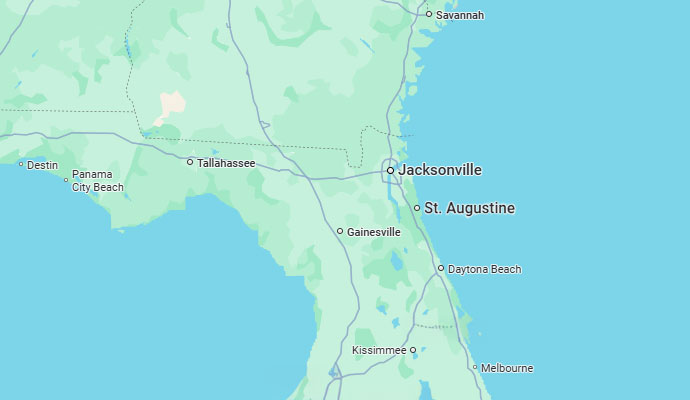
Service Area
- Atlantic Beach
- Bartram Park
- Doctors Inlet
- Eagle Harbor
- Elkton
- Fleming Island
- Fleming Island Plantation
- Fruit Cove
- Green Cove Springs
- Hastings
- Jacksonville
- Jacksonville Beach
- Julington Creek Plantation
- Keystone Heights
- Lake Geneva
- Middleburg
- Neptune Beach
- Nocatee
- Oakleaf Plantation
- Orange Park
- Palm Coast
- Penney Farms
- Ponte Vedra
- Ponte Vedra Beach
- River Town
- Saint Augustine
- Saint Johns
- Sawgrass
- World Golf Village
