
WAGMORE GARAGE DOORS | NORTHEAST FLORIDA | HONEST PRICING
“Will the Price Change When You Get Here?” Why Garage Door Bait-and-Switch Happens — and Why It Can’t Happen at WagMore
Commission pay is the engine behind the garage door industry’s worst behavior. Here’s how the scheme works, how to spot it before it costs you, and why nobody at WagMore has a financial reason to work you over.
904-584-4828QUICK ANSWER
Does the garage door price change once the technician arrives? At most companies, yes — and it’s by design. The garage door industry’s standard model is to advertise a low price ($29 tune-up, $69 spring repair, “from $99”), send a commission-paid salesperson in a service truck, and let that person rewrite the price on site. Their income depends on how much they sell you, not on whether your door needed it. That is bait and switch.
WagMore does it differently. Every WagMore technician is salaried. Nobody at WagMore earns a commission, a spiff, or a percentage of the ticket. Our techs do earn a bonus — tied to efficiency and quality of work, never to what they sell you. Our quoted range is the range you pay, and there is no one on our payroll with a financial reason to tell you your door needs more than it does.
The three-second test: ask any company “Are your technicians paid commission?” An honest company answers in one word. Call WagMore at 904-584-4828 .
What Is Bait-and-Switch in the Garage Door Industry?
Bait-and-switch is when a company advertises one price to get in your driveway, then quotes a dramatically different price once they’re standing in your garage. The advertised number was never the real number. It was the bait.
In the garage door business it usually looks like this: a homeowner sees a $29 tune-up, a $69 spring special, or a repair “starting at $99.” They book it. A truck shows up. Forty-five minutes later, the homeowner is holding a $1,900 quote for a spring system, a full roller set, and a new opener they never asked about — and being told the door is unsafe to operate until it’s all done.
The homeowner walks away feeling like they got worked over. They did. But the person in their garage wasn’t a villain. He was doing exactly what his pay structure told him to do.
Why Does the Price Change When the Technician Arrives?
Because the advertised price was never the job. It was the appointment. And because the person standing in your garage earns a percentage of whatever he writes on the invoice — not a wage for the work he performs.
Consider the math from the company’s side. No business sends a trained person to your home, pays an hour of labor, covers fuel and insurance and overhead, and walks away profitable on $29. It was never supposed to be profitable. It was supposed to be an entry ticket. The advertised price is a marketing expense. The real price is whatever gets signed in your driveway.
Two Different People Are Knocking on Your Door
It’s worth being precise here, because the industry is not made up of one type of person.
Some commissioned techs are genuinely skilled technicians. They can wind a torsion spring, diagnose a bad logic board, and true a track. They know exactly what they’re looking at. They’re simply paid in a way that puts their household budget on the opposite side of the table from yours. Good people, bad incentive.
Some are salespeople in disguise. They’ve been trained on hardware for a few weeks and on objection handling for considerably longer. The tool bag is a costume. These are the ones who quote a full spring system without ever performing a balance test — because they don’t know how, and because the test might return an answer they can’t sell.
From the homeowner’s side of the driveway, you cannot reliably tell these two apart in the first five minutes. That’s the point. It’s also why the right question isn’t “are you a real technician?” — both will say yes, and one of them is telling the truth. The right question is about how he gets paid.
How Commission Pay Creates Bait-and-Switch
Commission structures in this industry typically pay the tech a percentage of the invoice — often 10% to 15%+, sometimes with escalating tiers, bonuses on opener sales, and spiffs on specific upgrade parts. Some companies pay a small hourly base and make the tech earn the rest. Some pay nothing but commission.
Follow that logic all the way through:
- A tech who finds nothing wrong earns nothing. A $0 diagnosis is a wasted afternoon for him and his family.
- A tech who recommends a repair earns something. A $450 spring job puts real money in his pocket.
- A tech who recommends a full overhaul or replacement earns a great deal. Springs, rollers, cables, opener, and hardware on one ticket can be a four-figure commission day.
Nobody has to be dishonest for this to go badly. Put a decent person on a commission plan, give him a mortgage and a truck payment, and ask him to look at a five-year-old spring and decide whether it needs replacing today or in three years. The pay structure has already answered the question before he opens the toolbox.
THE UNCOMFORTABLE TRUTH
Commission doesn’t make people lie. It makes people see problems. When your income depends on finding wear, you will find wear. Every spring has some. Every roller has some. The judgment call about whether it matters right now is being made by someone whose paycheck has an opinion.
What Does the Industry’s Standard Playbook Look Like?
If you’ve been on the receiving end of this, you’ll recognize the sequence. It’s remarkably consistent, because it works.
- The hook. A price low enough that you don’t comparison shop. $29 tune-up. $69 service call. “Springs from $89.”
- The alarm. Within minutes, the language shifts to safety. “I wouldn’t let my family park under this.” “This cable could go any time.” Fear compresses your decision timeline.
- The stack. The quote isn’t for the thing that broke. It’s for the thing that broke plus everything adjacent to it — rollers, hinges, cables, bearing plates, and a new opener while we’re here.
- The clock. “I can do it today at this price. Tomorrow it goes back up.” Legitimate parts pricing does not expire at 5 p.m.
- The manager call. If you hesitate, the tech steps outside and calls a “manager” who authorizes a discount. The discount was in the price from the beginning.
Every step of that playbook is downstream of one decision: how the company chose to pay the person in your garage.
How Is WagMore Different?
We removed the incentive. Every WagMore technician is a salaried employee. Not commissioned. Not “commission-eligible.” Not hourly-plus-a-spiff-on-upgrades. Salaried. A WagMore technician’s pay does not go up by a single dollar because he replaced your entire spring system instead of telling you your door is fine and driving away.
That single decision changes the entire visit. When there’s nothing to gain by finding a problem, a technician is free to do the thing you actually hired him for: look honestly at your door and tell you the truth about it.
It also means our quotes hold. When we give you a budget range over text before we ever leave the shop, that range is built from the actual scope of work — your door size, your door weight, your spring configuration — not from a number designed to win the booking and get renegotiated in your driveway.
Do WagMore Technicians Earn Any Bonus at All?
Yes — and we’ll tell you exactly what it’s based on, because the basis is the entire question. Our technicians earn a bonus tied to efficiency and quality of work — doing the job right, doing it on time, and not being called back to redo it. It is not tied to revenue, to ticket size, to how many openers left the truck, or to any part or upgrade sold. A WagMore tech cannot increase his bonus by adding a roller set to your invoice. He can increase it by fixing your door correctly the first time.
That distinction is worth pressing any company on. “Performance pay” and “incentive pay” are phrases that sound identical whether the incentive is craftsmanship or revenue. Ask what the number is measured against. Ours is measured against the work. Theirs is measured against the invoice.
| Commission-Based Company | WagMore | |
|---|---|---|
| Who shows up | A commissioned rep — sometimes a real tech, sometimes a salesman with a tool bag | A salaried repair technician |
| How they’re paid | A percentage of your invoice, plus spiffs on parts and openers | A salary, plus a bonus tied to efficiency and quality — never to what’s sold |
| What raises their pay | A bigger ticket | Fixing it right the first time |
| Advertised price | A hook — loss leader designed to get in the door | The actual starting point of an honest quote |
| Price at the door | Frequently rewritten upward on site | Matches the range you were quoted |
| Incentive to find problems | Direct and financial | None. Zero. There is nothing to earn |
| Incentive to say “you’re fine” | Costs the tech money | Costs the tech nothing |
| The inspection | The setup for the quote | The product itself — $0 Safe & Sound 16-point |
What Does “Nobody Works on Commission” Actually Buy You?
- A quote that survives contact with your driveway. The range we text you is the range we honor.
- A technician who can say “this can wait.” And who loses nothing by saying it.
- A repair-first recommendation. We’d rather earn your trust on a spring job than sell you a door you don’t need yet.
- A real inspection. Our $0 Safe & Sound 16-point inspection runs on every service visit — balance test, spring and cable condition, roller wear, hardware torque, track alignment, and opener force and auto-reverse testing. Not a walk-around before a pitch.
- No expiring discounts. Our price on Tuesday is our price on Thursday.
How Do You Spot Bait-and-Switch Before It Costs You?
Ask these five questions on the phone, before you book. You will learn everything you need to know in about ninety seconds.
1. “Are your technicians paid commission?”
This is the whole ballgame. A company that pays salary answers immediately and plainly. A company that pays commission gets vague — “they’re incentivized to take care of you,” “they have performance pay,” “they’re compensated on customer satisfaction.” Vague means yes.
Follow-up worth asking: “If they earn a bonus, what is it measured against?” A bonus tied to efficiency, callback rate, or workmanship is a bonus that works for you. A bonus tied to revenue or ticket size is a commission wearing a nicer word.
2. “Will the price you’re giving me now be the price when you arrive?”
Listen for a straight yes with a stated condition (“yes, assuming the door and spring configuration match what you described”). Listen for hedging that leaves the number entirely open.
3. “What does your advertised special actually include?”
If a $29 tune-up includes no parts, no adjustment, and no balance test, it includes nothing. Ask what is covered and what triggers an upcharge.
4. “If my door doesn’t need the repair, what happens?”
A salaried outfit will tell you they’ll say so and leave. A commissioned outfit will struggle to imagine the scenario.
5. “Can you text me the range before you come out?”
Companies that intend to renegotiate in your garage don’t like putting numbers in writing first. Companies that don’t, do it happily.
RED FLAGS TO WALK AWAY FROM
- A price that only exists “today.” Parts pricing does not expire.
- A quote written before a balance test is performed.
- Exactly one option, take it or leave it — and the option is always the biggest one.
- Refusal to tell you what the price includes, or what happens if the door needs less than quoted.
- Safety language used as a closing tool rather than a finding.
- A “manager” phone call that produces a discount on the spot.
- No written warranty on parts and labor.
- A local-sounding name with no local address, and a call center that won’t name the technician.
What Should a Garage Door Repair Actually Cost in Northeast Florida?
Honest pricing isn’t a secret. Here are the real ranges we work within across Duval and St. Johns County. If a number you’re quoted lands far below these, ask what’s missing. If it lands far above, ask what’s been added.
- Average break/fix repair: $450–$550 for a standard double-car door, including the service call and labor.
- Spring replacement: $550–$950 depending on door size, layer count, and weight. Heavier triple-layer doors sit at the top of that range.
- Opener replacement: $750–$1,500 depending on drive type and smart features.
- Roller replacement (full set): $150–$275.
- Cable replacement: $175–$350.
A $29 tune-up cannot exist inside that math. That’s not a bargain — it’s a budget line item for customer acquisition, and you are the acquisition.
Frequently Asked Questions
Is bait-and-switch legal in Florida?
Why do garage door companies pay commission at all?
Why doesn’t WagMore break out parts and labor separately on a quote?
Does WagMore give homeowners options, or just one price?
Do salaried technicians work slower or care less?
Can WagMore really quote a price without seeing my door?
What if a WagMore tech finds nothing wrong with my door?
What is the Furever Warranty?
The Bottom Line
The question homeowners keep asking us — “will the price change when you get here?” — isn’t a suspicious question. It’s an educated one. It means somebody in Northeast Florida has already been worked over, and word travels.
Our answer is the same every time: no, because nobody here has a reason to change it. They send commission-based salespeople. We send salaried repair technicians. Nobody at WagMore works on commission, so nobody at WagMore will work you over.
You shouldn’t have to be an expert on torsion springs to avoid getting taken advantage of in your own garage. You should just have to hire someone who isn’t paid to take advantage of you.
904-584-4828
GET A REAL NUMBER — BEFORE ANYONE COMES OUT
Text two photos to — one of your door from the driveway, one of the size sticker inside the frame — and we’ll text back a real budget range the same day. No site visit. No salesperson. No pressure.
Salaried technicians. Furever Warranty. $0 Safe & Sound 16-Point Inspection on every service visit.








Garage Door Problems?
We turn "Uh-Oh" into
"ALL GOOD"
Is your garage door acting up? Don't worry, we've got you covered! Our expert technicians are here to diagnose and fix any garage door issues you may be experiencing. From broken springs to malfunctioning openers, the most likable techs you will ever meet will handle it all with precision and care.
Service Area
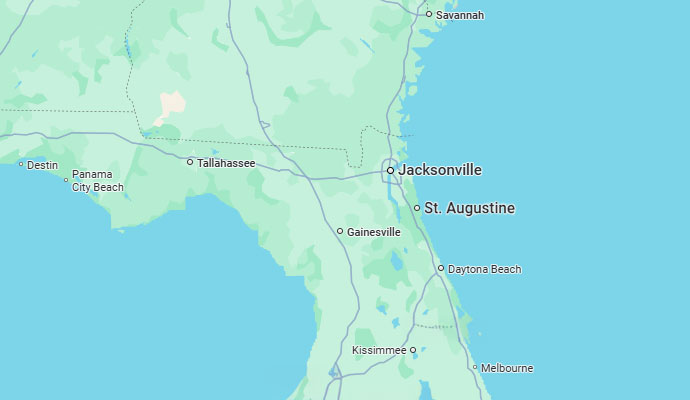
- Atlantic Beach
- Bartram Park
- Doctors Inlet
- Eagle Harbor
- Elkton
- Fleming Island
- Fleming Island Plantation
- Fruit Cove
- Green Cove Springs
- Hastings
- Jacksonville
- Jacksonville Beach
- Julington Creek Plantation
- Keystone Heights
- Lake Geneva
- Middleburg
- Neptune Beach
- Nocatee
- Oakleaf Plantation
- Orange Park
- Palm Coast
- Penney Farms
- Ponte Vedra
- Ponte Vedra Beach
- River Town
- Saint Augustine
- Saint Johns
- Sawgrass
- World Golf Village
