
GARAGE DOOR TROUBLESHOOTING | WAGMORE GARAGE DOORS | NORTHEAST
FLORIDA
Why Is My Garage Door Stuck? The Most Common Causes — and What to Do Next
Whether your door won't budge, stops halfway, or refuses to close, here's how to read the symptoms and figure out what's actually wrong.
Your garage door works thousands of times a year without complaint. Then one morning it just doesn't. Maybe you heard a bang. Maybe it started moving and stopped. Maybe it won't close no matter how many times you press the button.
A stuck garage door is almost always telling you something specific — and the symptom is the clue. This guide walks through the most common causes so you can figure out what's going on and decide what to do next.
904-584-4828QUICK ANSWER
A garage door that won't move, stops mid-travel, or is stuck open usually has one of these causes:
- Broken torsion or extension spring
- Misaligned or blocked safety sensors
- Opener failure, disconnect, or power loss
- Track obstruction or damage
- Snapped or frayed cable
Springs, sensors, and opener disconnects account for the vast majority of stuck-door calls in Northeast Florida. Read on to diagnose yours.
Stuck Garage Door Diagnosis: Match Your Symptom to a Cause
Find your symptom in the table below. The causes are sorted by frequency — the top three (broken spring, sensor issue, opener disconnect) account for the overwhelming majority of stuck-door calls we receive across Duval and St. Johns County.
| Symptom | Most Likely Cause | Safe to Check Yourself? |
|---|---|---|
| Loud bang, door dead | Broken spring | No — call a pro |
| Door starts to close, pops back up | Sensor misalignment | Yes — quick visual check |
| Motor hums, door doesn't move | Emergency release pulled / opener disconnect | Yes — re-engage trolley |
| Door stops or shudders mid-travel | Track obstruction or damaged track | Yes — clear debris; bent track is a pro job |
| Door moves crooked or drops fast | Broken or frayed cable | No — call a pro |
| Total silence, no lights | Power loss / tripped breaker | Yes — check outlet and panel |
The #1 Cause: A Broken Torsion or Extension Spring
If you heard a loud bang — like a firecracker going off in the garage — and now your door either won't move at all or feels impossibly heavy, a broken spring is almost certainly the cause.
Here's why: your garage door weighs 150 to 300 pounds depending on size and construction. The springs do most of the heavy lifting. Without them, the opener motor isn't strong enough to raise that weight on its own, so it either strains and stalls or refuses to run at all.
How To Confirm It’s a Broken Spring
Look at the horizontal bar above your door. If you see a visible gap — a 2-inch break in the coil — the spring has snapped. If both springs are intact but the door is still very heavy when you manually pull the emergency release cord and try to lift it, one or both springs may have lost their tension.
What To Do
Don't use the door. Don't force it with the opener. Spring replacement requires specialized tools and training — the springs are under enough stored tension to cause serious injury if handled incorrectly. This one is always a call-a-pro situation.
WagMore uses high-cycle powder-coated springs rated for 25,000+ cycles, backed by a Lifetime Warranty. If they ever fail while you own the home, we replace them for free.
The #2 Cause: Safety Sensor Problems
If your door goes up fine but refuses to close — or starts to close and immediately reverses — the safety sensors at the bottom of the tracks are almost always the culprit.
Every modern garage door opener has a pair of photo-eye sensors mounted about 4–6 inches off the ground on either side of the door. They shoot an invisible beam across the opening. If anything breaks that beam — a person, a pet, a box — the door reverses as a safety measure.
The problem is these sensors are sensitive. A spider web across the lens, a direct shot of afternoon sunlight, or a sensor that's been bumped slightly out of alignment can convince the opener that something is in the way when nothing is.
How To Check Your Sensors
- Look at both sensor units. Each one has a small indicator light. When they're aligned and the beam is clear, the lights should be solid and steady.
- If one light is blinking or dim, the sensors are out of alignment. Loosen the mounting wing nut slightly, adjust the sensor until the light goes solid, and retighten.
- Wipe both lenses with a dry cloth — dirt and condensation are surprisingly common culprits here in Florida's humidity.
- Check for anything — a broom handle, a trash bag, a piece of trim — that might be breaking the beam near the floor.
In Northeast Florida, afternoon sun angle is a known issue for sensors on west-facing garage openings. If your door acts up only at certain times of day, that's the first thing to check.
The #3 Cause: Opener Failure or Emergency Release Disconnect
If you hear the motor running but the door doesn't move — or the motor is completely silent — the issue is likely the opener itself or a disconnect in the drive system.
The Emergency Release Has Been Pulled
Every opener has a red emergency release cord hanging from the trolley rail. Pulling it disconnects the door from the drive mechanism so you can operate it manually during a power outage. If someone — or a pet — pulled that cord, the opener will run but the door won't respond.
The fix: slide the door fully closed, then run the opener. The trolley should click back into the carriage automatically. If it doesn't engage on the first try, run it again.
The Opener Has Lost Power
No lights, no sound, no response from the wall button or remote? Check the outlet the opener is plugged into — garage outlets are often GFCI-protected, and a tripped GFCI outlet cuts all power to the unit. Look for a GFCI outlet near the door or on the garage wall and press the reset button.
If the outlet is fine, check your home's circuit breaker panel for a tripped breaker on the garage circuit.
The Opener Motor Has Failed
If the motor hums but the door won't move, or the unit makes grinding or clicking noises during the cycle, the opener's internal components may have failed. Openers typically last 10–15 years. If yours is older than that and starting to act unpredictably, replacement is usually the right call — especially if you're also replacing or have recently replaced the door.
Note: An undersized opener straining against a heavy insulated door is one of the most common causes of premature opener failure we see in Northeast Florida. If you recently upgraded to a triple-layer door and kept the old opener, that's the first place to look.
Other Causes Worth Knowing About
Track Obstruction or Damage
The metal tracks on either side of the door guide the rollers as the door travels. A pebble, bolt, or piece of hardened debris caught in the track can stop the door mid-cycle and trigger the auto-reverse. Clear the tracks and wipe them down.
If the tracks themselves are bent or pulled away from the wall, that's a different problem — a bent track can catch the rollers and jam the door completely. Straightening or replacing damaged track sections is a technician job.
Broken or Frayed Cable
The lift cables run from the bottom corners of the door up through the drum at each end of the torsion bar. When a cable snaps or frays severely, the door loses support on that side and can drop, hang crookedly, or refuse to move. Like broken springs, frayed cables are a do-not-touch situation — they're under load and can snap unpredictably.
Lock Mode or Vacation Mode
This one trips people up: most wall-mounted consoles have a lock switch or vacation mode that disables all wireless signals to the opener. If a remote or keypad has stopped working but the wall button still opens the door, check for a slide switch or lock button on the console that may have been accidentally toggled.
Dead Remote or Keypad Battery
Worth ruling out first before any deeper troubleshooting: if the door responds to the wall button but not the remote or keypad, the battery is almost always the cause. Most remotes use CR2032 coin cells or AA batteries; keypads typically use a 9-volt. Swap it out before you call anyone.
Frequently Asked Questions
Why won't my garage door open but the motor runs?
Why does my garage door keep reversing before it closes?
Can I open a garage door with a broken spring?
Why did my garage door stop working after a storm?
How do I know if my garage door spring is broken?
Why does my garage door only get stuck sometimes?
Not Sure What's Holding Your Door Back?
Text us two photos — one of the full door from the driveway, one of the spring system above the door — and we'll tell you what's going on. Same-day response, no commitment.








Garage Door Problems?
We turn "Uh-Oh" into
"ALL GOOD"
Is your garage door acting up? Don't worry, we've got you covered! Our expert technicians are here to diagnose and fix any garage door issues you may be experiencing. From broken springs to malfunctioning openers, the most likable techs you will ever meet will handle it all with precision and care.
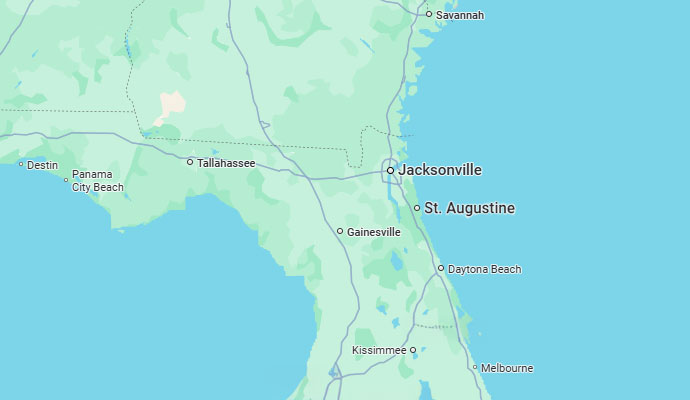
Service Area
- Atlantic Beach
- Bartram Park
- Doctors Inlet
- Eagle Harbor
- Elkton
- Fleming Island
- Fleming Island Plantation
- Fruit Cove
- Green Cove Springs
- Hastings
- Jacksonville
- Jacksonville Beach
- Julington Creek Plantation
- Keystone Heights
- Lake Geneva
- Middleburg
- Neptune Beach
- Nocatee
- Oakleaf Plantation
- Orange Park
- Palm Coast
- Penney Farms
- Ponte Vedra
- Ponte Vedra Beach
- River Town
- Saint Augustine
- Saint Johns
- Sawgrass
- World Golf Village
