
Why Is Your Garage Door Hotter Than the Air Outside?
Understanding radiant heat, and why the number of layers in your garage door determines how much of that heat ends up in your garage.
904-584-4828QUICK ANSWER
Yes — a garage door absorbs direct sunlight and re-radiates that heat inward, which means the door's surface (and the air right next to it) can run hotter than the ambient outdoor temperature. Single-layer steel doors transfer nearly all of that heat straight through. Double-layer doors slow it down. Triple-layer doors, with a solid insulating core, block the majority of it.
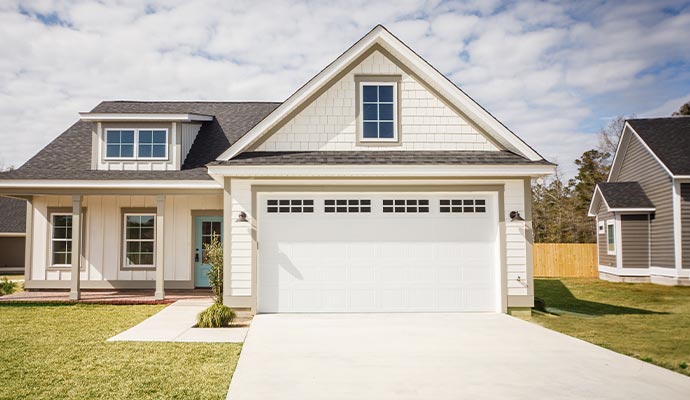
The Garage Door Isn't Just Warm — It's a Massive Radiant Heat Panel
Most homeowners assume their garage gets hot because it's simply exposed to the outside air. That's part of it — but it's not the biggest part. The bigger issue is radiant heat: direct sunlight striking your garage door's steel surface, heating that metal well beyond the surrounding air temperature, and then re-radiating that stored heat straight into your garage.
Think of it like standing next to a campfire. The air a few feet away might be a comfortable 75 degrees, but stand close to the fire and you feel heat radiating onto your skin regardless of the air temperature around you. A sun-baked, single-layer steel garage door works the same way — it becomes a low-grade radiant heater bolted to the front of your house, aimed directly into your garage.
Does a Garage Door Actually Get Hotter Than the Outside Temperature?
Yes. Steel garage doors facing direct sunlight in Northeast Florida can reach surface temperatures well above the surrounding air temperature — sometimes by 40 degrees or more on a clear summer day. The steel absorbs solar radiation efficiently, and an uninsulated door has nothing inside it to stop that heat from moving straight through to the interior surface.
Why Does This Matter if My Garage Isn’t Air Conditioned?
Even in a garage that isn't actively cooled, radiant heat coming off the door affects comfort, storage conditions, and — for attached garages — the temperature of shared walls next to bedrooms, laundry rooms, or home offices. A garage that radiates like an oven all afternoon keeps radiating that stored heat into the evening, long after the sun has moved off the door. High temperatures impact your usability for things like hobbies, projects, and a workout space, plus potentially negatively impact items stored in your garage too.
The Three Layers, and How Each One Handles Radiant Heat
Not all garage doors respond to solar radiant heat the same way. The construction — specifically, how many layers of material stand between the sun-facing steel skin and your garage — determines how much of that heat actually makes it inside.
Single-Layer Doors: No Barrier, No Defense
A single-layer door is one sheet of steel with nothing behind it. There's no insulating material to interrupt the heat as it moves from the sun-facing side to the garage-facing side. The exterior absorbs solar radiation, and within a short time, the interior surface is radiating that same heat directly into your garage. This is why single-layer doors — sometimes called "pan doors" — perform the worst in direct Florida sun, and why garages behind them so often feel like the hottest room on the property by mid-afternoon.
Double-Layer Doors: A Meaningful Improvement
Double-layer doors add a layer of polystyrene foam insulation behind the steel skin, finished with a vinyl backing. That foam layer gives radiant heat something to work against — it slows the transfer significantly compared to bare steel, which is why double-layer garages run noticeably cooler than single-layer ones on the same sun-exposed wall. It's a real improvement, though the insulating core is thinner than what a triple-layer door offers, so some heat transfer still gets through.
Triple-Layer Doors: The Actual Solution
Triple-layer doors sandwich a thick core of polyurethane (or polystyrene) insulation between two full steel skins. That thicker core is what actually interrupts radiant heat transfer in a meaningful way — the exterior skin still absorbs solar radiation the same as any steel door would, but the insulating core prevents most of that stored heat from ever reaching the interior surface. For attached garages, garages with a bedroom or bonus room above them, or homes on sun-exposed lots throughout Nocatee, Ponte Vedra, and World Golf Village, a triple-layer door is the build that actually solves the radiant heat problem rather than just softening it.
WHY THIS ISN'T THE SAME AS THE "30% ENERGY SAVINGS" CLAIM
Radiant heat reduction is about comfort and heat load — not a guaranteed cut to your JEA or FPL bill. If you've read our breakdown of the 30% cooling-savings myth, this is the piece of that story that's actually true: an insulated door meaningfully lowers how hot your garage runs and how much heat pushes into adjacent rooms, even though it won't slash your air conditioning bill by a dramatic percentage.
Quick Comparison: How Each Layer Handles Solar Radiant Heat
| Construction | Radiant Heat Transfer | Typical Garage Impact | Best For |
|---|---|---|---|
| Single-Layer | Highest — minimal barrier | Garage runs hottest, closest to outdoor surface temp | Detached garages, budget builds |
| Double-Layer | Moderate — foam core slows transfer | Noticeably cooler than single-layer | Workshops, garages used as living space |
| Triple-Layer | Lowest — thick insulated core blocks most transfer | Meaningfully cooler, less heat pushed to adjacent rooms | Attached garages, rooms above garage, sun-exposed lots |
Frequently Asked Questions
What causes a garage door to radiate heat?
Will insulating my garage door stop the heat completely?
Does the color of my garage door affect how much radiant heat it absorbs?
Is this the same as a hurricane-rated or wind-load-rated door?
What This Means for Your Northeast Florida Garage
If your garage door faces west or south — common throughout Nocatee, Ponte Vedra, World Golf Village, and Fleming Island — it's absorbing hours of direct, intense sunlight every afternoon. A single-layer door in that position isn't just uncomfortable; it's constantly pushing radiant heat into the garage and, for attached homes, into the walls and rooms next to it.
Storage and Workspace Comfort
If your garage is used for storage, tools, or a home gym, radiant heat through a single-layer door shortens the life of anything sensitive to heat and humidity stored inside.
Adjacent Living Space
Rooms sharing a wall with the garage — a bonus room, laundry room, or bedroom above a garage — stay measurably more comfortable behind a triple-layer door.
Evening Heat Retention
A garage that radiates heat all afternoon is still radiating stored heat well into the evening, which matters if you're working in the garage after work or using it as extra living space.
Not Sure Which Layer Your Door Needs?
Text two photos of your current door to 904-584-4828 and we'll send you a same-day quote — including whether an upgrade to double- or triple-layer construction makes sense for your home.








Garage Door Problems?
We turn "Uh-Oh" into
"ALL GOOD"
Is your garage door acting up? Don't worry, we've got you covered! Our expert technicians are here to diagnose and fix any garage door issues you may be experiencing. From broken springs to malfunctioning openers, the most likable techs you will ever meet will handle it all with precision and care.
Service Area

- Atlantic Beach
- Bartram Park
- Doctors Inlet
- Eagle Harbor
- Elkton
- Fleming Island
- Fleming Island Plantation
- Fruit Cove
- Green Cove Springs
- Hastings
- Jacksonville
- Jacksonville Beach
- Julington Creek Plantation
- Keystone Heights
- Lake Geneva
- Middleburg
- Neptune Beach
- Nocatee
- Oakleaf Plantation
- Orange Park
- Palm Coast
- Penney Farms
- Ponte Vedra
- Ponte Vedra Beach
- River Town
- Saint Augustine
- Saint Johns
- Sawgrass
- World Golf Village
