
GARAGE DOOR SPRINGS | WAGMORE GARAGE DOORS | NORTHEAST FLORIDA
Why Powder-Coated Garage Door Springs Last Longer in Florida
Most homeowners never see their garage door springs — but the finish on that steel wire is one of the most important factors in how long they survive Northeast Florida's climate.
When a garage door spring breaks, most homeowners focus on one thing: getting it replaced as fast as possible. That's understandable — a broken spring means a door that won't open, a car that's trapped, and a morning that's already off the rails.
But the conversation that almost never happens at that moment is the one that matters most for the next replacement: what kind of spring is going in, and what's on the outside of the wire.
Powder coating — a factory-applied polymer finish on the spring wire — isn't a luxury upgrade. In Northeast Florida's climate, it's the difference between a spring that lasts its full rated cycle life and one that fails years early due to corrosion. Here's what it is, why it matters, and what to ask about when you're getting springs replaced.
904-584-4828⚡ Quick Answer
Powder coating is a dry finishing process that applies a protective polymer layer to garage door spring wire before the spring is wound. In Florida's salt air and high humidity, bare steel springs oxidize from the outside in — rust forms between coils, increases friction, accelerates fatigue, and shortens spring life. Powder-coated springs seal the wire surface against moisture and corrosion, significantly extending service life in coastal and humid climates like Northeast Florida. They are the correct specification for any home in Duval or St. Johns County.
What Powder Coating Actually Is
Powder coating is an industrial finishing process in which a dry polymer powder is electrostatically applied to a metal surface and then cured under heat. The result is a uniform, bonded coating that is significantly more durable than paint — it doesn't chip, peel, or crack the way liquid finishes do, and it forms a continuous seal across the metal surface rather than sitting on top of it.
On a garage door spring, the powder coating is applied to the high-carbon steel wire before the spring is wound. This means the finished spring has a protective layer on every coil — including the surfaces that make contact with each other during tension and release. That's the critical distinction from a surface treatment applied after winding, which can't fully reach the inter-coil contact points.
All Wagmore high cycle springs are painted a distinctive yellow so you know with a quick glance you've got that extra layer of protection. That's part of why we guarantee them for as long as you own the home.
Why Bare Steel Springs Fail Faster in Florida
Steel corrodes. That's not a flaw — it's chemistry. High-carbon steel, which is what garage door springs are made from, is strong under tension but reactive in the presence of moisture and oxygen. In a dry climate, that reaction is slow enough to be a non-issue over a typical spring's rated cycle life. In Northeast Florida, it is not.
Salt Air Penetration
Homes within several miles of the Atlantic coast — Jacksonville Beach, Atlantic Beach, Neptune Beach, Ponte Vedra Beach, Vilano Beach — are exposed to airborne salt particles that accelerate the oxidation of bare steel dramatically. Salt doesn't just sit on the surface; it's hygroscopic, meaning it actively attracts and holds moisture against the metal. The combination of salt and sustained moisture is one of the most corrosive environments a metal component can experience.
But salt air isn't exclusively a beachside problem. Northeast Florida's onshore wind patterns mean that communities well inland — Nocatee, World Golf Village, Palencia, even parts of Mandarin and Fleming Island — see elevated salt deposition compared to truly inland regions. The coast is close, and the air moves.
Humidity and Condensation Cycling
Even without direct salt exposure, Northeast Florida's baseline humidity creates a corrosion environment that bare steel springs struggle with. Garages experience daily condensation cycling: the temperature inside the garage drops at night and rises during the day, and moisture condenses on metal surfaces during the cool phase. For an uncoated spring under tension, that means repeated wetting and drying of the steel wire — exactly the cycle that drives progressive oxidation.
A spring that looks fine in February may show visible rust by August if it's bare steel and the garage has poor ventilation, which describes a significant percentage of attached garages in St. Johns and Duval County.
What Rust Does to a Spring
Surface rust on a garage door spring isn't just cosmetic. As oxidation progresses, it creates two specific problems that shorten spring life:
- Inter-coil friction: Rust roughens the wire surface and increases friction between coils as the spring winds and unwinds. More friction means more heat and more stress on each cycle — accelerating fatigue in the wire.
- Tensile surface degradation: Corrosion attacks the outer surface of the wire, reducing the effective cross-section of steel that's carrying the tension load. A corroded spring is structurally weaker than its rating suggests, and it will fail earlier under the same load.
The failure isn't gradual in the way that makes it easy to predict. The spring may look acceptable right up until the moment it snaps. Powder coating interrupts this process at the source by keeping moisture and oxygen off the wire surface.
Powder-Coated VS Bare Steel: A Direct Comparison
| Factor | Bare Steel Spring | Powder-Coated Spring |
|---|---|---|
| Corrosion resistance | None — bare steel oxidizes on contact with moisture | Sealed surface; resists salt air and humidity |
| Lifespan in FL climate | 5–7 years (standard cycle) | Significantly longer; coating maintains wire integrity |
| Surface friction | Increases as rust forms between coils | Smooth finish reduces inter-coil friction |
| Visible wear indicator | Rust blends in; damage is hidden | Coating chips or discolors before wire is compromised |
| Spring fatigue rate | Accelerated by surface pitting | Slowed — coating protects the wire's tensile surface |
| Maintenance requirement | Lubrication critical; partially compensates | Still benefits from lube; corrosion risk is lower |
The Connection Between Powder Coating and High-Cycle Springs
Powder coating and high-cycle spring ratings are separate specifications — but in practice, they almost always go together in quality spring replacements. Here's why.
High-cycle springs are manufactured from heavier-gauge, higher-carbon steel wire, wound to tighter tolerances, and rated for 25,000 cycles or more. Standard springs, by contrast, use lighter wire gauges and are rated for approximately 10,000 cycles. The heavier wire gauge of high-cycle springs gives the powder coating more surface area to adhere to and more steel underneath it — creating a more durable finished component overall.
A powder-coated standard spring is better than a bare steel standard spring. But a powder-coated high-cycle spring is the correct long-term specification for a Northeast Florida home — because you get the corrosion protection of the coating combined with the extended cycle life of heavier wire. The two upgrades compound each other.
This is the specification WagMore installs on every spring job: powder-coated, high-cycle torsion springs, backed by a Lifetime Warranty. If a spring we install fails for any reason while you own the home, we replace it at no charge. We can make that offer because we're confident in what we're putting in.
WagMore's Lifetime Warranty on High-Cycle Springs
We install powder-coated, high-cycle springs on every job — and we back them with a Lifetime Warranty for as long as you own the home. If they fail, we replace them at no charge. It's the last spring have to buy.
What To Ask When Getting Springs Replaced
Most homeowners don't know to ask about spring specifications, and most companies don't volunteer the information. When you're getting a quote for spring replacement — from WagMore or anyone else — these are the questions worth asking:
- Are these springs powder coated? Ask specifically. "Galvanized" is not the same as powder coated — galvanizing is a zinc coating applied by dipping, which provides some corrosion resistance but is less durable and less complete than electrostatic powder application.
- What is the cycle rating? Standard springs (10,000 cycles) and high-cycle springs (25,000+ cycles) are priced differently and perform very differently over time. Know which you're getting.
- What is the wire gauge? Heavier gauge wire carries the load with less stress per cycle and holds coating better. This is a number a technician should be able to provide.
- What warranty is included? A company confident in its spring quality will stand behind it in writing. A vague answer or a short warranty period tells you something about what's actually going in.
A technician who can't answer these questions or deflects them isn't a good fit for a Northeast Florida home — where the climate will expose any shortcut in component specification within a few seasons.
Does Powder Coating Eliminate the Need for Lubrication?
No — and this is worth being clear about. Powder coating is a corrosion barrier, not a lubricant. The coils of a torsion spring still experience friction against each other as the spring winds and unwinds, and that friction still accelerates wear over time.
Proper lubrication — white lithium grease worked into the coil gaps, not sprayed on the outside of the spring — is still the correct maintenance practice on powder-coated springs. The combination of a coated wire surface and adequate lubrication is meaningfully better than either alone. The coating keeps moisture out; the lubricant reduces inter-coil friction. They serve different functions.
Lubricate twice a year — once before summer heat arrives and once heading into fall. A can of dedicated garage door lubricant or white lithium grease takes five minutes and is the highest-ROI maintenance task on the system.
How To Inspect Your Current Springs for Corrosion
If your current springs are bare steel, it's worth knowing what early-stage corrosion looks like before it becomes a structural problem. Here's a safe visual inspection you can do from the garage floor — do not touch or handle the springs:
- Look for orange or reddish-brown discoloration anywhere on the spring coils. Surface rust will appear as a uniform dusting or as pitting — small dark spots where oxidation has begun to eat into the wire.
- Check the coil gaps — the spaces between individual coils when the spring is at rest. Rust that forms in these gaps is more damaging than surface rust because it directly increases inter-coil friction.
- Look at the winding cones at each end of the spring. These are metal fittings that anchor the spring to the torsion bar. Rust at the cone-to-coil interface is a sign of advanced corrosion and warrants a professional evaluation.
- Note whether the spring looks uniform in color and finish. A spring that has patches of bare silver metal mixed with darker areas has had its protective finish compromised somewhere — either it was never coated or the coating has failed.
If you see any of these signs on springs that are more than five years old, it's worth having a technician assess whether replacement is the right call. Corroded springs near the end of their cycle life are an unpredictable failure waiting to happen.
Frequently Asked Questions
Are powder-coated garage door springs worth the extra cost?
What is the difference between galvanized and powder-coated garage door springs?
Can you powder coat existing garage door springs?
How do I know if my current springs are powder coated?
Do powder-coated springs still need to be lubricated?
Ask About Powder-Coated Springs at Your Next Service Visit
WagMore installs powder-coated, high-cycle torsion springs backed by a Lifetime Warranty. Every installation includes our 16-point Safe & Sound inspection — and if your current springs show early corrosion or fatigue, we'll show you exactly what we're looking at before recommending anything.








Garage Door Problems?
We turn "Uh-Oh" into
"ALL GOOD"
Is your garage door acting up? Don't worry, we've got you covered! Our expert technicians are here to diagnose and fix any garage door issues you may be experiencing. From broken springs to malfunctioning openers, the most likable techs you will ever meet will handle it all with precision and care.
Service Area
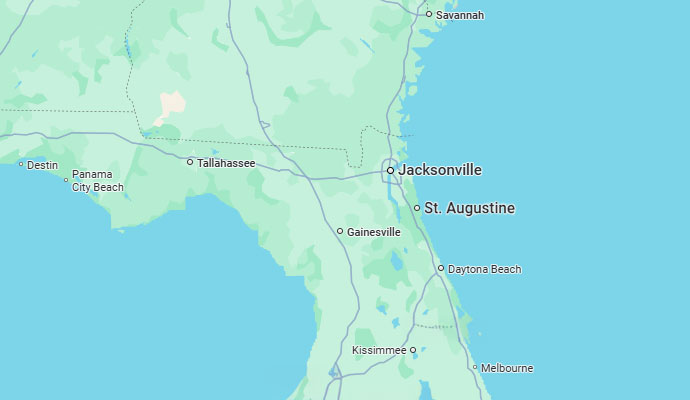
- Atlantic Beach
- Bartram Park
- Doctors Inlet
- Eagle Harbor
- Elkton
- Fleming Island
- Fleming Island Plantation
- Fruit Cove
- Green Cove Springs
- Hastings
- Jacksonville
- Jacksonville Beach
- Julington Creek Plantation
- Keystone Heights
- Lake Geneva
- Middleburg
- Neptune Beach
- Nocatee
- Oakleaf Plantation
- Orange Park
- Palm Coast
- Penney Farms
- Ponte Vedra
- Ponte Vedra Beach
- River Town
- Saint Augustine
- Saint Johns
- Sawgrass
- World Golf Village
