
WAGMORE GARAGE DOORS | NORTHEAST FLORIDA
Why Your Garage Door Tries to Close — Then Reverses Back Open
Your garage door is one of those things that works invisibly until it doesn't. And when it starts closing, stops partway, and reverses back up — sometimes repeatedly — it's one of the more frustrating mechanical failures a homeowner can encounter. The good news: most of the time, this is a self-protective system doing its job. Understanding why it reverses is the fastest path to a fix.
This guide covers every meaningful cause, starting with the most common and most fixable, and ends with a clear line between what homeowners can handle themselves and when it's time to call a professional. Northeast Florida's climate — humidity, storms, summer heat, and the spiders that come with all three — adds a regional layer that's worth understanding.
904-584-4828Quick Answer: Why does a garage door reverse before closing?
A garage door that reverses before or during closing is almost always triggering its built-in safety system. The five most common causes are: (1) Misaligned or obstructed photo-eye sensors, (2) Close-limit settings that tell the opener the door is 'home' before it actually reaches the floor, (3) Down-force sensitivity set too high, (4) A worn or warped bottom seal adding unexpected resistance, and (5) Travel-limit settings that are out of calibration. Logic board failure is rare but possible on older units.

How the Garage Door Safety System Works — and Why It Reverses
Modern garage door openers are required by federal safety standards to reverse automatically if they detect resistance during closing. This is not a malfunction — it is the system protecting children, pets, and objects from being pinned under several hundred pounds of moving door. The same system that stops a door from crushing a bicycle also stops a door from closing when a sensor is bumped out of alignment or a setting drifts out of calibration.
The reversal signal can come from several places: the photo-eye sensors at the base of the tracks, the force-detection circuitry in the opener's motor head, the limit settings that define the door's travel range, or — in older systems — the mechanical spring tension going off-balance. Each has a distinct signature, and knowing which one is acting up saves significant time and money.
In Northeast Florida, the safety system gets triggered more often than homeowners elsewhere might experience. Summer humidity swells wood-composite door frames and can warp bottom seals. Storm debris lands in tracks. Spiders — and in this region, there are a lot of them — build webs directly across photo-eye lenses between fall and spring. Understanding the climate's role in these failures is part of diagnosing them correctly.
Quick Diagnostic: Match What You See to the Likely Cause
| What You're Seeing | Most Likely Cause | DIY or Call a Pro? |
|---|---|---|
| Sensor light blinking / door goes back up immediately | Sensor alignment or obstruction | DIY fix — wipe lenses, realign brackets |
| Door goes down ~halfway then reverses | Close-limit set too short | Call a technician |
| Door reverses when it hits the floor | Down-force sensitivity too high, or worn bottom seal | Call a technician |
| Door goes up fine, reverses erratically on close | Travel limit or internal logic issue | Call a technician |
| Door reverses only after power outage or storm | Settings reset, or humidity-warped seal | Call if unresolved when power returns |
| Older Wayne Dalton — door reverses randomly | TorqueMaster spring tension off | Call a technician — do not DIY springs |
Cause 1: Misaligned or Obstructed Photo-Eye Sensors
This is the most common cause by a wide margin, and it is entirely fixable without a service call. Every garage door opener manufactured after 1993 is required to have photo-eye sensors — two small units mounted near the bottom of the door tracks, one on each side, facing each other. When the beam between them is broken or the sensors are not perfectly aligned, the opener interprets it as an obstruction in the door's path and reverses.
How to Diagnose ItLook at the sensor lights. Both should be solid — one typically green (sending), one amber or red (receiving). If the receiving sensor's light is blinking, flickering, or off entirely, the beam is broken. That is your culprit.
How to Fix It — Step by Step- Wipe both sensor lenses with a clean, dry cloth. In Florida's humidity, condensation and spider webs are the two most common causes of sensor failure, and a 30-second wipe solves a surprisingly high percentage of reversals.
- Check for physical obstructions. A garden hose, a piece of cardboard, a child's toy — anything within a few inches of the sensor beam path will trigger the reversal. Clear the area completely.
- Examine the sensor brackets. Each sensor is mounted on an adjustable wing nut bracket that can vibrate loose over time. If a sensor has been bumped or drifted, gently loosen the wing nut, rotate the sensor until it points directly at its partner, and tighten it back down while watching for the receiving unit's light to go solid.
- Test the door. Press the close button and watch both sensor lights during travel. If they stay solid and the door closes fully, you are done.
Northeast Florida Note: Sensor problems spike in fall and spring here, when golden silk orb-weavers and other large spiders build webs across the sensor path almost overnight. A quick sensor wipe every month or two is worth adding to your routine.
Cause 2: Close-Limit Setting Out of Calibration
Every garage door opener has a close-limit setting — an internal adjustment that tells the motor how far the door should travel before it considers itself 'closed.' When this setting is too short, the opener thinks the door has reached the floor before it actually has. It then reads the continued downward travel as resistance and reverses in response.
This is distinct from a sensor problem: with a limit issue, the sensor lights are both solid, the door travels most of the way down, and then reverses near — but not at — the floor. The door isn't detecting an obstruction. It's miscounting its own distance.
What Triggers Limit Drift in FloridaPower outages can cause opener logic boards to lose or reset saved settings. Newer LiftMaster and Chamberlain models with battery backup are more resistant to this, but older units are vulnerable. Summer heat cycling — particularly in south- or west-facing garages in communities like Nocatee, WGV, and Ponte Vedra where afternoon sun exposure is significant — can also cause gradual drift in older units' limit settings.
Cause 3: Down-Force Sensitivity Set Too High
Alongside the travel limit, openers have a down-force or sensitivity setting that controls how much resistance triggers a reversal. When sensitivity is set too high — meaning the system is calibrated to reverse at even minor resistance — ordinary friction from worn rollers, a stiff hinge, or a slightly warped bottom seal is enough to trigger the reversal.
This cause often surfaces gradually. A door that closes fine in cool months may begin reversing in July when heat-swollen hardware adds friction. The opener hasn't changed — but the physical resistance of the door system in Florida summer has.
Adjusting down-force sensitivity may be required. There is an important safety consideration: the down-force setting is the same system that stops the door from closing on a person or a pet. If you are experiencing reversals that appear to be sensitivity-related, it is worth having a technician confirm that the underlying cause is friction — not an actual obstruction — before adjusting the sensitivity threshold upward.
Cause 4: A Worn or Warped Bottom Seal Adding Resistance
The rubber bottom seal is the strip that runs along the bottom edge of the door and creates a weather-tight contact with the floor. In Northeast Florida's heat and UV exposure, these seals age faster than anywhere in the continental U.S. A seal that has hardened, split, folded back on itself, or warped can create uneven resistance as the door reaches the floor — enough to trigger the opener's force sensor and cause a reversal.
The diagnostic is straightforward: watch the door's behavior carefully during the last 6–12 inches of travel. If the reversal consistently happens as the door makes contact with the floor — not partway through travel — a compromised bottom seal is a strong suspect.
Replacing a bottom seal is a reasonable DIY task for some homeowners. The challenge in Florida is that heat and UV exposure can fuse an old seal into the retainer channel, making removal difficult. If the retainer track itself is bent or corroded, a replacement seal won't seat properly — and that requires a technician visit to address the track first.
Cause 5: Logic Board Issues and Other Pro-Territory Problems
When sensors check out, limits are correctly set, force sensitivity is appropriate, and the bottom seal is in good shape — and the door still reverses — the issue is internal to the opener. Logic board degradation, motor capacitor failure, and wiring faults are the most common culprits at this stage.
These are not DIY repairs. Garage door opener circuitry operates on 120V AC power, and the logic boards in many models are no longer available as individual components — meaning a board failure in an older unit may require full opener replacement rather than repair.
One model-specific note worth flagging for Northeast Florida homeowners: Wayne Dalton doors with TorqueMaster enclosed spring systems can produce reversal behavior when the internal spring tension shifts. These springs are housed inside a hollow tube above the door, making visual inspection impossible. If you have a Wayne Dalton door that reverses erratically and the opener checks out, the spring system is the next logical suspect — and a TorqueMaster failure is a technician job, not a homeowner one.
When to stop troubleshooting and call:
- You've checked sensors, limits, force, and the bottom seal — door still reverses
- The door reverses at different points in its travel, not consistently at the same spot
- The door is jerky, crooked, or makes grinding sounds during travel
- You have a Wayne Dalton TorqueMaster system and the reversal is unexplained
- The opener is more than 10–12 years old and this is not the first issue
Frequently Asked Questions
Why does my garage door reverse only when it's hot outside?
Why does my garage door reverse right after a storm?
Can I override the reversal to force the door closed?
Does a brand-new garage door opener still need sensor alignment?
How much does it cost to fix a garage door that keeps reversing?
Is Your Garage Door Reversing Every Time You Close It?
WagMore's technicians diagnose reversal issues the same day — and give you a straight answer on what it will take to fix it. No pressure. No upsells.








Garage Door Problems?
We turn "Uh-Oh" into
"ALL GOOD"
Is your garage door acting up? Don't worry, we've got you covered! Our expert technicians are here to diagnose and fix any garage door issues you may be experiencing. From broken springs to malfunctioning openers, the most likable techs you will ever meet will handle it all with precision and care.
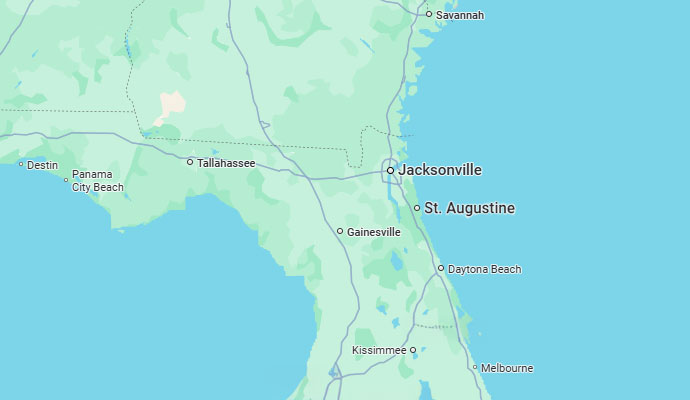
Service Area
- Atlantic Beach
- Bartram Park
- Doctors Inlet
- Eagle Harbor
- Elkton
- Fleming Island
- Fleming Island Plantation
- Fruit Cove
- Green Cove Springs
- Hastings
- Jacksonville
- Jacksonville Beach
- Julington Creek Plantation
- Keystone Heights
- Lake Geneva
- Middleburg
- Neptune Beach
- Nocatee
- Oakleaf Plantation
- Orange Park
- Palm Coast
- Penney Farms
- Ponte Vedra
- Ponte Vedra Beach
- River Town
- Saint Augustine
- Saint Johns
- Sawgrass
- World Golf Village
