
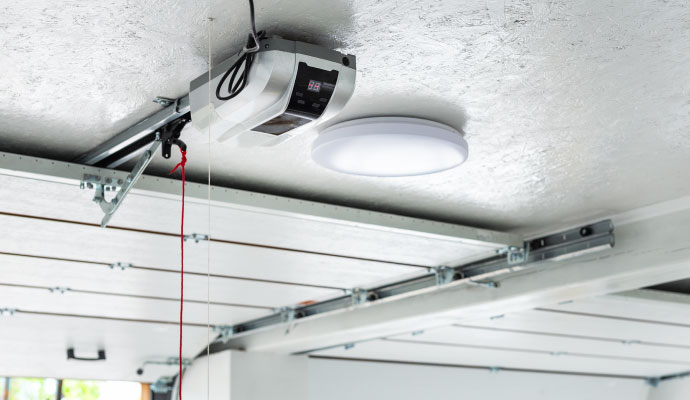
Your Garage Door Opener Is Trying to Tell You Something
Most homeowners don't think about their garage door opener until the morning it doesn't work. By then, the car is trapped, you're already late, and the repair call is happening under the worst possible conditions.
The good news: openers rarely fail without warning. They telegraph the problem for weeks — sometimes months — before the final breakdown. If you know what to listen and look for, you can get ahead of it.
Here are seven signs your opener is on its way out, why Florida's climate makes them worse, and a straight-talk guide to whether repair or replacement makes more sense for your situation.
904-584-4828Seven warning signs your opener is failing — and an honest guide to whether you repair it or replace it before it leaves you stranded.
QUICK ANSWER
The most common signs a garage door opener is failing:
- Slow, sluggish, or uneven movement on open or close
- Grinding, straining, or clicking sounds during operation
- Opener runs but the door doesn't move
- Remote or keypad requires multiple presses to respond
- Door reverses unexpectedly or stops mid-travel
- Opener vibrates excessively or makes a loud humming noise
- Age over 10–12 years with no recent service
In Northeast Florida, heat, humidity, and salt air accelerate wear on every one of these components. What might last 15 years in a dry climate often fails at 8–10 here.
Sign 1: The Door Moves Slowly or Unevenly
A garage door opener at full health moves with confident, consistent speed from the moment it starts. Sluggishness — especially on the way up — is one of the earliest signs something is wrong.
What you're noticing is the opener struggling against resistance it shouldn't have. That resistance comes from one of three places: the door itself (springs out of balance, rollers worn, tracks dirty), the opener's motor wearing down, or both. In Northeast Florida, where humidity causes hardware corrosion and summer heat accelerates lubricant breakdown, that resistance builds faster than it would in a drier climate.
Don't assume the opener is the culprit before ruling out the door. A properly balanced door should feel almost weightless when lifted by hand (emergency release pulled). If it's heavy, the springs are doing less work than they should — and making the opener do more.
Sign 2: You're Hearing New Sounds
Openers are not silent machines, but there's a significant difference between the routine operational hum of a healthy unit and the grinding, straining, rattling, or clicking of one in distress.
What different sounds mean:
- Grinding or metal-on-metal noise: worn drive gears, a failing chain or belt, or debris in the drive system.
- Loud humming with no movement: the motor is receiving power but the door isn't moving — often a broken drive gear or a door that's mechanically stuck.
- Clicking or popping: could be loose hardware on the door, a chain jumping, or the opener's circuit board struggling.
- Vibration against the ceiling or wall: mounting hardware has loosened. The opener itself may be fine, but a unit that vibrates loose from its mounting will accelerate wear on everything connected to it.
Florida-specific note: Salt air corrodes metal components, and high humidity creates conditions where moving parts wear faster. An opener that sounds fine in October can deteriorate noticeably by the following summer if it hasn't been lubricated and inspected.
Sign 3: The Opener Runs But the Door Doesn't Move
You press the remote, you hear the motor, and nothing happens. The door sits exactly where it was.
Two common causes: the emergency release cord was pulled at some point and the carriage was never re-engaged, or the drive gear inside the opener has stripped. The first is a quick fix — run the opener and it usually re-engages automatically. The second means the motor is turning but the mechanism connecting it to the door has failed.
A stripped drive gear is one of the most common mechanical failures in chain and belt drive openers, especially units over 8–10 years old. The gear is a relatively affordable replacement part, but it's also a signal that the opener has accumulated significant wear. On older units, replacing the gear may be the right short-term call; on units approaching 12–15 years, it's worth comparing gear replacement cost against a new opener.
Sign 4: Your Remote or Keypad Requires Multiple Presses
A properly functioning opener should respond the first time, every time — from the end of a full driveway. If you're finding yourself pressing twice, rolling the window down, pulling forward, or getting out of the car to press the wall button, the wireless system has degraded.
The most common culprit isn't the opener itself — it's the light bulb inside it. Standard LED bulbs generate electromagnetic interference (EMI) that can jam the opener's radio receiver. Swapping to an opener-rated LED bulb or a standard incandescent is the first fix to try before assuming the receiver is failing.
If the bulb isn't the issue, the receiver module inside the opener may be degrading. On older units, the receiver's sensitivity drops over time — particularly in Florida's climate, where humidity can affect circuit board performance. This is a component-level repair, and at a certain age, it makes more sense to replace the opener than repair the receiver.
Sign 5: The Door Reverses Unexpectedly or Stops Mid-Travel
Your opener has two safety systems that tell it to stop and reverse: the photo-eye sensors at the base of the door, and the force/resistance sensors built into the drive mechanism. When the door reverses on its own or stops without completing travel, one of those systems is firing — either correctly (something is actually in the way) or incorrectly (the system has become miscalibrated or is failing).
Start with the photo-eyes. In Florida, spider webs, dust, and humidity film on the lenses are constant issues. Wipe the lenses clean and make sure both sensors are pointed directly at each other (steady lights, no blinking). If that doesn't solve it, check whether the door's resistance has increased — a door that's harder to move will trip the force sensor as if something is blocking it.
If the sensors are clear and the door is balanced but the reversal keeps happening, the opener's logic board may be failing. A board that intermittently misreads sensor signals is unpredictable — and unpredictable in a large moving object is a safety issue, not just an inconvenience.
Sign 6: Excessive Vibration or Heat From the Motor
Run your hand along the opener housing shortly after a normal cycle. Slight warmth is normal. Hot to the touch — especially if accompanied by a burning smell — is not.
Excessive heat means the motor is working harder than it should. Common causes: the door is out of balance and the motor is compensating, the opener is undersized for the door weight (common when a builder-grade opener is paired with a newer, heavier insulated door), or the motor windings are failing with age.
In Northeast Florida, where summer temperatures push garage interiors past 110°F, thermal stress on motor components is a real factor. An opener that runs hot during winter will run hotter during July — and motors that overheat cycle-shutdown, then fail permanently faster than those running within their rated temperature range.
Sign 7: The Unit Is Over 10–12 Years Old and Has Never Been Serviced
This one isn't a symptom — it's a risk profile. Garage door openers in Northeast Florida have a realistic service life of 10–15 years under normal use. An opener that's never been lubricated, inspected, or adjusted is operating at or near the end of its designed life, even if it hasn't shown visible symptoms yet.
The risk isn't just inconvenient failure. Openers manufactured before 2010 frequently lack safety technology that is now standard: battery backup for power outages, rolling code security that generates a new access code with every use, auto-reverse sensors with modern sensitivity calibration, and soft-start/soft-stop motors that reduce stress on springs and hardware. Using an aging opener isn't just a reliability question — it's a security and safety one.
Repair or Replace? An Honest Framework
Not every failing opener needs to be replaced. Here's how to think through the decision:
| Symptom | Likely Call | Notes |
|---|---|---|
| Drive gear stripped, opener otherwise sound | Repair | Gear replacement is cost-effective if unit is under 8 years old |
| Remote range degraded, bulb swap didn't help | Repair | Receiver module replacement; compare cost to new opener age |
| Occasional reversal, sensors clean, door balanced | Repair | Logic board calibration or adjustment; monitor closely |
| Motor runs hot, door heavy/unbalanced | Fix door first | Balance the door before condemning the opener |
| Unit 10+ years old, multiple symptoms | Replace | Repair costs approach or exceed replacement value |
| No battery backup, no rolling code security | Replace | Safety/security gap that repair cannot address |
| New insulated door on old opener | Replace opener | Weight mismatch accelerates wear on both components |
| Repairs more than once in 18 months | Replace | The math has changed; patching is costing more than replacing |
What a New Opener Includes That Your Old One Probably Doesn't
If replacement makes sense, here's what the current generation of openers brings that units manufactured before 2015 typically lack:
- Battery backup: Your door works through Florida power outages — no manual release fumbling during a storm.
- Rolling code security: A new encrypted access code is generated with every remote press, eliminating the vulnerability of fixed-code systems.
- myQ smart integration: Open, close, and monitor your door from your phone; receive alerts when the door opens; grant temporary access to contractors or family members remotely.
- Soft-start/soft-stop motors: Dramatically reduces stress on springs and hardware at the beginning and end of every cycle, extending the life of everything the opener connects to.
- Modern auto-reverse sensors: Faster and more precisely calibrated than older units, with better response to obstruction.
These aren't luxury add-ons — they're the current standard. Battery backup alone is worth the upgrade for any Northeast Florida home heading into hurricane season.
What Does Opener Replacement Cost in Northeast Florida?
Opener replacement in this market runs $650 to $1,500 installed, depending on drive type, smart features, and whether your door weight requires a higher-horsepower unit:
| Opener Type | Installed Price Range |
|---|---|
| Chain drive (detached garages, budget-conscious) | $650 – $850 |
| Belt drive (attached garages, quiet operation) | $750 – $1,000 |
| Wall-mount / jackshaft (high ceilings, clean look) | $1,000 – $1,500 |
| Smart opener with battery backup | $900 – $1,300 |
If your door is heavier than what your current opener was rated for — common when a builder-grade door has been replaced with a newer triple-layer insulated model — make sure the replacement is properly rated. An undersized opener on a heavy door burns out motors, stresses springs, and creates the same problem you started with, on a shorter timeline.
Frequently Asked Questions
How long do garage door openers last in Florida?
Can I replace just the drive gear instead of the whole opener?
My opener works but the remote is unreliable. Does the opener need to be replaced?
Is it worth replacing an opener when I'm also replacing the door?
What's the most important feature to look for in a replacement opener?
Can a failing opener damage my garage door springs?
Think Your Opener Is on Its Way Out?
Text us two photos — one of your opener from the front, one of your door from the driveway — and we'll give you a real assessment the same day. No site visit, no pressure, no commitment.








Garage Door Problems?
We turn "Uh-Oh" into
"ALL GOOD"
Is your garage door acting up? Don't worry, we've got you covered! Our expert technicians are here to diagnose and fix any garage door issues you may be experiencing. From broken springs to malfunctioning openers, the most likable techs you will ever meet will handle it all with precision and care.
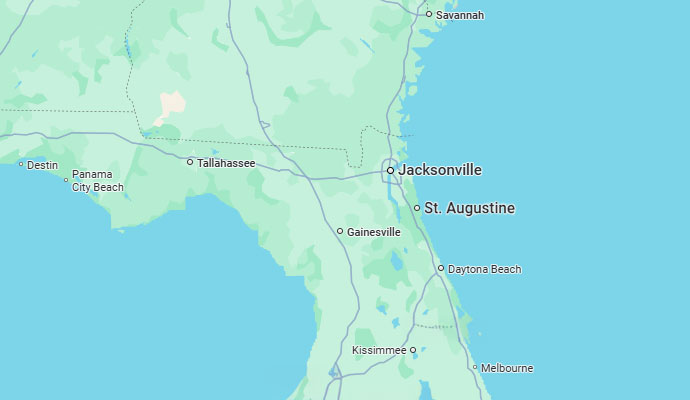
Wagmore Garage Doors Service Area
- Atlantic Beach
- Bartram Park
- Doctors Inlet
- Eagle Harbor
- Elkton
- Fleming Island
- Fleming Island Plantation
- Fruit Cove
- Green Cove Springs
- Hastings
- Jacksonville
- Jacksonville Beach
- Julington Creek Plantation
- Keystone Heights
- Lake Geneva
- Middleburg
- Neptune Beach
- Nocatee
- Oakleaf Plantation
- Orange Park
- Palm Coast
- Penney Farms
- Ponte Vedra
- Ponte Vedra Beach
- River Town
- Saint Augustine
- Saint Johns
- Sawgrass
- World Golf Village
